HEC for Household Cleaners

Hydroxyethyl Cellulose (HEC) is a non-ionic thickener used in liquid household cleaning formulations.

It builds viscosity, shapes flow, supports clear texture in many systems.
Share your cleaner type and target viscosity. We will suggest a simple test plan.
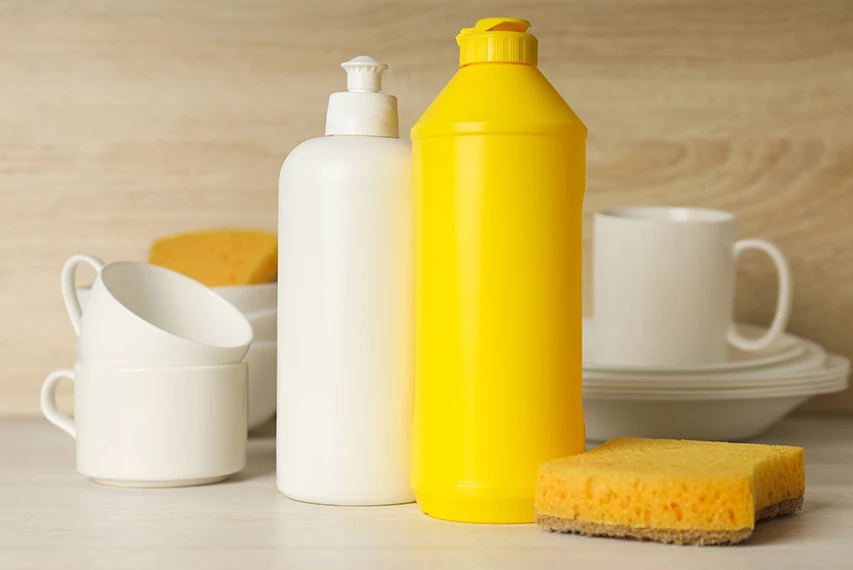
Household cleaner bottles and sponge for HEC cleaning product applications

What HEC Brings to Household Cleaners

  • Viscosity build for better body
  • Clear formulation options in many systems
  • Salt and surfactant tolerance support
  • Cling control for vertical cleaning formats

Product Overview

HEC is used in household cleaners to adjust viscosity and control flow behavior in water-based formulations. It can improve product feel during dispensing, spreading, and rinsing. It also helps keep texture more consistent during storage. Results depend on surfactant type, salt level, pH, temperature, solvents, plus mixing method. Some systems prefer delayed hydration to reduce fisheyes during incorporation. A short bench test usually confirms the best approach. Send your base system, target viscosity range, and product type. We will recommend evaluation options.
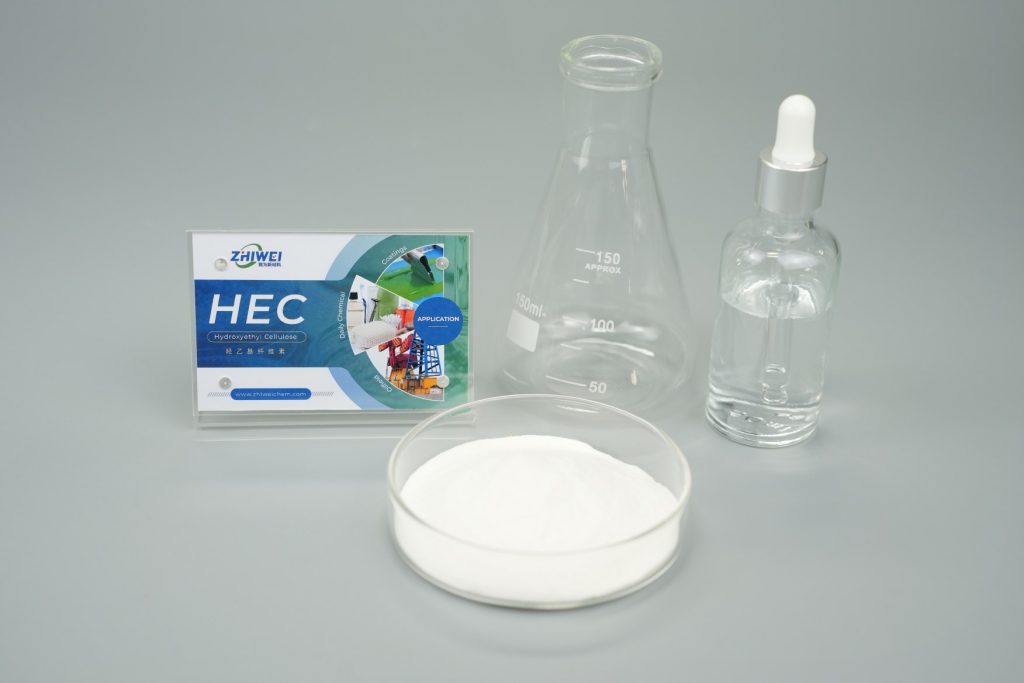
HEC powder sample with product packaging and lab glassware.

Where HEC Fits

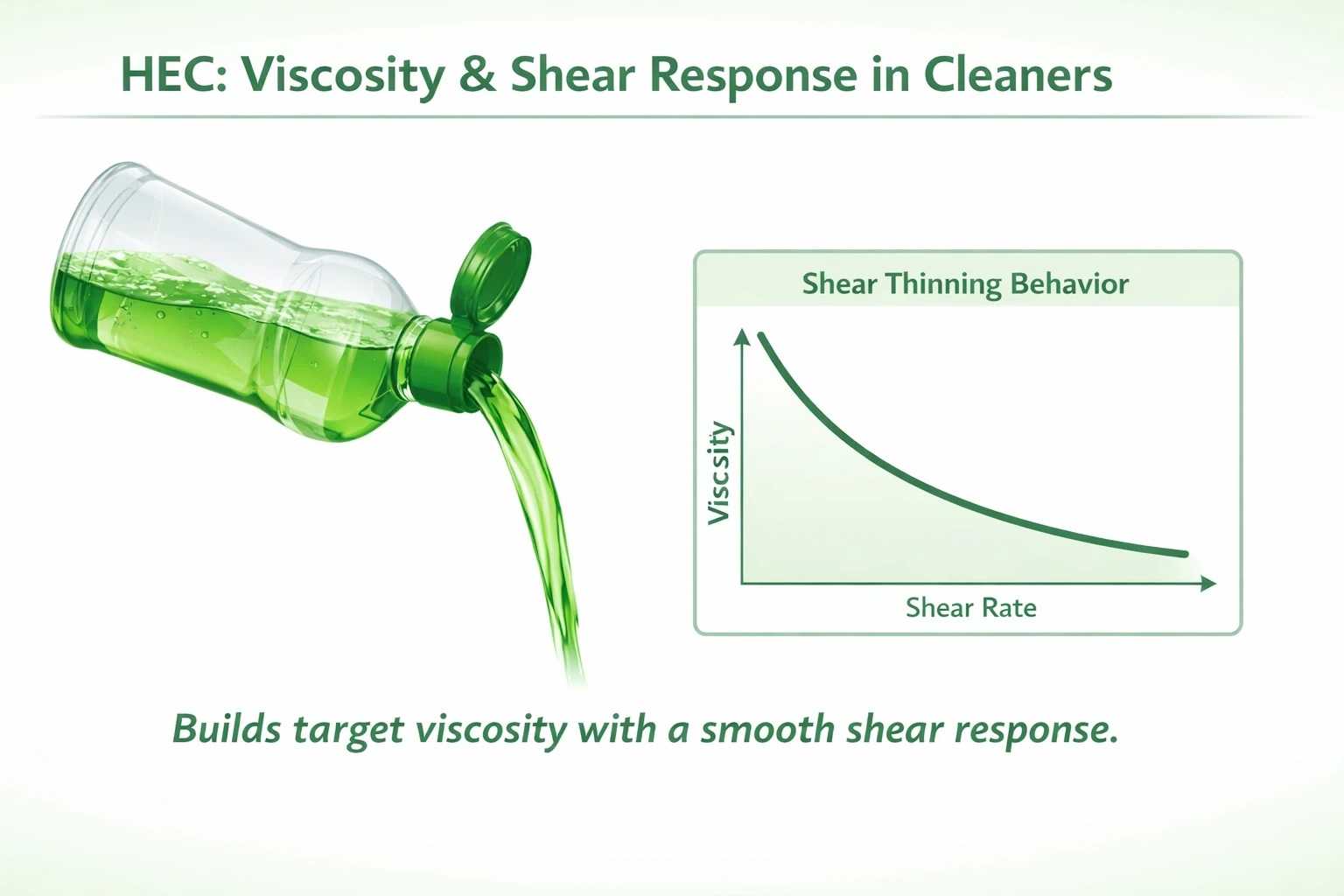
Diagram showing HEC viscosity and shear response in household cleaners

Thickening, Body

Builds target viscosity with a smooth shear response.
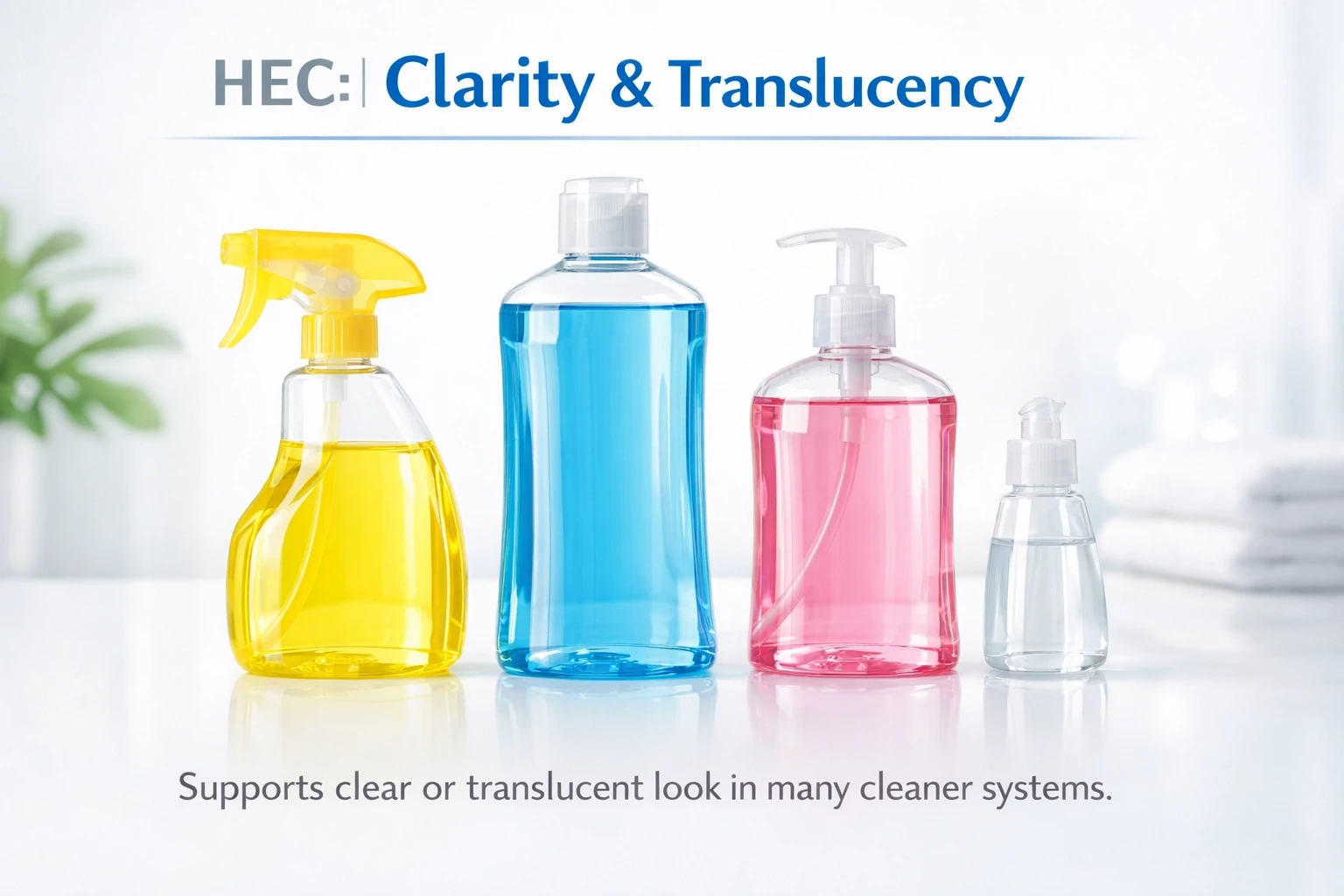
Diagram showing HEC clarity and translucency in household cleaner formulations

Clarity, Appearance

Supports clear or translucent look in many cleaner systems.
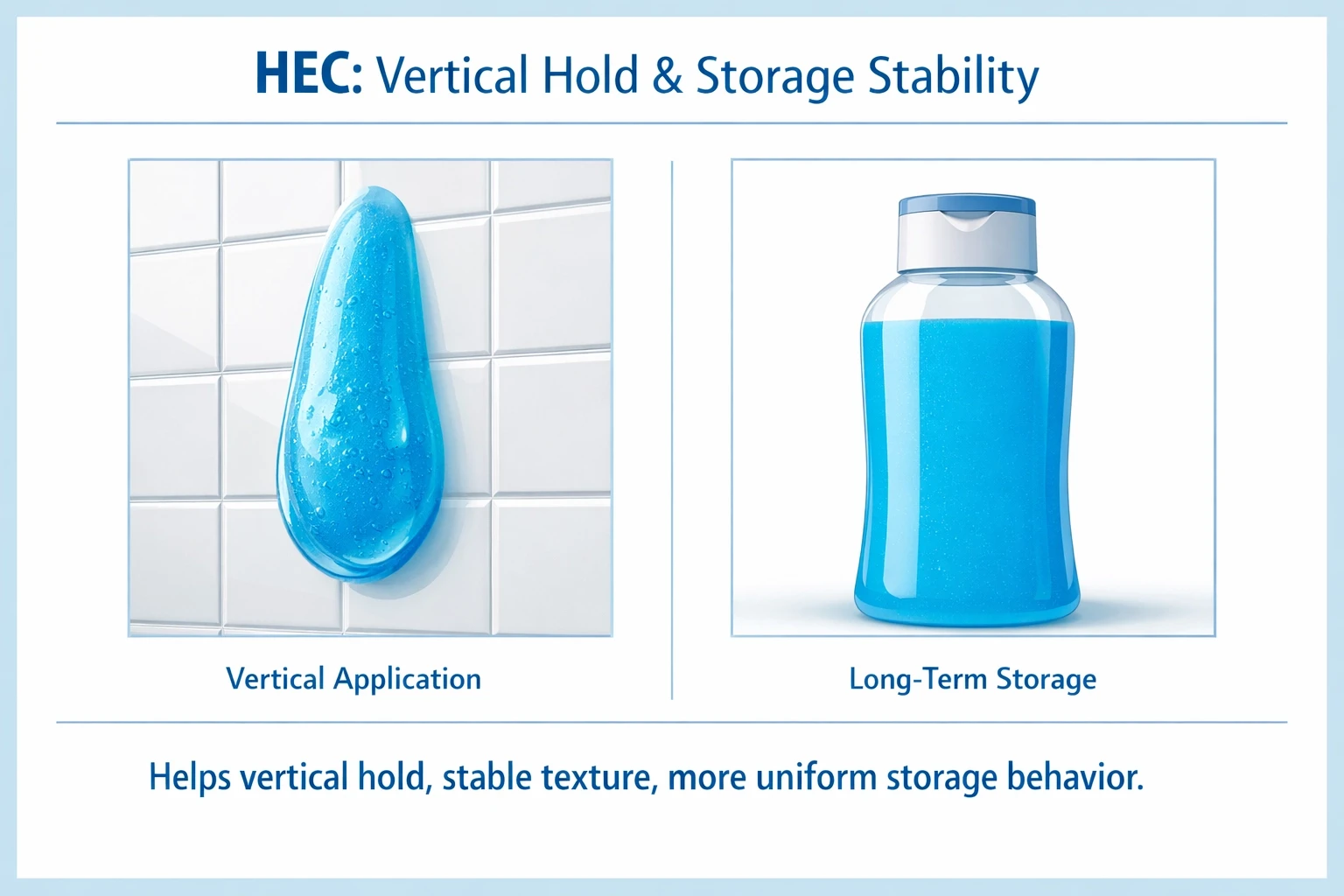
Diagram showing HEC vertical hold and storage stability in household cleaners

Cling, Stability

Helps vertical hold, stable texture, more uniform storage behavior.

Send These Details

  • Product type: surface cleaner, floor cleaner, toilet cleaner, glass cleaner, dish cleaner
  • Surfactant system (main types)
  • Target viscosity range and temperature
  • Clarity target: clear, translucent, opaque
  • Salt or electrolyte level
  • pH range
  • Solvents or fragrance used
  • Mixing equipment and shear level
  • Packaging type: spray bottle, squeeze bottle, refill pouch
  • Main issue: low body, poor cling, haze, fisheyes, unstable texture
HEC powder sample with product packaging and lab glassware.
Modern cellulose ether production base with stable manufacturing capacity

Mixing Tips

  • Add powder slowly into moving water. Avoid dumping.
  • Maintain steady agitation during addition.
  • Disperse fully before speeding hydration.
  • Adjust salt or pH later if your process allows.
  • Check viscosity after rest. Confirm repeatability.

Frequently Asked Questions

Yes. HEC is used in many liquid home care formulations.

Many systems can stay clear. Clarity depends on surfactants, salt, fragrance, solvents, pH.

Many HEC systems show broad surfactant compatibility and good salt tolerance. Confirm in your base.

In many cleaner formats, viscosity profile influences cling. Confirm with a simple panel test.

Use controlled addition. Keep steady agitation. Disperse fully before speeding hydration.

TDS and SDS. COA is available by batch on request.

Ready to Test HEC in Your Household Cleaner?

Send your base system and targets. Get a clear sample plan.