Hydroxyethyl Cellulose (HEC) is a non-ionic polymer used to viscosify clear brine production fluids.
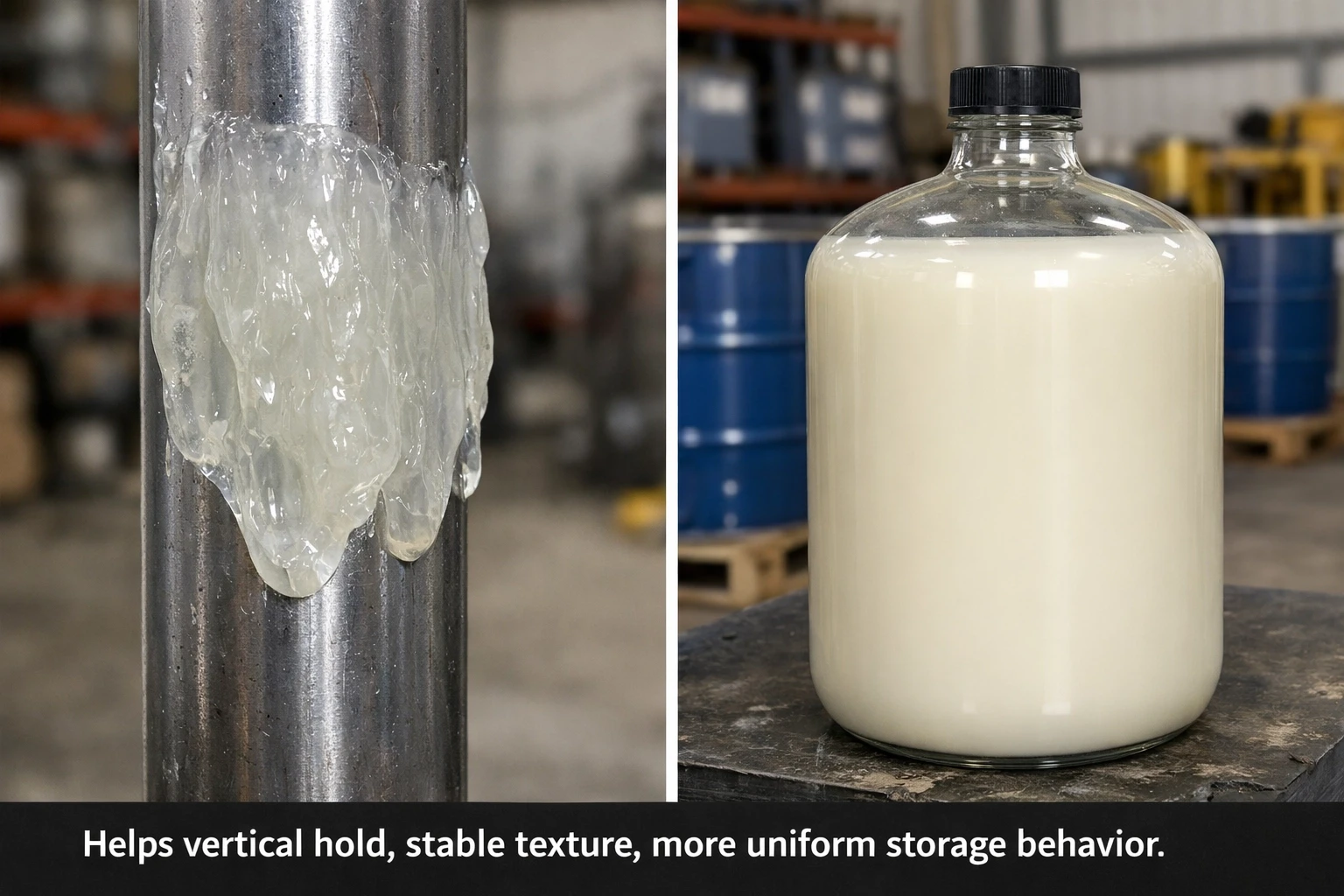
It supports pseudoplastic flow, low gel build, stable handling in the field.
Share your brine type and target viscosity. We will suggest a simple test plan.
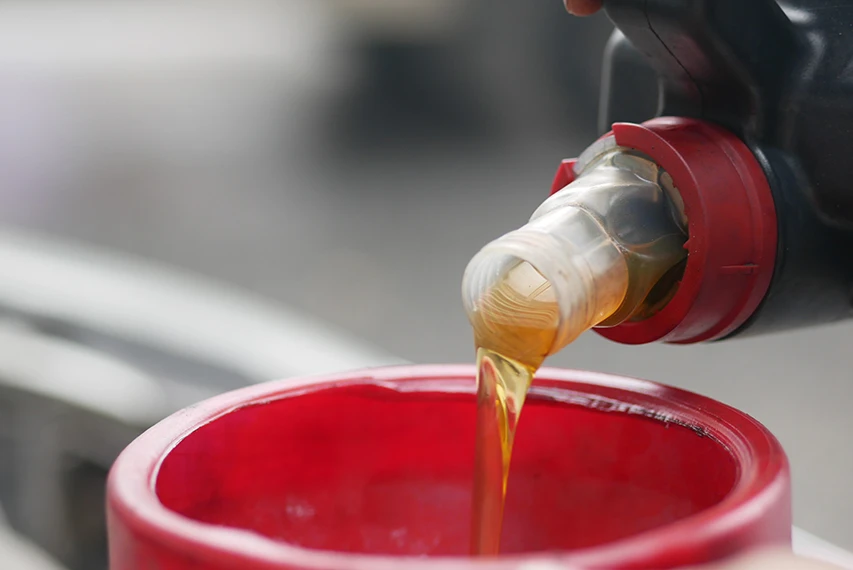
HEC is used in oil production fluids to build viscosity in brines without relying on suspended solids. It helps shape flow behavior during mixing, pumping, displacement, intervention, and fluid handling around producing wells. It can support solids transport where needed while keeping gel build low during static conditions. Results depend on brine type, density, temperature, solids content, plus shear history. Some systems also value clean-up options after the job. A short lab test usually confirms the best approach. Send your brine type, target viscosity, temperature, and process details. We will recommend evaluation options.
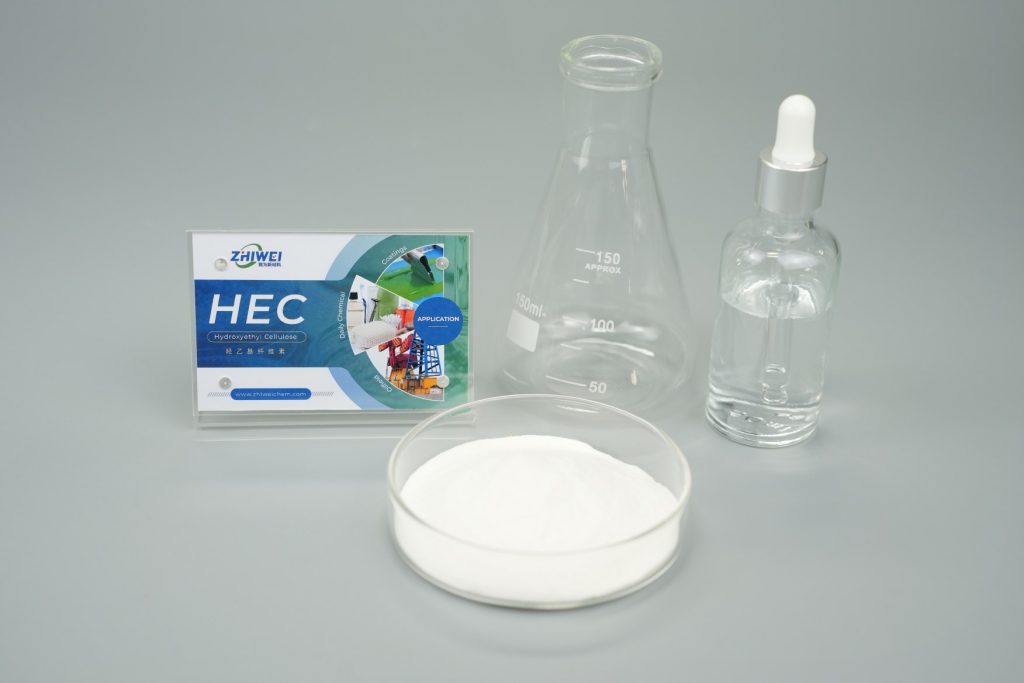
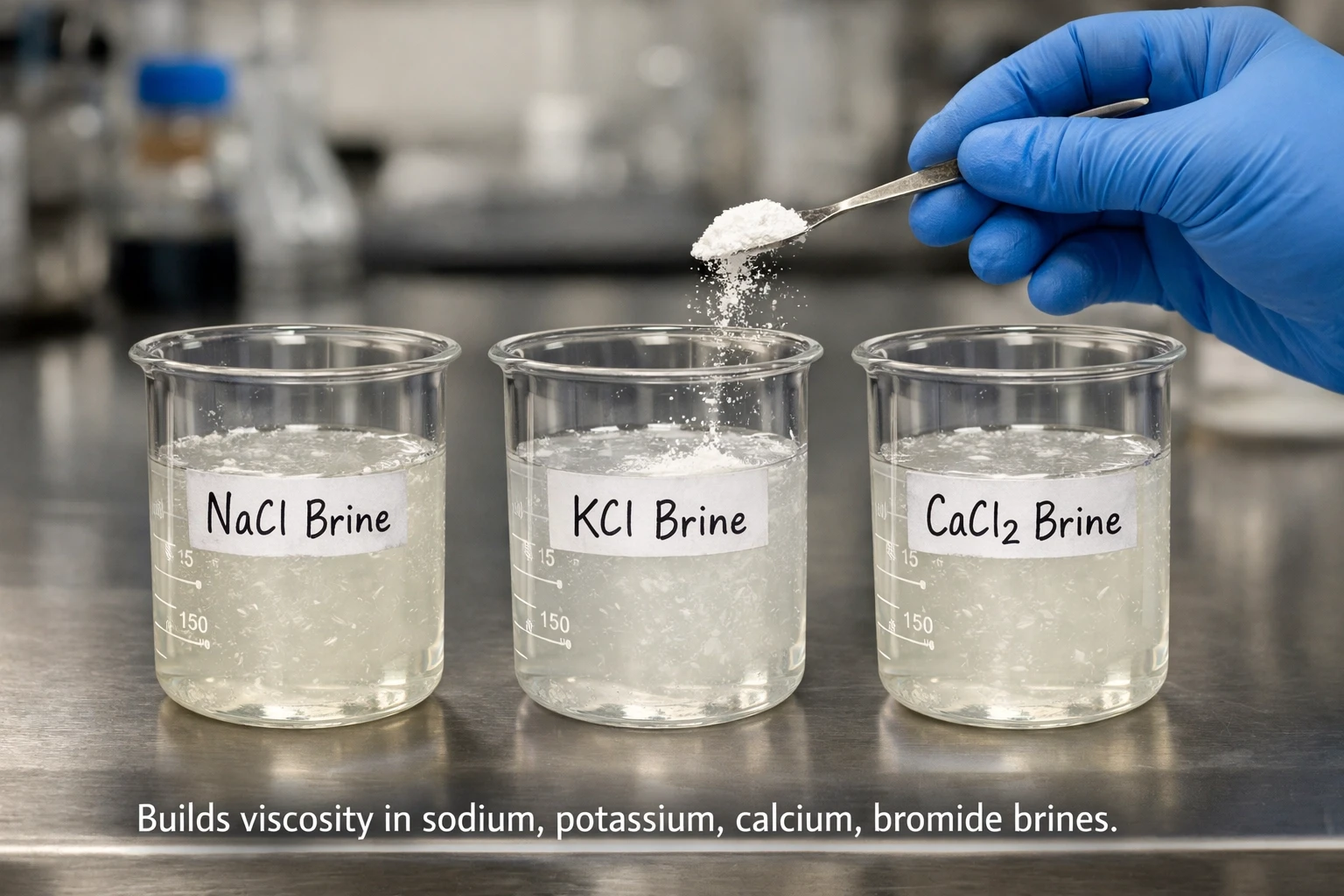
Builds viscosity in sodium, potassium, calcium, bromide brines.
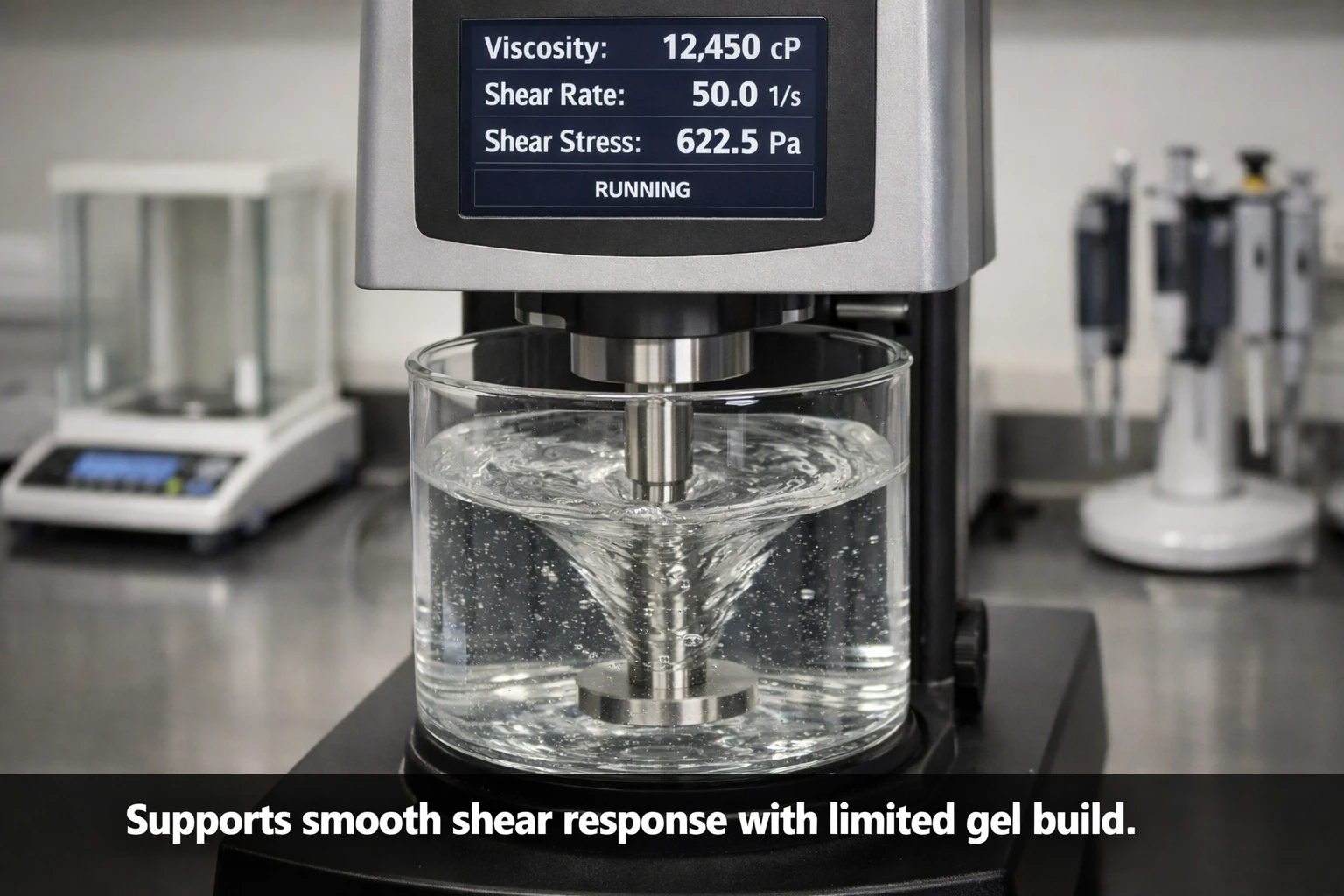
Supports smooth shear response with limited gel build.
Helps fluid handling in packer, intervention, and clear brine systems.
Yes. HEC is widely used as a viscosifier in clear brine oilfield systems.
Many HEC systems show good brine compatibility. Share your brine type for better matching.
HEC typically gives pseudoplastic flow with limited gel build.
HEC mainly changes rheology. Fluid-loss control often needs a separate approach.
Some systems value acid-soluble clean-up behavior. Confirm with your fluid design.
TDS and SDS. COA is available by batch on request.
Send your brine type and targets. Get a clear sample plan.