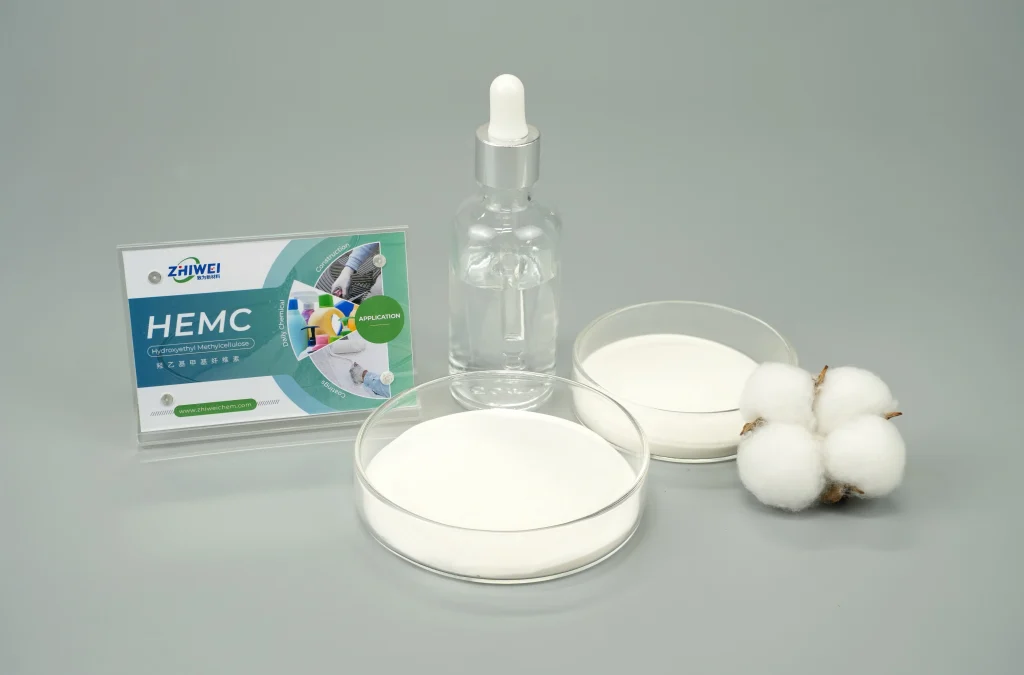
Hydroxyethyl Methyl Cellulose (HEMC) is a cellulose ether used in cementitious waterproof mortar systems.
It supports water retention, smoother troweling, stable handling during application. Share your mortar type and targets. We will suggest a simple test plan.

– Water retention for steadier cement hydration
– Smoother troweling and pressing during application
– More uniform layer formation on the substrate
– Better fresh-state stability during spreading and finishing
HEMC is widely used in cementitious waterproof mortar to adjust rheology and improve fresh-state application properties. It helps the mortar hold water, spread more evenly, and stay workable during troweling or pressing. It can also support a more stable build on the substrate, which helps the formed layer look more uniform after application. Results depend on cement type, filler package, sand grading, polymer modifier level, temperature, and mixing order. Some grades are designed for quick, lump-free hydration in dry-mix systems. A short lab test usually confirms the best approach. Send your mortar type, target performance, and process details. We will recommend evaluation options.
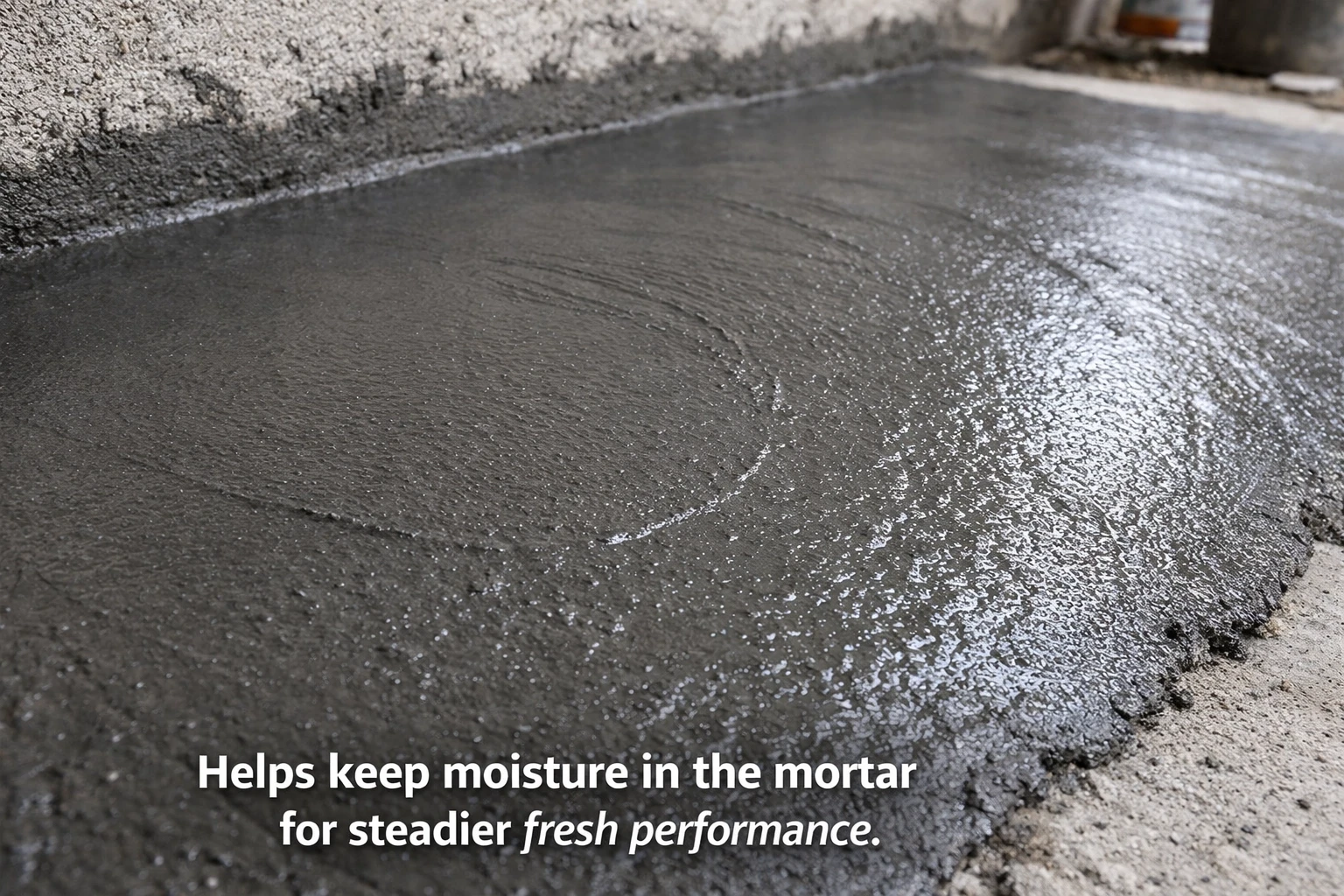
Helps keep moisture in the mortar for steadier fresh performance.
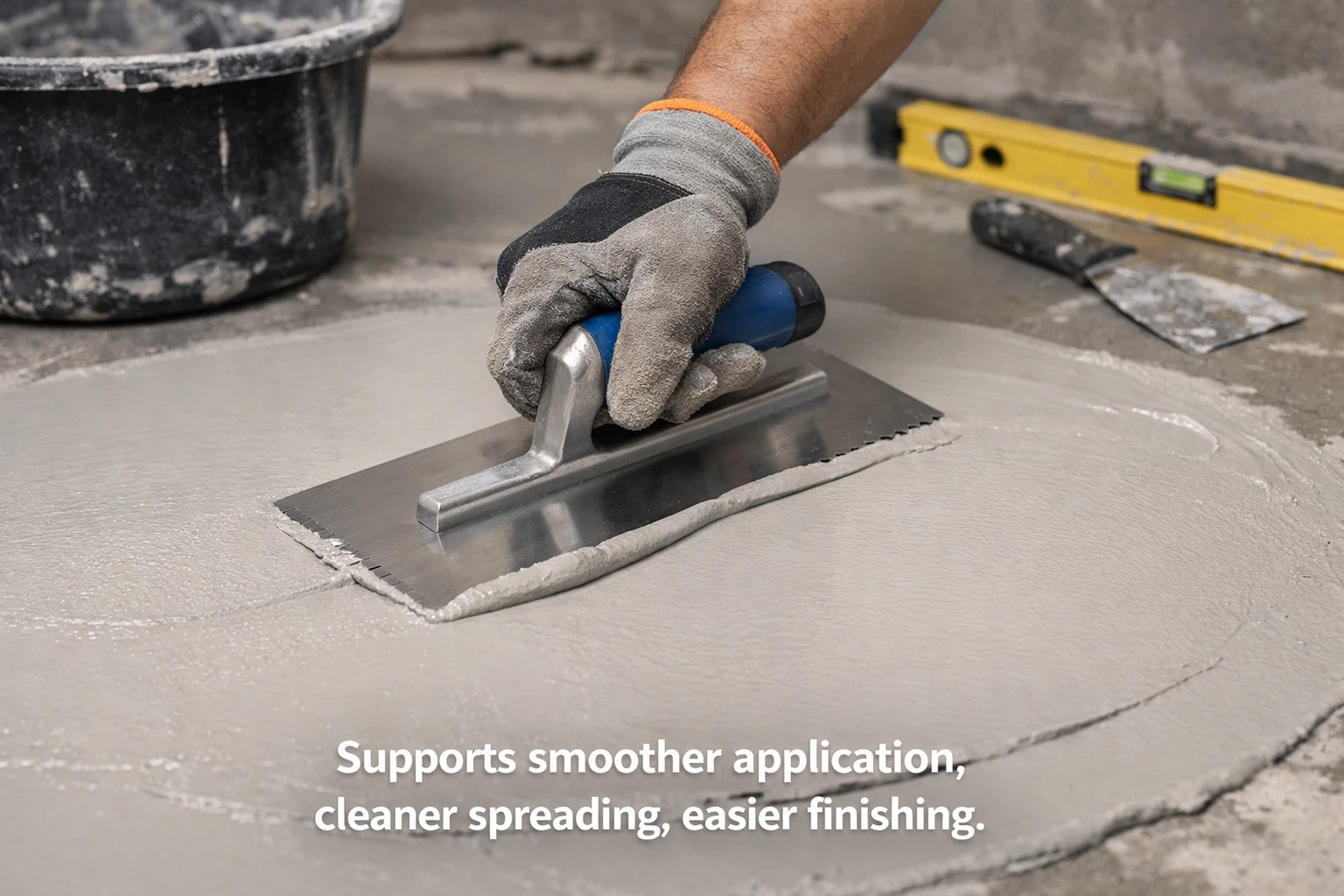
Supports smoother application, cleaner spreading, easier finishing.
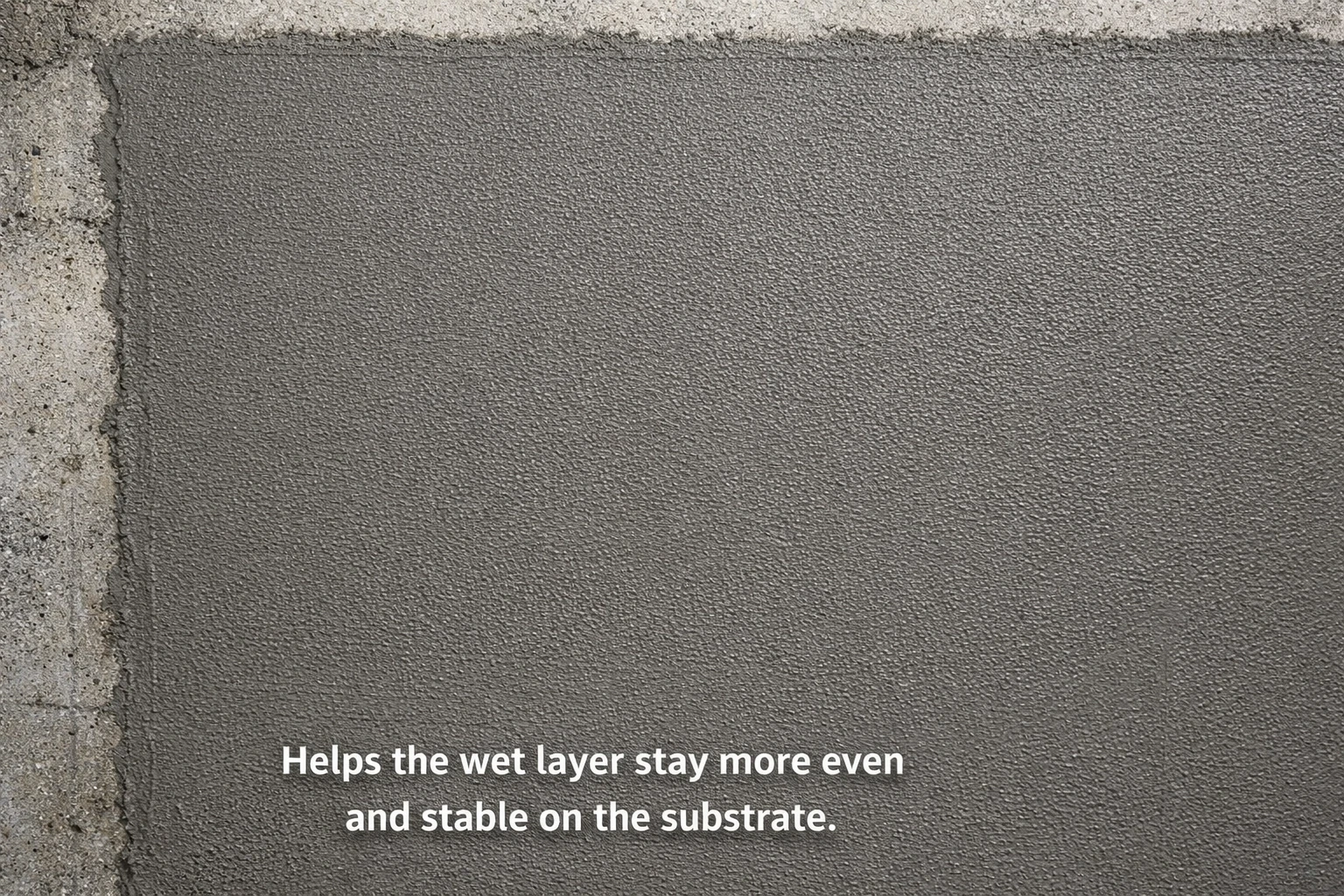
Helps the wet layer stay more even and stable on the substrate.
1) Blend dry powders evenly before water addition.
2) Add water under steady mixing.
3) Allow enough wetting time for full hydration.
4) Avoid over-adjusting water after the mix is ready.
5) Check workability and layer stability after rest.
– Mortar type: rigid waterproof mortar, polymer-modified waterproof mortar, slurry type
– Cement type and filler system
– Sand grading or aggregate type
– Polymer modifier used, if any
– Target water retention and workability
– Application method: trowel, pressing, brush, spray
– Layer build target and finish target
– Mixing method and process order
– Main issue: poor spreading, drag, uneven build, fast drying, unstable fresh layer
Yes. HEMC is commonly used in cement-based mortar systems to improve fresh-state application properties.
Yes. Water retention is one of the main functions linked with cellulose ether in cementitious mortars.
Yes. HEMC is commonly used to improve consistency and smooth handling during manual application.
In many systems, better rheology and water retention support more uniform spreading and build.
Yes. Many mortar systems use cellulose ether to improve stability during application and short resting periods.
A: TDS and SDS. COA is available by batch on request.
Send your targets. Get a clear sample plan.