
Hydroxyethyl methyl cellulose, or HEMC, is one of the most used cellulose ethers in the construction industry. Buyers from the Middle East, Southeast Asia, and South America often ask us about HEMC grades, applications, and how to pick the right supplier. In this article, we will walk you through the basics of HEMC and explain why so many importers source it from China.
What Is Hydroxyethyl Methyl Cellulose?
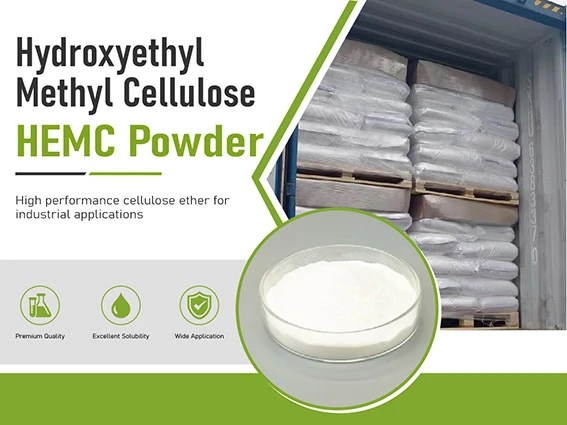
Hydroxyethyl methyl cellulose (HEMC) is a non-ionic, water-soluble cellulose ether. Its CAS number is 9032-42-2. You may also see it called MHEC (methyl hydroxyethyl cellulose). Both names refer to the same product.
HEMC is made from natural cellulose through a chemical process. Methyl groups and hydroxyethyl groups are introduced into the cellulose chain. This modification gives HEMC its water solubility, thickening power, and stability.
We produce HEMC at our factory in China using refined cotton from Xinjiang as the raw material. The quality of the raw cotton directly affects the purity and performance of the final product. That is why we are strict about raw material sourcing.
HEMC dissolves in cold water and forms a clear, viscous solution. It does not dissolve in hot water. This property is useful in construction applications because it gives workers enough time to apply the material before it sets.
What Does HEMC Do in Construction Materials?
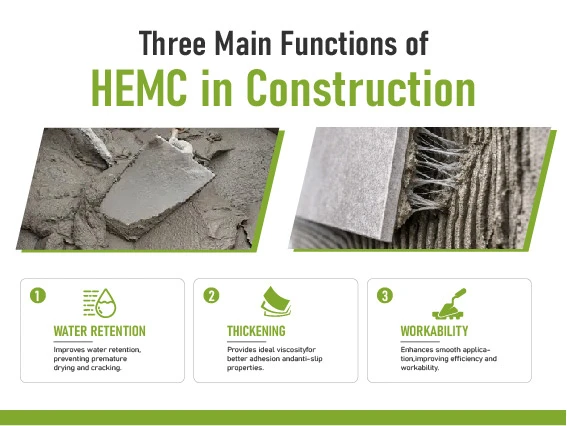
HEMC plays several roles in construction formulations. The three main functions are water retention, thickening, and workability improvement.
Water retention. When you mix cement or gypsum with water, the water tends to evaporate or get absorbed by the substrate. HEMC locks the water inside the mortar. This ensures that the cement hydrates properly and reaches full strength. Without enough water retention, the mortar can crack and lose bond strength.
Thickening. HEMC adds viscosity to the mix. A thicker mortar is easier to apply on vertical surfaces because it does not sag or slide down. This is especially important for wall renders and tile adhesives applied on large areas.
Workability. Workers need the mortar to spread smoothly and feel consistent. HEMC improves the creamy texture of the mix. It also extends the open time, which means workers can adjust tiles or re-trowel the surface without rushing.
Where Is HEMC Used?
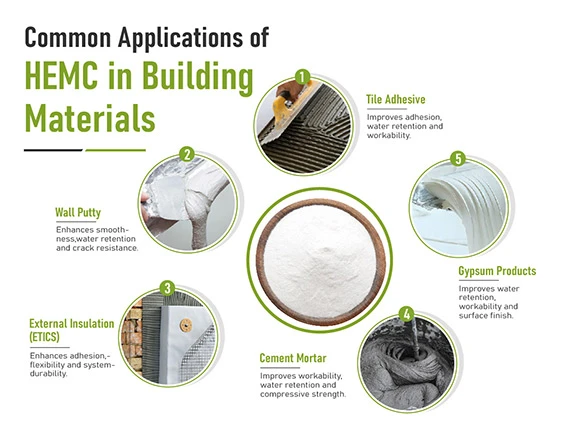
HEMC is used in a wide range of construction and building materials. Here are the most common applications.
Tile Adhesive
Tile adhesive is one of the largest application areas for HEMC. The cellulose ether gives the adhesive the right balance of slip resistance and open time. Workers can spread the adhesive, place the tile, and adjust the position within a reasonable time window.
HEMC also improves the bond strength between the tile and the substrate. A strong bond reduces the risk of tile detachment over time. This matters a lot in wet areas like bathrooms and kitchens.
Wall Putty and Skim Coat
Wall putty requires a smooth, crack-free finish. HEMC helps by retaining water in the putty layer. The result is a surface that dries evenly and does not shrink or crack. For skim coats applied in thin layers, HEMC provides the right viscosity to prevent sagging on vertical walls.
Cement-Based Mortar
In cement mortars and renders, HEMC acts as a water-retaining agent and thickener. It improves the adhesion of the mortar to brick, concrete, and block surfaces. We recommend different HEMC viscosity grades depending on whether the mortar is used for interior or exterior applications.
Exterior Insulation Systems (ETICS)
External thermal insulation systems expose the mortar to temperature changes, wind, and rain. HEMC performs well in these conditions because it does not gel at high temperatures. This is one advantage of HEMC over HPMC. We will explain the differences in a later section.
Gypsum-Based Products
HEMC is also used in gypsum plasters and joint compounds. It works as a retarder and water-retention agent. The gypsum sets more slowly, which gives workers more time to finish the surface. HEMC also reduces shrinkage cracks in the dried gypsum layer.
HEMC vs HPMC: Which One Should You Use?
Many buyers ask us about the difference between HEMC and HPMC. Both are cellulose ethers, and both are used in construction. But they have some clear differences.
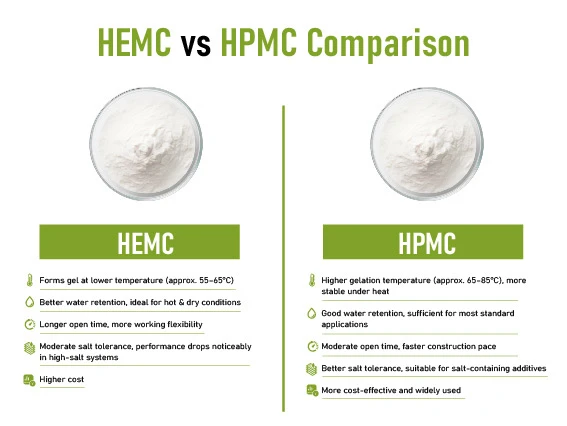
| Property | HEMC | HPMC |
|---|---|---|
| Thermal gelation | No gelation at high temperature | Gels at 60–90°C |
| Water retention | Excellent | Good |
| Open time | Longer | Standard |
| Salt tolerance | Superior | Moderate |
| Workability | Smoother, creamier | Good |
| Cost | Higher | More economical |
The main advantage of HEMC is its thermal stability. HEMC does not form a gel when the temperature rises. This makes it a better choice for exterior applications and hot climates. If your project is in the Middle East or Southeast Asia, where temperatures often exceed 35°C, HEMC will give you more consistent performance.
HPMC is a good option for standard interior applications where cost is a bigger concern. It provides reliable water retention and workability at a lower price point.
We produce both HEMC and HPMC at our factory. Our team can help you decide which product fits your formulation and budget.
How to Choose the Right HEMC Grade
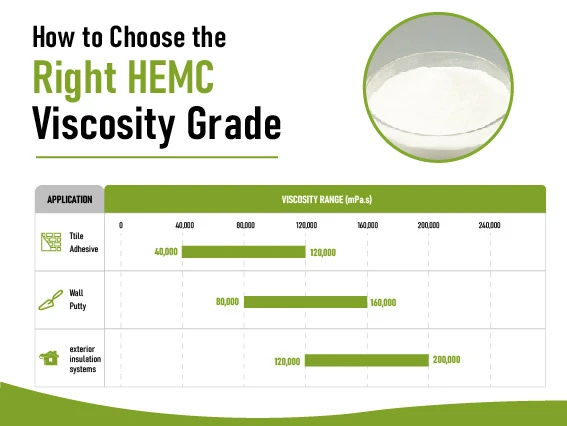
HEMC comes in different viscosity grades. The viscosity you need depends on your application.
For tile adhesives, a medium viscosity grade, around 40,000 to 60,000 mPa·s, is a common choice. This grade gives good water retention without making the adhesive too thick to spread.
For wall putty and skim coat, a lower viscosity grade, around 20,000 to 40,000 mPa·s, works well. The putty needs to be easy to sand and smooth after drying.
For exterior renders and ETICS, a higher viscosity grade, around 60,000 to 100,000 mPa·s, provides better anti-sagging properties on vertical surfaces.
We offer HEMC in a range of viscosity options. When you contact us, tell us your application and target market. We will recommend the right grade and send you samples for lab testing.
What Does HEMC Cost?
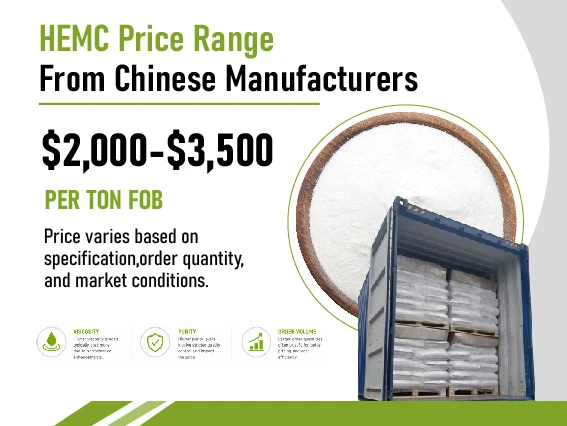
Cellulose ether prices in China have fluctuated in recent years. As of late 2025, the average price for cellulose ethers was around $4,200 per metric ton on an FOB Qingdao basis. HEMC is typically priced in the range of $3,500 to $5,000 per ton, depending on the viscosity grade, order volume, and packaging requirements.
Several factors affect the price. The cost of raw materials, such as refined cotton and propylene oxide, is a major driver. Energy costs and logistics also play a role. Prices tend to be higher for low-volume orders because the production setup cost is spread across fewer units.
We offer competitive pricing for bulk orders. For regular customers, we can also lock in prices for a defined period to help with budget planning. Contact our sales team for a detailed quote based on your specific needs.
Why Choose Us as Your HEMC Supplier?
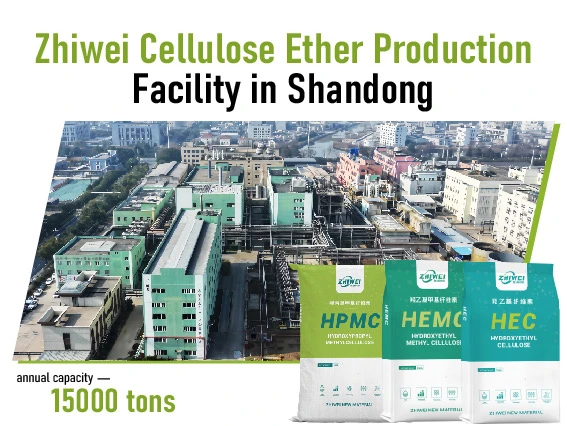
We are Zhiwei (Jinan) New Materials Co., Ltd., a manufacturer of cellulose ethers based in Shandong, China. We started in 2017 and now have an annual production capacity of 15,000 tons.
Our factory uses refined cotton from Xinjiang as raw material. Xinjiang cotton is known for its high alpha-cellulose content, which translates into better product purity and performance. We hold several patents and provincial-level science and technology awards for our cellulose ether products.
We produce HEC, HEMC, HPMC, RDP, and PCE at our facility. All products go through strict quality control before shipment. Every batch comes with a Certificate of Analysis, or COA, that shows viscosity, moisture, ash content, and other key parameters.
We have experience exporting to the Middle East, Southeast Asia, South America, and other regions. Our team understands the documentation and logistics requirements for international shipping. We can handle FOB, CIF, and other delivery terms based on your preference.
If you are looking for a reliable HEMC supplier, we welcome you to request samples. Test our product in your own lab and see the results for yourself. You can reach us at info@zhiweichem.com or call +86 183 6616 3707. Visit zhiweichem.com for more information about our product range.
Frequently Asked Questions
Is HEMC the Same as MHEC?
Yes. HEMC, or hydroxyethyl methyl cellulose, and MHEC, or methyl hydroxyethyl cellulose, are two names for the same product. Different regions and industries use one name or the other. In practice, they are interchangeable.
What Is the CAS Number of HEMC?
The CAS number is 9032-42-2. You can use this number to search chemical databases and supplier catalogs for the exact product.
Can HEMC Be Used in High-Temperature Environments?
Yes. One of the main advantages of HEMC is that it does not gel at high temperatures. This makes it suitable for exterior applications and regions with hot climates. HPMC, on the other hand, can form a gel at 60–90°C.
What Viscosity Grade Should I Use for Tile Adhesive?
A medium viscosity grade in the range of 40,000 to 60,000 mPa·s is a common starting point for tile adhesives. The best grade depends on your specific formulation and the type of tiles you are installing. We recommend testing a few grades in your lab before making a decision.
How Can I Get Samples?
You can contact us by email at info@zhiweichem.com or by phone at +86 183 6616 3707. Tell us your application and the viscosity range you need. We will arrange sample delivery. You only pay for the shipping cost.
Conclusion
HEMC is a versatile and reliable cellulose ether for construction materials. It offers excellent water retention, long open time, and strong thermal stability. These properties make it a preferred choice for tile adhesives, wall putty, renders, and exterior insulation systems.
As a HEMC manufacturer in China, we are ready to support your business with quality products, competitive pricing, and export experience. Send us an inquiry at info@zhiweichem.com and let us know what you need.