
Introduction
If you are sourcing hydroxypropyl methylcellulose for your business, China is likely at the top of your list. China produces over 65% of the world’s HPMC and accounts for nearly 48% of global exports. The numbers speak for themselves — Chinese HPMC suppliers offer competitive pricing, large production capacity, and a wide range of viscosity grades for construction, pharmaceuticals, food, and industrial applications.
But who exactly are these suppliers? Where are they located? And how do you pick the right one for your needs?
This article answers those questions. We walk through the key production regions in China, profile the top HPMC suppliers, and share practical tips on what to look for when choosing a Chinese hydroxypropyl methylcellulose supplier.
Why China Dominates the Global HPMC Supply
China’s position in the HPMC market did not happen by accident. Several factors drive this dominance:
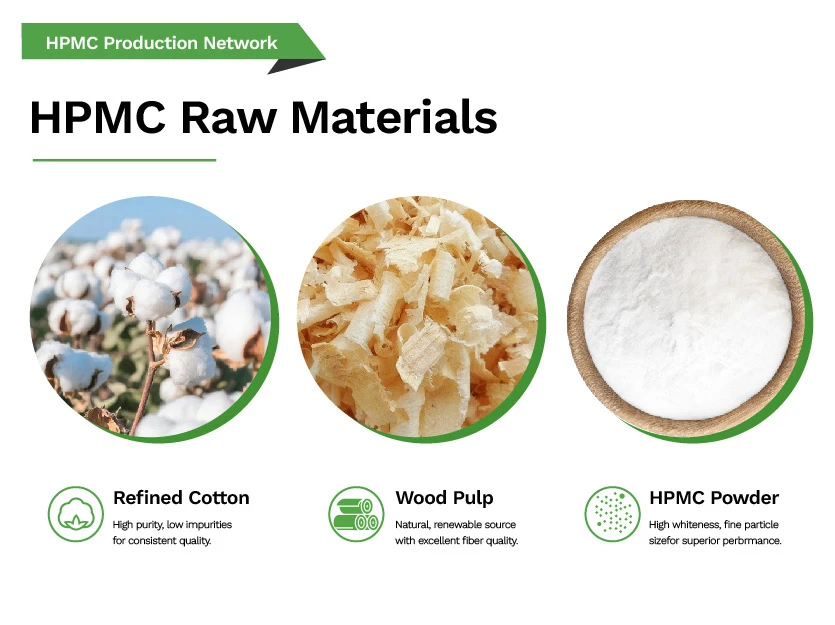
Raw material access. China has abundant supplies of refined cotton and wood pulp — the primary raw materials for cellulose ether production. This keeps input costs low and supply steady.
Scale and vertical integration. Major Chinese HPMC producers operate vertically integrated facilities. They handle everything from raw material processing to final packaging under one roof. This reduces costs and improves quality control.
Cost advantage. Construction projects that use Chinese HPMC report 12–18% material cost savings compared to alternatives. For distributors and importers, this margin matters a lot.
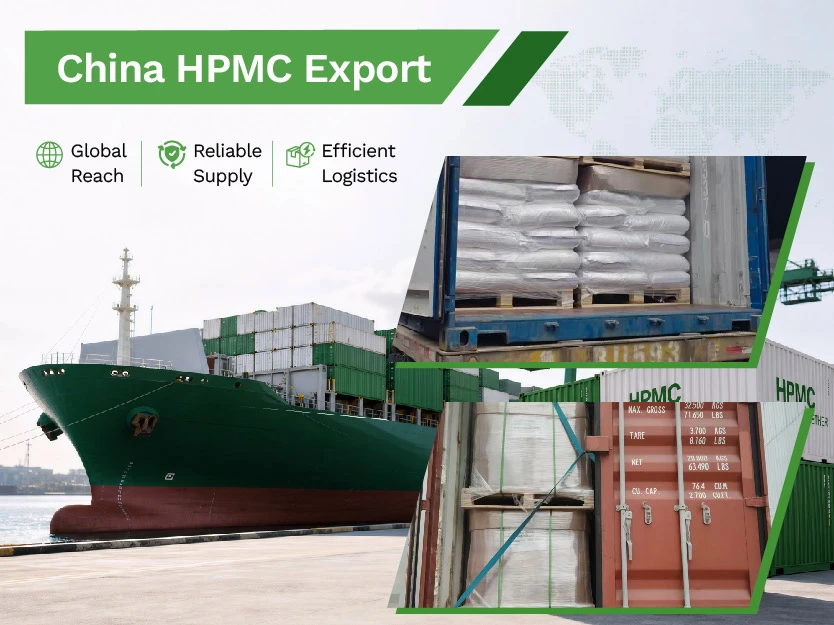
Export infrastructure. Chinese HPMC manufacturers have built strong export networks over the past two decades. They ship to Asia, the Middle East, Africa, Europe, and the Americas. Many suppliers offer FOB, CIF, and door-to-door delivery options.
Growing R&D investment. Leading Chinese manufacturers invest an average of 8.5% of revenue into R&D. They are developing new grades like low-dusting surface-treated HPMC, salinity-resistant formulations, and thermo-reversible pharmaceutical grades.
China’s HPMC exports have grown at a CAGR of 8.2% since 2018. This trend shows no sign of slowing down as global demand for construction-grade and specialty HPMC continues to rise.
Major HPMC Production Hubs in China
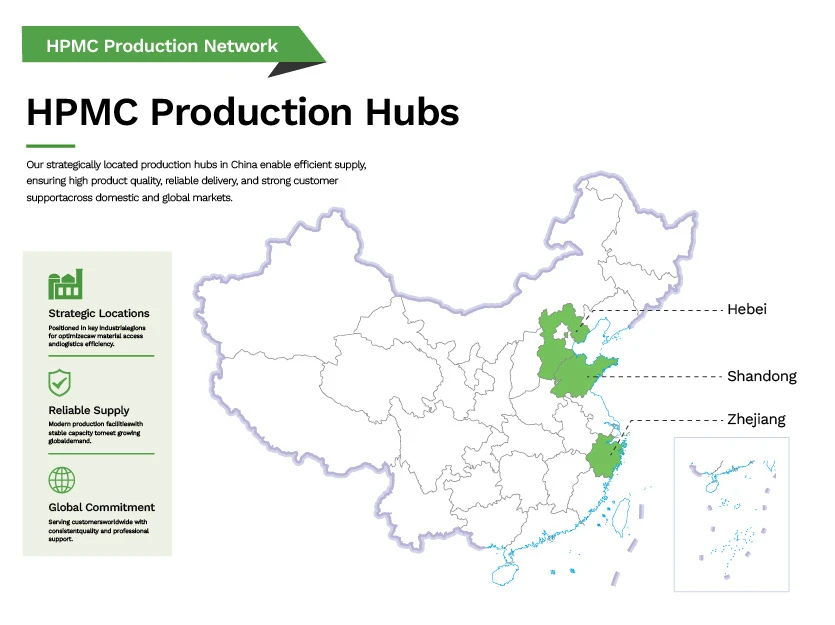
China’s HPMC industry is concentrated in three main provinces. Each region has its own strengths and characteristics.
Shandong Province
Shandong is the largest HPMC production base in China. The province is home to several major manufacturers with combined annual capacity exceeding 150,000 metric tons.
Shandong’s advantages include:
- Proximity to Qingdao port, one of China’s busiest export hubs
- A well-developed chemical industry supply chain
- Access to quality cotton linter pulp from northern China
- A large pool of experienced chemical engineers and technicians
The biggest HPMC producer in China, Shandong Head Co., Ltd., is based here. Many mid-size and specialty manufacturers also operate in the Jinan and Zibo areas.
Hebei Province
Hebei is the second-largest HPMC production cluster. Manufacturers in this province focus heavily on construction-grade HPMC for domestic and export markets.
Key characteristics of Hebei suppliers:
- Strong focus on construction applications — tile adhesives, wall putty, cement mortars
- Competitive pricing for bulk orders
- Vertically integrated production from raw pulp processing
- Growing investment in pharmaceutical-grade HPMC
Hebei’s proximity to Tianjin port gives its manufacturers efficient export logistics to Northeast Asia, the Middle East, and Africa.
Zhejiang Province
Zhejiang represents a smaller but growing HPMC production hub. Manufacturers here tend to focus on specialty grades and export-oriented business models.
What sets Zhejiang suppliers apart:
- Emphasis on higher-value specialty grades
- Strong export orientation with established international partnerships
- Proximity to Ningbo and Shanghai ports for global shipping
- Focus on quality certifications and compliance with international standards
Zhejiang-based manufacturers often serve customers who need specific HPMC formulations for niche applications in coatings, personal care, and pharmaceuticals.
Top HPMC Suppliers in China
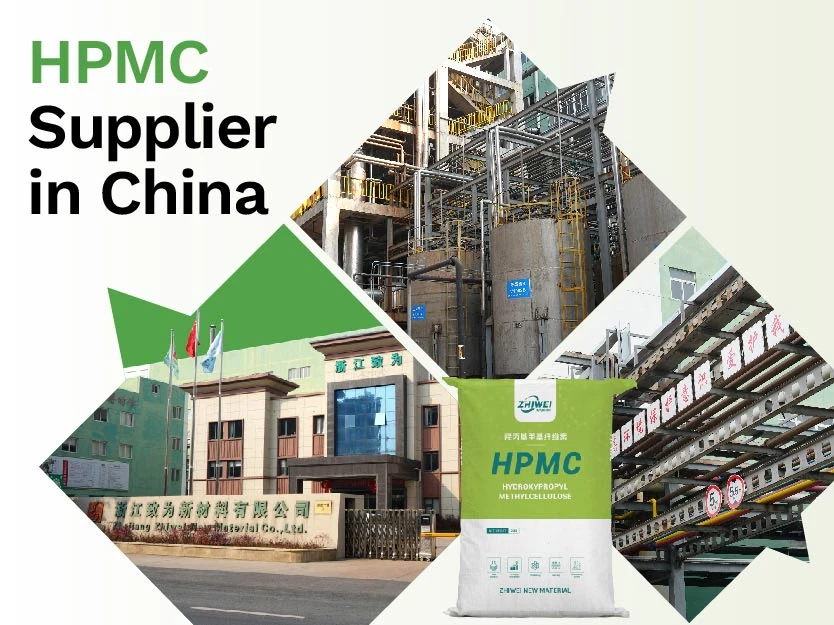
Below are five of the most notable hydroxypropyl methylcellulose suppliers in China. This is not a ranking — each supplier has its own strengths depending on what you need.
Shandong Head Co., Ltd.
Shandong Head is China’s largest cellulose ether manufacturer. Based in Jinan, Shandong Head operates with an annual production capacity of 75,000 metric tons across two production bases.
Shandong Head is publicly listed on the Shanghai Stock Exchange. Their HPMC product line covers viscosity grades from 400 to 200,000 CPS, serving construction, pharmaceutical, and food industries. They export to the Americas, Europe, Africa, and Australia.
Key facts:
- Location: Jinan, Shandong
- Annual capacity: 75,000 MT
- Certifications: ISO 9001, ISO 14001
- Main markets: Global — Americas, Europe, Africa, Australia
- Strengths: Largest scale, broad product range, public company transparency
LANDU Chemical
LANDU Chemical operates three HPMC factories with a combined annual production capacity of 25,000 metric tons. LANDU is one of the fastest-growing cellulose ether suppliers in China.
LANDU focuses on construction-grade HPMC for tile adhesives, self-leveling compounds, EIFS systems, and renders. They also produce HEMC and RDP as complementary products for the construction sector.
Key facts:
- Location: Shandong Province
- Annual capacity: 25,000 MT
- Certifications: ISO 9001
- Main markets: Construction sector globally
- Strengths: Large capacity, multi-factory operations, fast delivery
Kima Chemical Co., Ltd.
Kima Chemical is a well-known cellulose ether manufacturer based in Zibo, Shandong. In 2020, Kima invested 55 million USD in a new production base in the Bohai New District with an annual capacity of 27,000 metric tons of MC (HPMC/MHEC).
Kima produces HPMC for construction, pharmaceuticals, food, and daily chemical applications. Their new facility covers 68,000 square meters and features modern production equipment and quality control systems.
Key facts:
- Location: Zibo, Shandong
- Annual capacity: 27,000 MT
- Certifications: ISO 9001
- Main markets: Construction, pharma, food, daily chemicals
- Strengths: Modern facility, multi-grade production, active online presence
Zhiwei (Jinan) New Materials Co., Ltd.
Our company, Zhiwei (Jinan) New Materials Co., Ltd., is a specialized cellulose ether manufacturer based in Jinan, China. Our production facility, Zhejiang Zhiwei New Materials, was established in 2017 with an annual capacity of 15,000 metric tons.
We produce HPMC, HEMC, HEC, RDP, and PCE for the global construction and building materials market. Our HPMC grades are designed for tile adhesives, cement-based mortars, self-leveling compounds, wall putty, and exterior insulation finishing systems (EIFS).
What makes us different is our export-first approach. We built our business around serving international distributors and importers, and we understand what overseas buyers need — consistent quality, clear documentation, flexible packaging, and responsive communication.
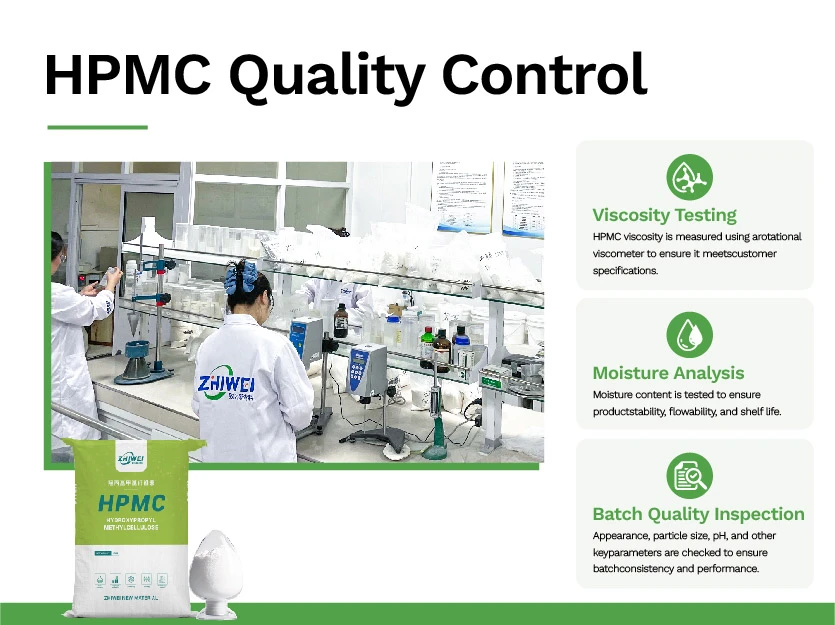
Every batch of our HPMC goes through strict quality control, and we provide full COA documentation with each shipment. We also offer OEM services and custom viscosity grades for customers who need specific formulations for their local markets.
Our products are certified to ISO standards, and we export to over 30 countries across Asia, the Middle East, Africa, and South America.
Key facts:
- Location: Jinan, China (Factory in Zhejiang)
- Annual capacity: 15,000 MT
- Products: HPMC, HEMC, HEC, RDP, PCE
- Main markets: Global construction and building materials
- Strengths: Export focus, OEM services, custom grades, responsive support
MATECEL
MATECEL is one of China’s largest cellulose ether producers by export volume. They ship over 25,000 metric tons of HPMC annually to markets in Asia, Africa, Europe, and Latin America.
MATECEL focuses on construction-grade HPMC for dry-mix mortars and building materials. They hold ISO 9001 certification and have built a reputation for consistent quality at competitive prices.
Key facts:
- Location: China
- Annual exports: 25,000+ MT
- Certifications: ISO 9001
- Main markets: Asia, Africa, Europe, Latin America
- Strengths: High export volume, competitive pricing, broad geographic reach
What to Look for in a Chinese HPMC Supplier
Not all Chinese HPMC suppliers are the same. Here are the key factors to evaluate before you place an order:
1. Production capacity and lead time
Match the supplier’s capacity to your order volume. If you import 500 tons per year, a manufacturer with 15,000 MT annual capacity can handle your orders smoothly. If you need 5,000 tons, look for larger producers with 50,000 MT or more. Always ask about typical lead times before signing a contract.
2. Quality consistency
Request COA samples from at least three different production batches. Compare viscosity, moisture content, ash content, and substitution levels. Consistent numbers across batches mean reliable quality control.
3. Certifications
For construction-grade HPMC, ISO 9001 is the baseline. For pharmaceutical or food applications, check for GMP, USP, EP, or Halal certifications as needed. Do not take certifications at face value — ask for copies and verify expiry dates.
4. Export experience and documentation
A supplier who regularly exports to your region knows the documentation requirements, shipping routes, and customs procedures. This saves you time and avoids costly mistakes. Ask for references from customers in your market.
5. Technical support and custom grades
Some applications need specific HPMC formulations. If you work with tile adhesives in hot climates, you may need HPMC with higher heat resistance. A supplier who offers technical support and can develop custom grades gives you a real edge.
6. Communication and responsiveness
This is easy to overlook but critical in practice. When you have a quality issue or need a rush order, you want a supplier who responds within hours, not days. Test their responsiveness during the inquiry stage — it tells you a lot about what to expect long-term.
Conclusion
China is the world’s largest source of hydroxypropyl methylcellulose, and for good reason. The country has the raw materials, the production scale, the export infrastructure, and the growing technical capabilities to serve global buyers.
Among the many hydroxypropyl methylcellulose suppliers in China, each has its own strengths. Shandong Head and LANDU lead on production volume. Kima Chemical offers modern facilities and multi-grade production. MATECEL excels in export reach.
We at Zhiwei focus on what matters most to international buyers — consistent export-grade quality, flexible OEM services, custom formulations, and fast, clear communication. If you are looking for a Chinese HPMC supplier who treats your business as a priority, reach out to us. We are ready to send samples, discuss specs, and support your next order.