
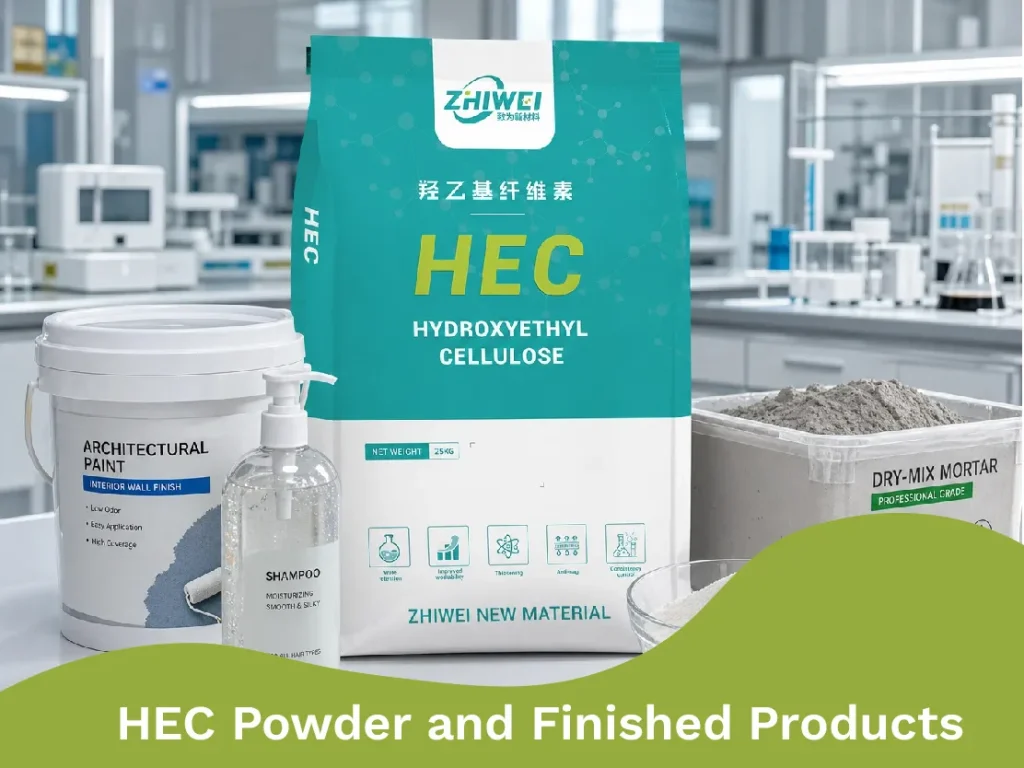
Introduction
If you work in paints, cosmetics, construction, or pharmaceuticals, you have probably come across HEC hydroxyethyl cellulose on an ingredient list or a technical data sheet. It shows up everywhere. But what exactly does it do in each of these industries? And why do formulators keep choosing HEC over other thickeners?
Hydroxyethyl cellulose (HEC) is a non-ionic, water-soluble cellulose ether. It dissolves in both cold and hot water, thickens efficiently at low concentrations, and plays well with other ingredients. These basic traits make it useful across a wide range of products — from the shampoo in your shower to the paint on your walls to the drilling fluid in an oil well.
This article breaks down what HEC hydroxyethyl cellulose is used for in each major industry. We explain how it works, why it gets chosen over alternatives, and which viscosity grades match which applications. Whether you are a formulator, a procurement manager, or a distributor, this guide helps you understand HEC applications and select the right grade for your needs.
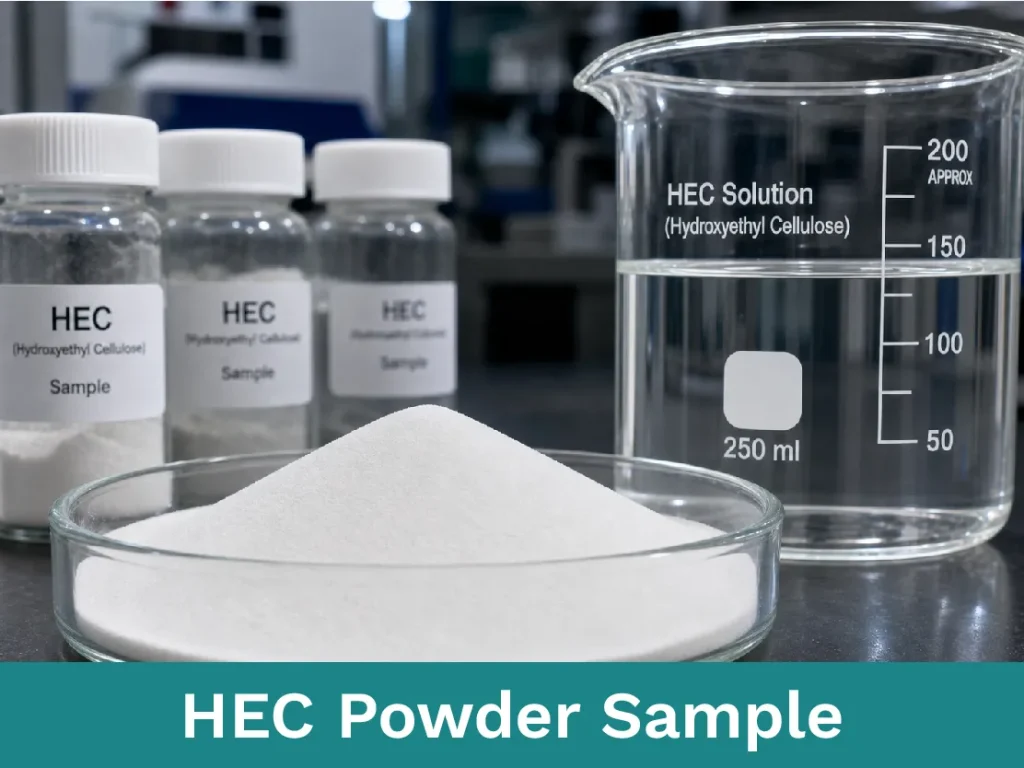
What Makes HEC So Versatile?
Before we dive into specific applications, it helps to understand why HEC works in so many different products. The answer comes down to five core properties.
Thickening efficiency. HEC increases viscosity at low dosages. Most applications use between 0.1% and 2% HEC by weight to reach the target consistency. This efficiency keeps formulation costs down and leaves room for other ingredients.
Non-ionic compatibility. HEC carries no electrical charge in solution. It does not react with salts, surfactants, or pigments. This means it works in complex formulations — like paint with dispersants and defoamers, or shampoo with anionic surfactants — without causing precipitation or instability.
Clarity in solution. HEC dissolves to form clear, colorless solutions. This matters a lot in cosmetics and personal care, where consumers expect transparent gels and lotions. It also matters in clear coatings and pharmaceutical eye drops.
Pseudoplastic behavior. HEC solutions thin under shear (when you stir, pump, or spread them) and thicken again when the shear stops. This is called pseudoplasticity or shear thinning. It makes HEC-based products easy to apply but stable at rest. Think of paint that spreads smoothly under a roller but does not sag on vertical walls.
Water retention. HEC holds water in formulations. In construction materials, this prevents cement from drying too fast and cracking. In cosmetics, it keeps skin hydrated. In oilfield fluids, it helps control fluid loss.
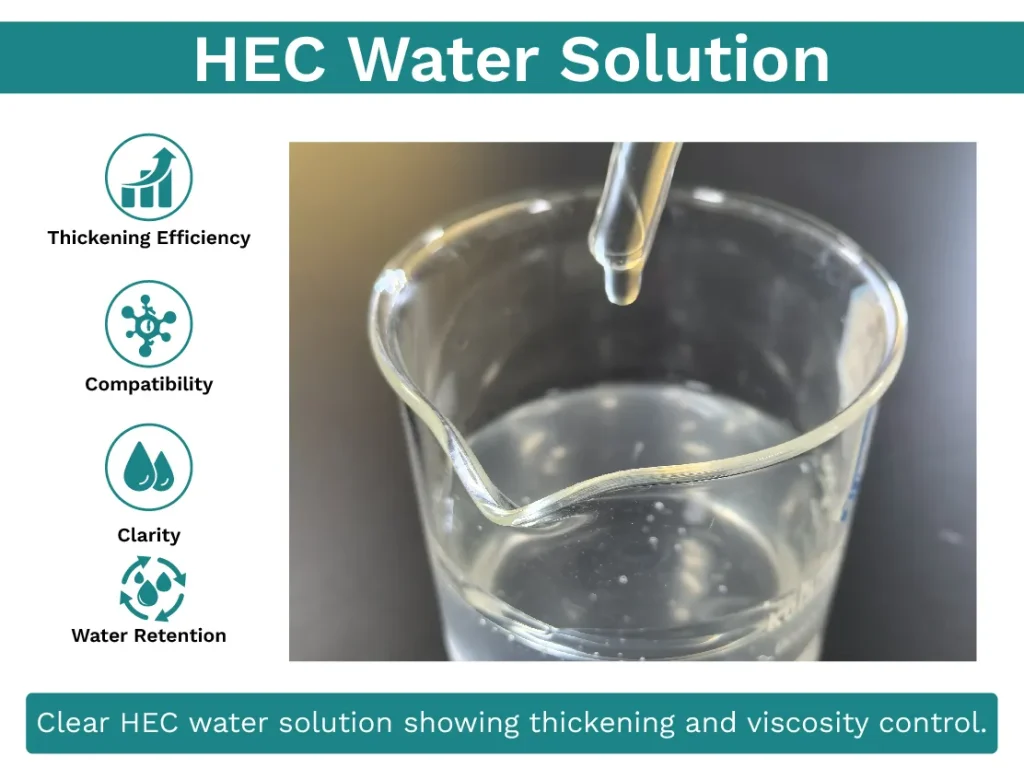
These five properties show up in every application below. The difference is how each industry prioritizes them.
HEC in Paints and Coatings
The paints and coatings industry is one of the largest consumers of HEC hydroxyethyl cellulose. Water-based architectural paints — both interior and exterior — rely on HEC as a primary thickener and rheology modifier.

What HEC does in paint:
- Thickens the formulation. HEC increases the viscosity of water-based paints so they do not drip or splatter during application. Formulators typically use mid-viscosity HEC grades (around 30,000 to 50,000 mPa·s) for standard architectural paints.
- Controls flow and leveling. HEC gives paint the right balance between flow (spreading evenly) and sag resistance (staying on vertical surfaces). This balance is critical for a smooth finish without brush marks or runs.
- Stabilizes pigment dispersion. HEC keeps pigments and fillers suspended in the paint. Without a proper thickener, heavy pigments settle at the bottom of the can during storage, and the paint loses uniformity.
- Improves film formation. HEC helps the paint form a continuous, even film as it dries. This reduces defects like cracking, blistering, or uneven gloss.
Why HEC over other thickeners? Paint formulators often choose HEC because it provides consistent viscosity, it is compatible with a wide range of co-additives, and it does not affect color or gloss. Some paints use associative thickeners (like HEUR) alongside HEC for enhanced flow, but HEC remains the backbone thickener in most water-based systems.
Our coatings-grade HEC is formulated to deliver reliable thickening and stable viscosity across production batches. We test every lot for viscosity consistency, moisture content, and pH to ensure your paint formulations perform the same way every time.
HEC in Personal Care and Cosmetics
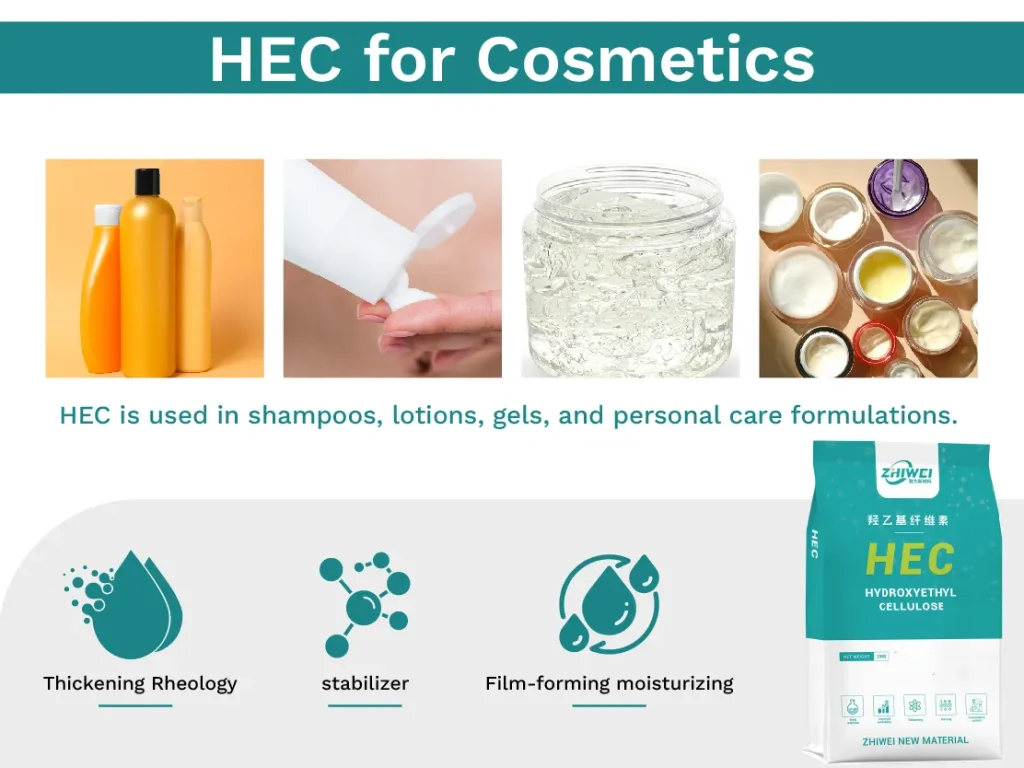
The personal care and cosmetics industry depends heavily on HEC hydroxyethyl cellulose as a thickener, stabilizer, and texture enhancer. You will find HEC in shampoos, conditioners, body washes, lotions, creams, gels, and facial serums.
What HEC does in personal care:
- Thickens shampoos and body washes. HEC gives liquid products a pleasant, creamy consistency that consumers expect. It works well with anionic and amphoteric surfactants, which are common in cleansing products.
- Stabilizes emulsions in creams and lotions. Many creams and lotions are oil-in-water emulsions. HEC thickens the water phase and prevents the oil and water phases from separating over time.
- Creates clear gels. HEC dissolves to form clear solutions, making it ideal for transparent hair gels, aloe vera gels, and facial serums. Consumers associate clarity with purity and quality.
- Improves skin feel. HEC-based formulations spread smoothly and absorb without a sticky or greasy residue. This is important for daily-use products like moisturizers and sunscreens.
- Enhances foam stability. In shampoos and cleansers, HEC helps foam last longer and feel denser, which consumers perceive as a sign of effective cleaning.
Why HEC over other thickeners in cosmetics? HEC is non-ionic, so it does not interfere with charged active ingredients like cationic conditioners or anionic surfactants. It is also gentle and well-tolerated by sensitive skin. Carbomer is another common thickener in cosmetics, but it requires neutralization (adjusting pH) to thicken, while HEC thickens at any pH within its stable range. This simplicity makes HEC easier to formulate with.
Our personal care-grade HEC offers smooth texture, clear solutions, and consistent performance. We can adjust particle size and viscosity to match your specific formulation requirements.
HEC in Construction Materials
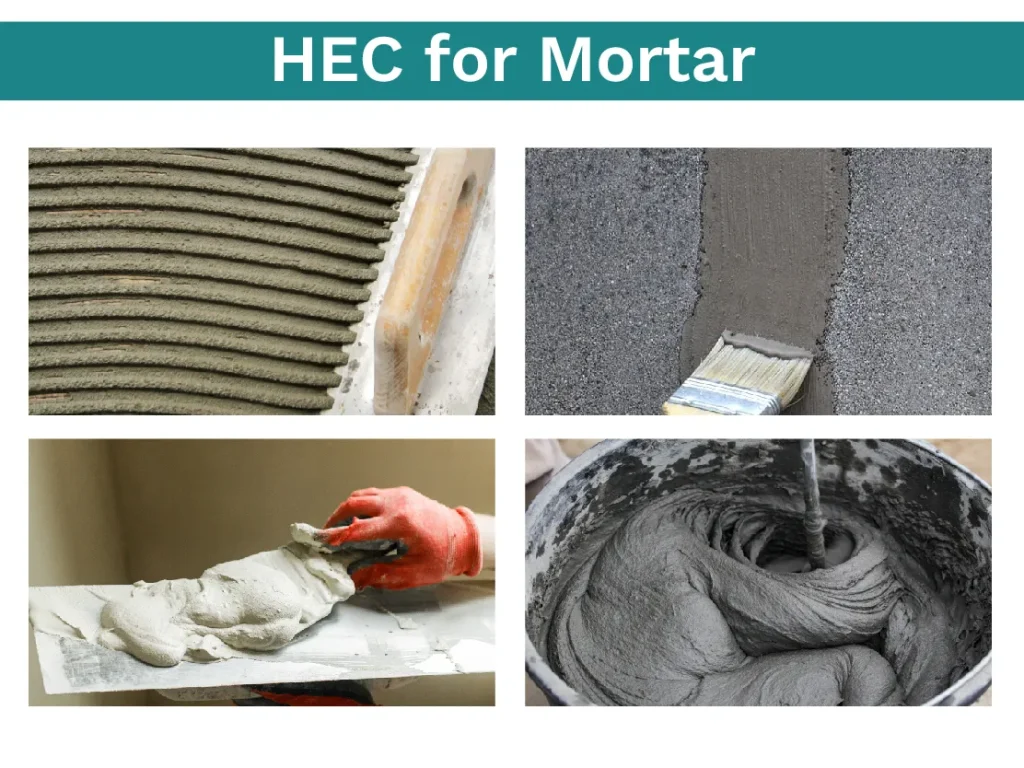
In construction, HEC hydroxyethyl cellulose serves as a water retention agent and thickener in cement-based and gypsum-based products. It plays a different role here than in paints or cosmetics — the focus is on keeping water in the mix long enough for proper curing.
What HEC does in construction:
- Retains water in cement mortars. When you apply cement mortar to a wall or floor, the substrate can suck water out of the mix too quickly. This causes weak bonding, cracking, and poor strength development. HEC holds water in the mortar, giving cement enough time to hydrate properly. The result is stronger adhesion and more durable finishes.
- Improves workability in tile adhesives. Tile adhesives need to stay workable long enough for installers to adjust tile positions. HEC extends the open time and improves the slip resistance of tile adhesives, so tiles stay in place without sliding.
- Enhances spreadability in wall putty and renders. HEC makes wall putty and renders smoother and easier to spread. This translates to faster application and a more even surface.
- Controls flow in self-leveling compounds. Self-leveling floor compounds need to flow enough to create a flat surface but not so much that they run off edges or segregate. HEC provides the right viscosity balance.
Why HEC over HPMC in construction? Both HEC and HPMC are used in construction, but they serve slightly different purposes. HPMC (hydroxypropyl methylcellulose) is more common overall in cement-based products because it offers thermal gelation — it thickens as temperature rises, which helps in hot climates. HEC, on the other hand, does not gel with heat. It provides more consistent viscosity across temperature changes. Some formulators prefer HEC for applications that need stable performance in varying temperatures, or they blend HEC with HPMC for combined benefits.
Our construction-grade HEC delivers strong water retention and consistent viscosity. We produce it in particle sizes that dissolve quickly in dry-mix formulations, and we can customize the viscosity grade to suit your local climate and application needs.
HEC in Oilfield Applications
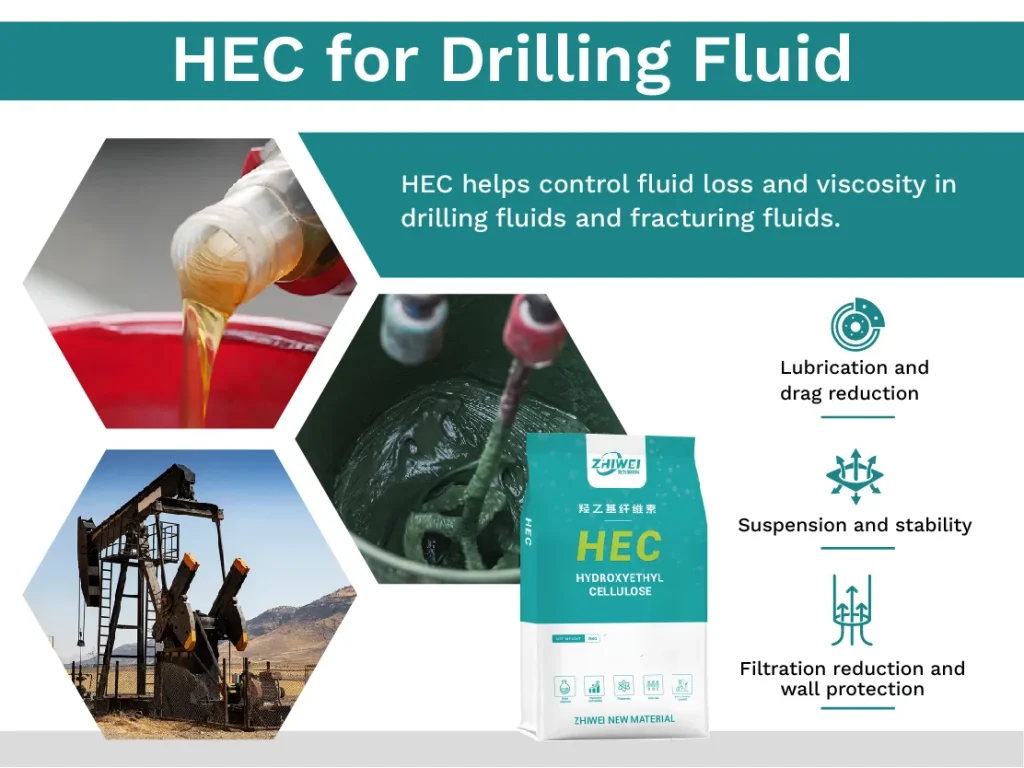
The oilfield industry uses HEC hydroxyethyl cellulose in drilling fluids, fracturing fluids, and workover operations. This is one of the most demanding application areas for HEC because of the extreme conditions involved.
What HEC does in oilfield fluids:
- Controls fluid loss in drilling fluids. When a drill bit penetrates rock formations, drilling fluid can seep into the rock instead of circulating back up. HEC forms a thin, low-permeability filter cake on the borehole wall that limits fluid loss. This keeps the drilling fluid volume stable and prevents formation damage.
- Viscosifies fracturing fluids. In hydraulic fracturing, fluids carry proppant (sand or ceramic beads) into fractures deep underground. HEC thickens the fracturing fluid so it can transport proppant effectively. After the fracture is created, HEC breaks down with a breaker chemical, allowing the fluid to flow back and leaving the proppant in place.
- Stabilizes the wellbore. HEC helps maintain borehole stability by controlling fluid loss and providing viscosity to suspend cuttings and weighting materials.
What makes oilfield HEC different? Oilfield applications require HEC grades that perform at high temperatures (above 150°C in deep wells) and high salinity (over 200,000 ppm total dissolved solids). Standard HEC grades lose viscosity under these conditions. Special oilfield-grade HEC is designed with higher substitution degrees and modified molecular structures to resist thermal and salt degradation.
HEC is preferred over some synthetic polymers in oilfield applications because it is biodegradable and leaves less residue in the formation. Environmental regulations in many regions favor biodegradable drilling fluid components, and HEC meets this requirement.
HEC in Pharmaceuticals
In pharmaceuticals, HEC hydroxyethyl cellulose is used as a binder, film-coating agent, viscosity enhancer, and controlled-release matrix. Pharmaceutical applications require the highest purity grades.
What HEC does in pharmaceuticals:
- Thickens eye drops and ophthalmic solutions. HEC increases the viscosity of eye drops so the liquid stays on the eye surface longer instead of draining away immediately. This improves drug absorption and patient comfort. HEC is chosen for eye drops because it forms clear solutions, it is non-ionic and gentle, and it does not irritate sensitive ocular tissues.
- Acts as a binder in tablets. HEC helps hold the active ingredient and excipients together during tablet compression. It ensures tablets maintain their shape and do not crumble.
- Provides controlled release in drug delivery. HEC forms a gel matrix when it contacts water. Drug molecules trapped in this matrix release slowly over time, providing sustained therapeutic effects. This is useful for once-daily or twice-daily medications that need steady drug levels in the bloodstream.
- Coats tablets for protection and appearance. HEC is used in film-coating formulations to give tablets a smooth, protective outer layer. This layer masks taste, protects the drug from moisture, and makes the tablet easier to swallow.
Pharmaceutical-grade requirements. HEC for pharmaceutical use must meet pharmacopeial standards (USP, EP, or JP). It needs to have low ethylene oxide residuals, consistent substitution degree, and tight viscosity tolerance. These requirements are stricter than for industrial or construction grades, and they come with higher costs.
Other Applications of HEC
Beyond the five major industries above, HEC hydroxyethyl cellulose appears in several other sectors:
Textile and paper. HEC works as a sizing agent and thickener in textile printing pastes and paper coatings. It improves the sharpness of printed patterns on fabric and helps paper coatings spread evenly.
Household cleaners. HEC thickens liquid detergents, dish soaps, and surface cleaners. It gives these products the right consistency for dispensing and spreading, and it stabilizes the formulation during shelf life.
Ceramics. In ceramic production, HEC acts as a binder and water retention agent in glazes and slips. It helps glazes adhere to ceramic surfaces before firing and prevents defects caused by uneven drying.
Adhesives. HEC thickens water-based adhesives and improves their open time. It is used in wallpaper paste, bookbinding adhesives, and packaging adhesives where water-based formulations are preferred.
3D printing. A growing application for HEC is in 3D printing pastes and bio-inks. HEC provides the right viscosity and shear-thinning behavior for extrusion-based printing, and it is biocompatible for biomedical applications.
HEC Viscosity Grades and Application Guide
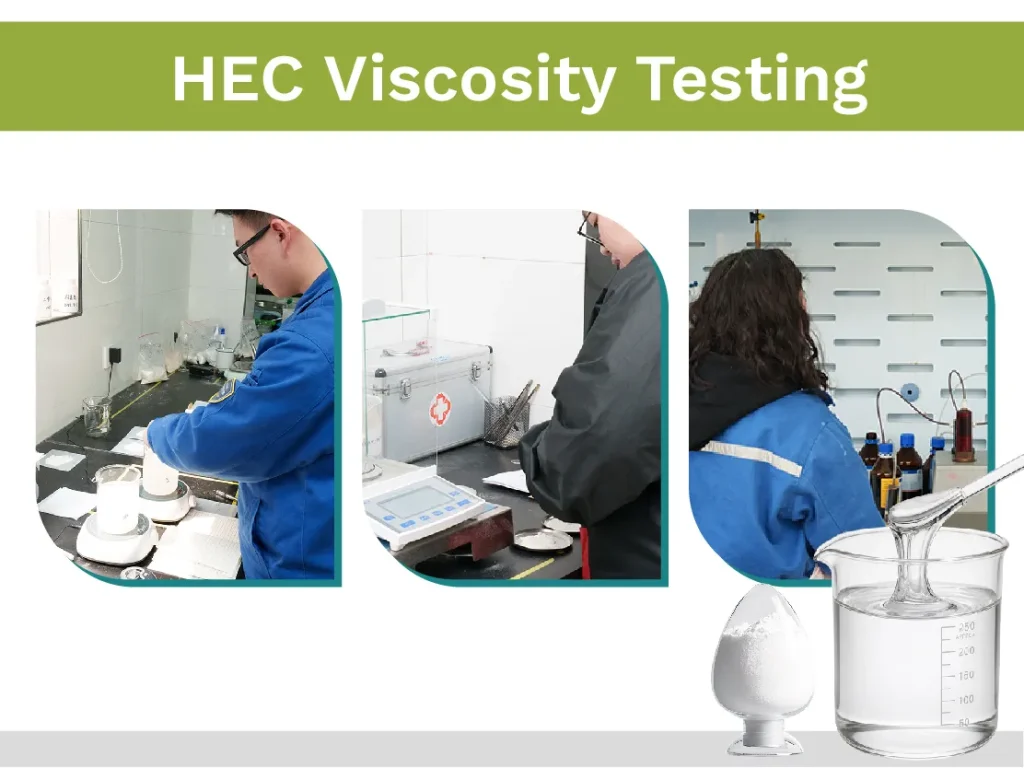
Different applications need different viscosity grades of HEC. Here is a practical guide to help you select the right grade:
| Application Area | Recommended Viscosity Grade (2% solution, 20°C) | Key Property Needed |
|---|---|---|
| Spray paints | Low (300–1,500 mPa·s) | Easy atomization, low viscosity under shear |
| Shampoos and body washes | Low to mid (1,500–6,000 mPa·s) | Smooth texture, clear solution |
| Lotions and creams | Mid (6,000–15,000 mPa·s) | Emulsion stability, pleasant skin feel |
| Architectural paints | Mid (15,000–50,000 mPa·s) | Sag resistance, leveling, pigment suspension |
| Tile adhesives and mortars | Mid to high (15,000–60,000 mPa·s) | Water retention, workability |
| Hair gels and thick creams | High (50,000–100,000 mPa·s) | Thick consistency, hold and structure |
| Oilfield drilling fluids | High (30,000–150,000 mPa·s) | Fluid loss control, salt and heat resistance |
| Pharmaceutical eye drops | Low to mid (1,000–8,000 mPa·s) | Clarity, gentleness, viscosity control |
This table gives you a starting point. Actual grade selection depends on your specific formulation, the other ingredients you use, and the performance targets you need to hit. We recommend testing multiple grades during formulation development to find the best fit.
Choosing the Right HEC for Your Application
With so many grades and applications, choosing the right HEC can feel overwhelming. Here are practical tips to guide your decision:
1. Start with your end product. What are you making? A paint, a shampoo, a mortar, or an eye drop? The end product determines the basic viscosity range and purity level you need.
2. Check compatibility. Make sure HEC works with your other ingredients. HEC is broadly compatible because it is non-ionic, but very high salt concentrations or certain cationic polymers can reduce its thickening efficiency. Run a compatibility test before committing to a grade.
3. Consider dissolution speed. If you manufacture dry-mix products like tile adhesive or wall putty, you need HEC that dissolves quickly when mixed with water on site. Surface-treated or fine-particle HEC grades dissolve faster. If you produce liquid products in a factory with mixing equipment, standard dissolution grades work fine.
4. Verify certifications. For pharmaceutical, food, or cosmetics applications, verify that your HEC supplier holds the right certifications — USP, EP, REACH, ISO, or others depending on your market and product category.
5. Request samples and test. Never commit to a bulk order without testing. Request samples from your shortlisted suppliers, run them in your formulation, and compare results for viscosity, clarity, stability, and batch consistency.
6. Ask about custom grades. Some suppliers, including us, can develop custom HEC grades for specific applications. If your formulation needs a viscosity or particle size that standard grades do not offer, a custom grade can save you time and improve your product performance.
Conclusion
So what is HEC hydroxyethyl cellulose used for? The short answer is: a lot. It thickens paints, stabilizes cosmetics, retains water in construction materials, controls fluid loss in oil wells, and delivers drugs in pharmaceuticals. Its versatility comes from a combination of efficient thickening, non-ionic compatibility, solution clarity, pseudoplastic behavior, and water retention.
The key to getting good results with HEC is choosing the right grade for your application. Low-viscosity grades work for sprays and eye drops. Mid-viscosity grades cover paints, shampoos, and lotions. High-viscosity grades handle thick gels, mortars, and oilfield fluids.
We at Zhiwei produce HEC grades for paints and coatings, construction materials, and personal care products. Our team can help you select the right viscosity grade, provide samples for testing, and develop custom formulations for your specific market. Contact us to discuss your HEC requirements.