
Introduction

Low temperature construction is difficult for cement-based materials. Cement hydration slows down when the temperature drops. The grout may set slowly, gain strength slowly, bleed water, or lose workability before it reaches the right position. For projects that need fast repair or early load-bearing capacity, this can delay the whole job.
Low temperature early strength cementitious grout is designed to solve this problem. It needs to keep good flow during placement. It also needs to build strength quickly under cold conditions. A good formula should balance early strength, fluidity, water retention, durability, and bonding performance. If one part is pushed too far, another part may suffer. For example, too much viscosity can reduce flow. Too much accelerator can shorten working time. Too much water can hurt final strength.
This guide explains how to design a practical low temperature early strength cementitious grout formula. It covers cement selection, aggregate grading, additive choice, mix ratio design, field use, and the role of Zhiwei cellulose ether products such as HPMC 100K, HPMC 200K, and HEMC 100H in construction dry-mix systems.
What Is Low Temperature Early Strength Cementitious Grout?
Low temperature early strength cementitious grout is a cement-based material used for grouting, repair, reinforcement, connection, and fast restoration work. It is made from cement, aggregate, water, and functional additives. Its main purpose is to keep workable flow and gain usable strength faster than ordinary cement grout in cold conditions.
This type of grout is often used when the project cannot wait for normal strength development. It may be used in winter construction, equipment foundation grouting, structural reinforcement, steel-to-concrete connections, bridge repair, building repair, runway repair, and high-performance concrete-related work.
A good grout should not only become hard quickly. It should also flow into the required space, fill gaps well, bond to the base material, and remain durable after curing. This is why formula design is important.
Basic Formula Structure
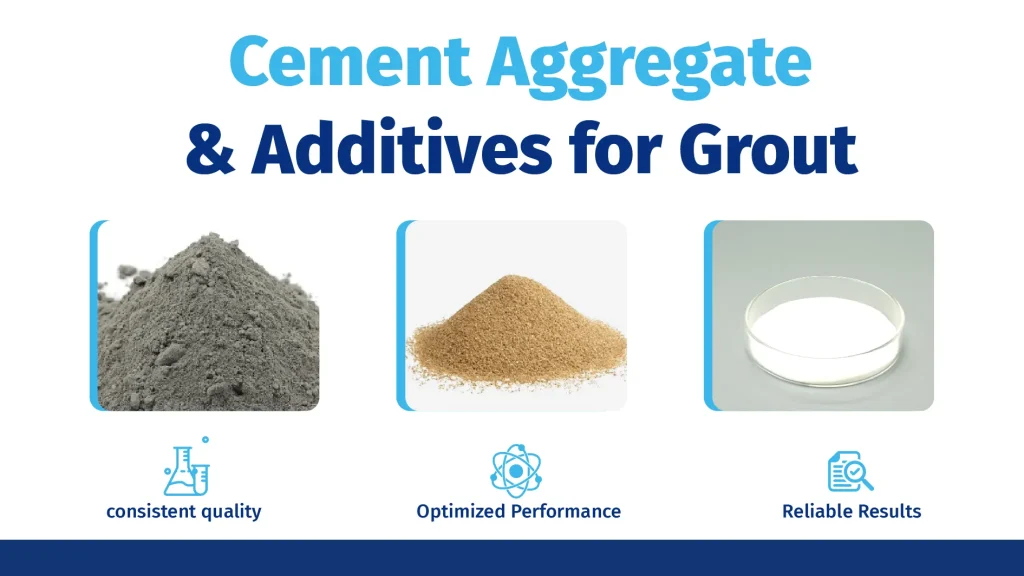
A low temperature early strength cementitious grout formula usually includes four main parts: cement, aggregate, additives, and water. Each part has a clear job.
| Component | Main Function | Formula Notes |
|---|---|---|
| Early strength cement | Provides early strength and final strength | Ordinary Portland cement or early strength Portland cement can be selected based on project needs |
| Aggregate | Improves volume stability and cost control | Hard, clean, well-graded sand or crushed stone is preferred |
| Early strength agent | Helps strength develop faster in low temperature | Dosage should be tested to avoid too short working time |
| Water reducer | Improves flow at lower water demand | Helps maintain strength while keeping good fluidity |
| Set controller | Adjusts setting time | Useful when early strength and working time need balance |
| Cellulose ether | Improves water retention, consistency, and workability | Zhiwei HPMC or HEMC grades can be screened based on flow and body requirements |
| Water | Starts hydration and controls workability | Water dosage should be controlled carefully |
As a starting design direction, the cement-to-aggregate ratio can often be considered around 1:1 to 1:2. The final ratio should be adjusted based on strength grade, flow target, aggregate grading, water demand, and construction conditions.
Cement Selection
Cement is the main strength source in the grout. For low temperature early strength grout, the cement should support fast hydration and reliable early strength. Early strength cement is often preferred because it can build strength faster than ordinary cement under the same curing condition.
Ordinary Portland cement can also be used in some formulas, but it may need stronger support from early strength agents and temperature control. Early strength Portland cement is often a better choice when the project needs faster demolding, faster loading, or fast repair.
The cement should also have stable quality. If cement strength, fineness, or setting behavior changes too much, the final grout performance will change. For factory-made dry mix grout, stable raw materials are important for repeatable production.
Aggregate Selection
Aggregate has a strong effect on flow, strength, shrinkage, and cost. For cementitious grout, the aggregate should be clean, hard, and well graded. Poor aggregate can reduce strength and make the grout hard to pump or pour.
The maximum particle size should be controlled based on the grouting gap and flow requirement. In many cementitious grouting systems, aggregate size should not be too large. A maximum particle size below 20 mm is a practical limit for many grout designs because it helps maintain flow and reduces blockage risk.
Fine aggregate grading also matters. If there is too much fine powder, the mix may need more water. If the grading is too coarse, the grout may segregate or bleed. A balanced grading curve helps the grout flow well and stay uniform.
Additive Design For Low Temperature Early Strength
Additives are important because cement alone may not give the required low temperature performance. The common additive system includes early strength agent, water reducer, set controller, and sometimes other performance modifiers.
The early strength agent helps the grout gain strength faster. This is useful in winter repair, equipment foundation work, and emergency maintenance. But the dosage must be controlled. If the reaction is too fast, the grout may lose working time before it is placed.
The water reducer improves fluidity without adding too much water. This is very important because extra water can reduce strength and increase bleeding. A good water reducer helps the grout keep high flow while protecting strength development.
A set controller may be needed when the formula becomes too fast. This is common in cold-weather early strength systems because the formula must balance two opposite needs: fast strength and enough working time.
Role Of Cellulose Ether In Cementitious Grout
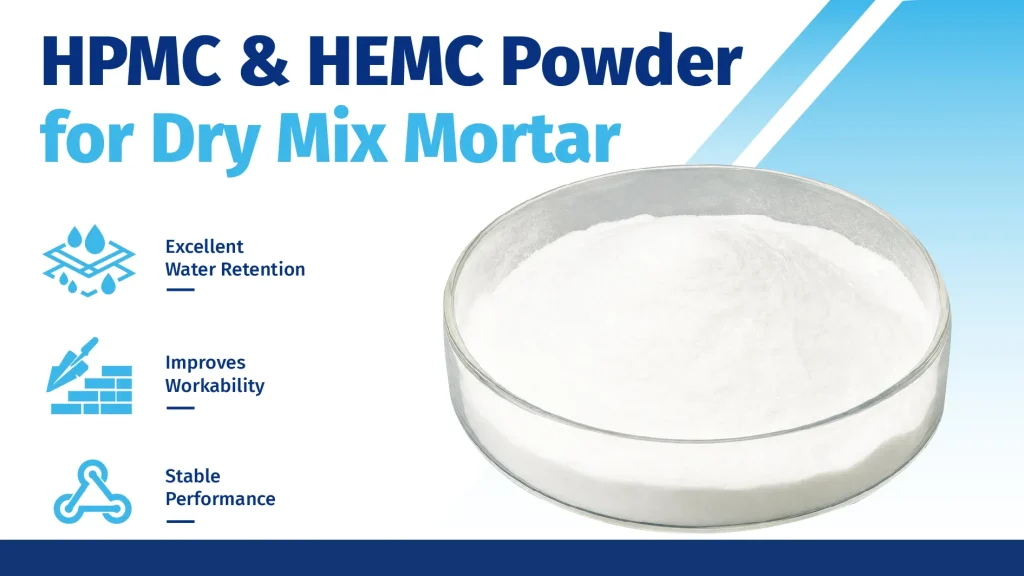
Cellulose ether is not the main early strength material. Its role is different. It helps control water retention, consistency, workability, and fresh-state stability. In cement-based grout, this can help reduce water loss, improve handling, and keep the mix more uniform during placement.
For dry-mix construction systems, Zhiwei supplies HPMC and HEMC products that can be screened for different performance targets. HPMC 100K is a high-viscosity hydroxypropyl methyl cellulose grade designed for construction systems that need stronger water retention, open time, and vertical stability. HPMC 200K is a very-high-viscosity grade for stronger water retention and application body. HEMC 100H is a high-viscosity hydroxyethyl methyl cellulose grade used when high water retention, body, and anti-sag performance are needed.
For high-flow grout, dosage control is very important. Too much cellulose ether can make the grout too thick and reduce fluidity. For this reason, the grade and dosage should be tested in the real formula. If the target is high flow, a lower-viscosity grade or a lower dosage may be more suitable. If the target is better body, less bleeding, and stronger wet stability, a higher-viscosity grade such as Zhiwei HPMC 100K, HPMC 200K, or HEMC 100H can be tested.
Performance Targets
A good low temperature early strength cementitious grout should meet several performance targets at the same time.
First, it should have low temperature early strength. This means the grout can still build useful strength when the site temperature is low. This is important for winter construction and fast repair.
Second, it should have high fluidity. Grout must flow into gaps and fill the space around steel parts, base plates, reinforcement areas, or repair zones. Poor flow can leave voids and reduce load transfer.
Third, it should have good compressive, flexural, and tensile performance. Compressive strength is important for load-bearing. Flexural and tensile performance help the repair area resist cracking and stress.
Fourth, it should have good durability. The grout may face moisture, temperature change, freeze-thaw cycles, vibration, and chemical exposure. Durable grout keeps its performance longer.
Fifth, it should bond well with steel and concrete. Good bonding improves the overall structural connection and helps transfer load more effectively.
Suggested Formula Development Process
Start with the required application. A grout for equipment foundation repair may need high flow and fast strength. A grout for structural reinforcement may need better bonding and durability. A grout for steel-to-concrete connection may need strong load transfer and stable filling performance.
Then choose the cement system. Use early strength cement when the project needs fast strength under cold conditions. If ordinary Portland cement is used, adjust the early strength agent and curing plan carefully.
Next, design the aggregate system. Use hard and well-graded aggregate. Keep the maximum particle size suitable for the grouting space. For narrow gaps, smaller aggregate is safer. For larger sections, a broader grading may improve volume stability.
Then select the additive package. Use a water reducer to keep flow while controlling water. Use an early strength agent to support strength development. Use a set controller if the formula loses working time too quickly. Add cellulose ether only after checking the flow target and stability needs.
Finally, test the formula at the real working temperature. Room-temperature test results are not enough for low temperature grout. Test flow, setting time, early strength, final strength, bleeding, segregation, and bonding under the expected site conditions.
Application Areas
Low temperature early strength cementitious grout can be used in civil engineering reinforcement. It can help fill structural gaps and improve bearing capacity in bridges, buildings, and other concrete structures.
It can also be used for steel structure and concrete component connection. In this use, the grout fills the space between steel parts and concrete. It helps transfer load and improves the connection effect.
Another important use is equipment foundation and runway emergency repair. These projects often need fast return to service. A grout with early strength and good flow can help shorten repair time.
It can also support high-performance concrete preparation. In this area, the grout system can improve strength, durability, and construction reliability when the formula is designed correctly.
How Zhiwei Supports Grout Formula Development
Zhiwei (Jinan) New Materials Co., Ltd. supplies cellulose ether products for construction, coatings, and daily chemical systems. For cementitious grout and dry-mix mortar work, Zhiwei can help customers screen suitable HPMC and HEMC grades based on water retention, viscosity, workability, and application body.
For grout formulas that need stronger water retention and stable wet structure, HPMC 100K, HPMC 200K, and HEMC 100H can be considered as test options. For formulas where high flow is the top priority, Zhiwei can help review whether a lower-viscosity grade or lower dosage is better.
The key is not to choose a product only by viscosity number. The final choice should depend on cement type, aggregate grading, water reducer, accelerator system, temperature, mixing method, and flow requirement. Zhiwei can support sample testing and grade comparison, so customers can find a practical balance between flow, water retention, early strength, and site handling.
Testing Checklist Before Bulk Use
Before using the grout in a real project, test the formula carefully.
Check flow immediately after mixing and after a short waiting time. This shows whether the grout can keep workability long enough for placement.
Check early strength at the required low temperature. If the grout is used in winter, test it under winter-like curing conditions.
Check bleeding and segregation. The grout should stay uniform and should not release too much water.
Check bonding performance when the grout is used for repair, reinforcement, or steel-to-concrete connection.
Check final strength and durability. Early strength is important, but the final structure must also remain stable over time.

Conclusion
Low temperature early strength cementitious grout must do several jobs at once. It should flow well, fill gaps, gain strength quickly in cold conditions, bond to the base material, and remain durable after curing. A strong formula starts with suitable early strength cement, clean graded aggregate, controlled water, and a balanced additive system.
Cellulose ether is a useful part of the formula when water retention, consistency, and fresh-state stability need improvement. Zhiwei products such as HPMC 100K, HPMC 200K, and HEMC 100H can be tested in construction grout and dry-mix systems when the formula needs stronger water retention and better handling. The best grade should always be chosen through real formula testing.
For low temperature grout projects, Zhiwei can help review your application, flow target, temperature condition, and construction method. Contact Zhiwei (Jinan) New Materials Co., Ltd. to request cellulose ether samples, technical information, and grade recommendations for your cementitious grout formula.