
Introduction
When you search for an HEC supplier in China, you will find dozens of results. Alibaba, Made-in-China, and Google return pages of companies claiming to manufacture hydroxyethyl cellulose. But here is the problem: most of them do not actually produce HEC. They are trading companies that buy from real factories and resell at a markup.
China has a large cellulose ether industry, but only a handful of companies operate their own HEC production lines. HEC manufacturing is technically demanding — it requires specialized equipment, precise reaction control, and consistent raw material quality. Not every cellulose ether factory can make it.
This article answers the question directly: who manufactures hydroxyethyl cellulose in China? We list the five companies that actually produce HEC at their own facilities, and we explain how to tell the difference between a real manufacturer and a trading company before you place an order.
Why Real HEC Manufacturers Matter
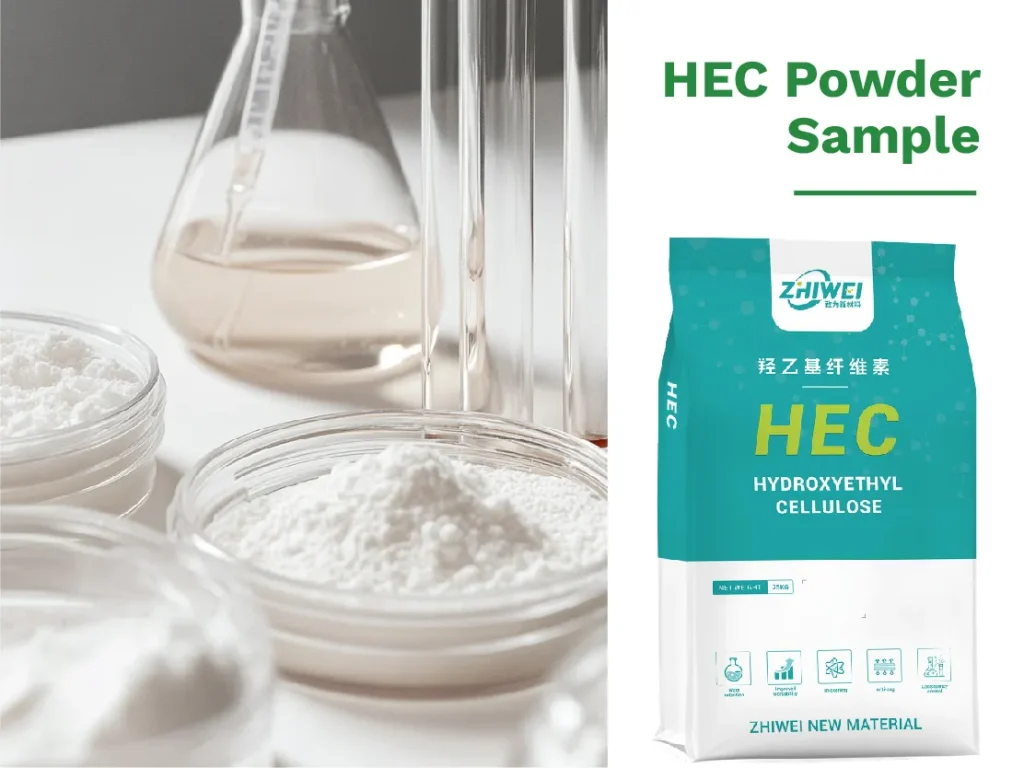
Working with a real HEC supplier instead of a trading company gives you several advantages:
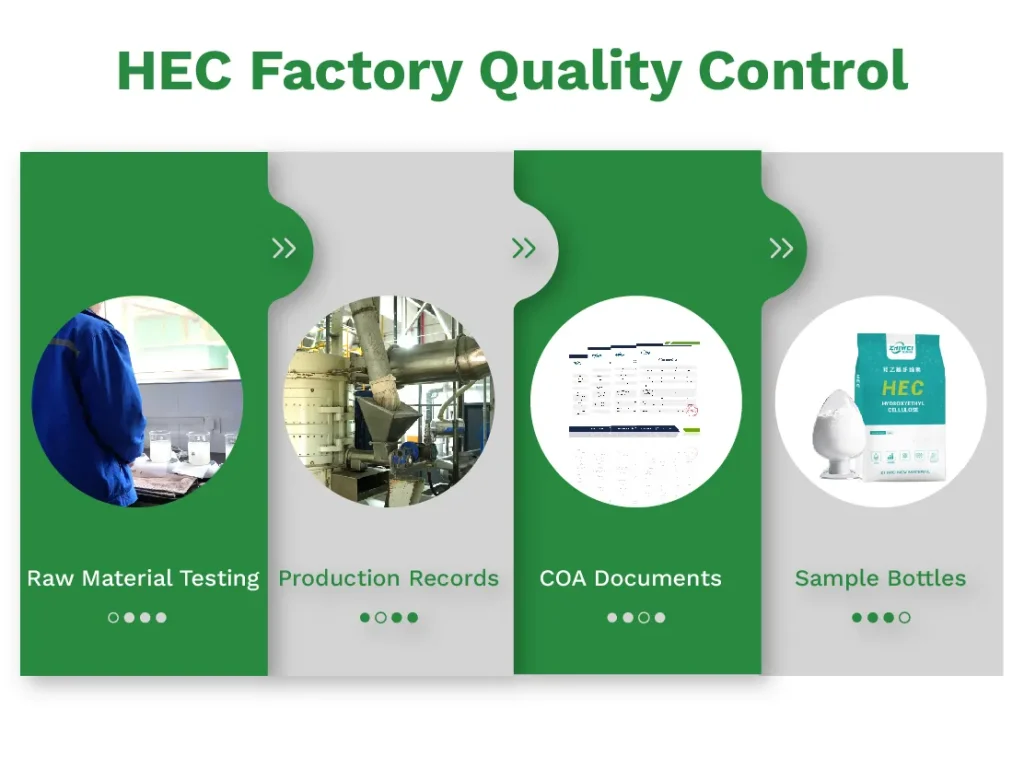
Quality control. A manufacturer tests raw materials before production and finished products before shipment. They control the entire process from cellulose to final powder. A trading company cannot guarantee what happens inside the factory because they do not run it.
Consistent pricing. Manufacturers set prices based on raw material costs and production capacity. Trading companies add their own margin, and that margin can fluctuate with market conditions. With a direct factory, you get more stable and transparent pricing.
Technical support. When you have a formulation problem or need a custom viscosity grade, a manufacturer can adjust the production process to meet your specs. A trading company can only relay your request to the factory and hope for the best.
Supply reliability. A real manufacturer knows their production schedule, inventory levels, and lead times. They can give you accurate delivery dates and prioritize your order when you need it fast. A trading company relies on the factory’s schedule, which they do not control.
After-sales accountability. If a shipment has quality issues, a manufacturer can investigate the root cause in their own lab and fix the problem. With a trading company, resolving quality complaints takes longer because they have to coordinate between you and the factory.
How to Identify a Real HEC Manufacturer
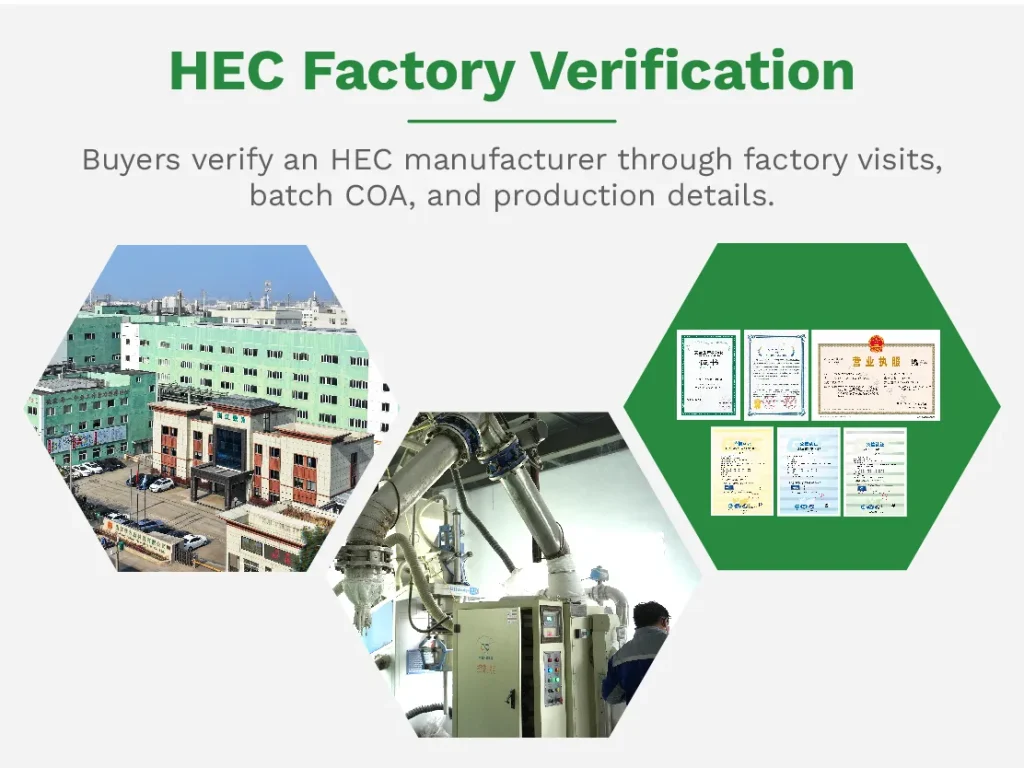
Before we introduce the five actual manufacturers, here are practical ways to check whether a company really produces HEC:
1. Ask for a factory visit or video call. A real manufacturer will welcome a visit or at least agree to a video tour of their production line. Trading companies will make excuses or offer to show you a warehouse instead of a factory.
2. Check their product range. HEC manufacturers typically produce a limited range of related cellulose ethers — HPMC, HEMC, CMC, or MC. Trading companies often list an impossibly wide range of unrelated chemicals, which is a sign they source from multiple factories.
3. Request a COA from a specific production batch. A manufacturer can provide a Certificate of Analysis tied to a real batch number. Trading companies sometimes supply generic COAs that lack batch-specific data.
4. Look for production equipment photos or technical details. Real manufacturers describe their production process, reactor sizes, and quality control equipment. Trading companies focus on product specifications and pricing but avoid production details.
5. Verify their business license. In China, a manufacturing license (生产型) and a trading license (贸易型) are different categories. A quick check on the company’s registration can reveal whether they are a factory or a trader.
The 5 Real HEC Manufacturers in China
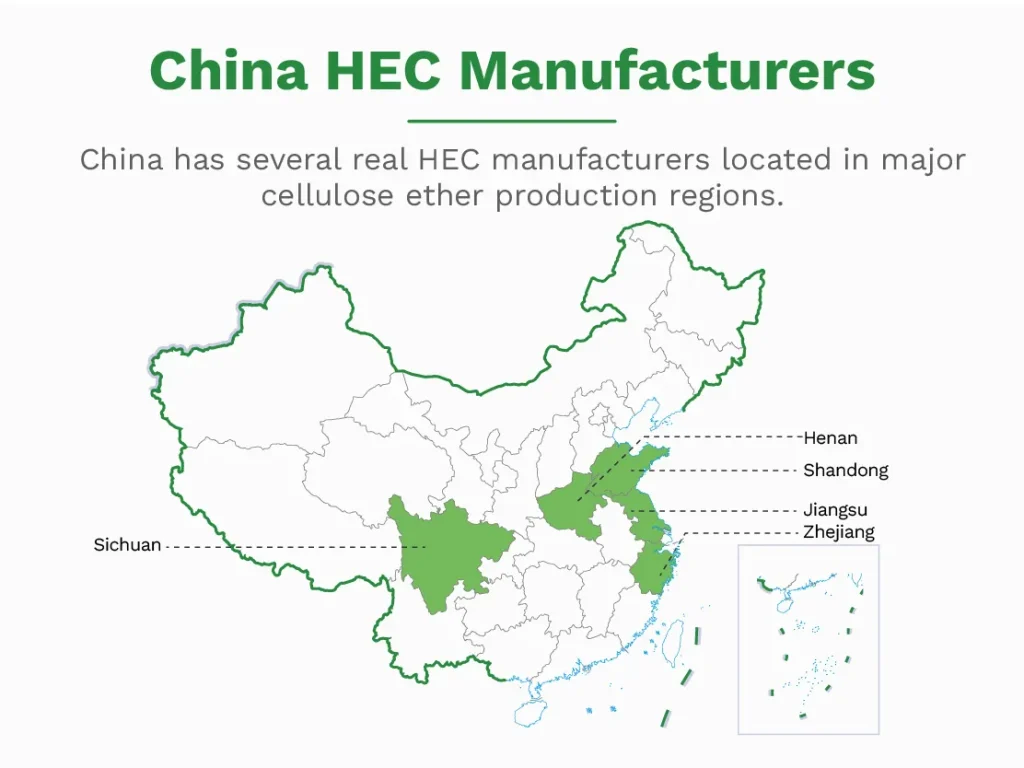
After researching the Chinese HEC market, these are the five companies that operate their own HEC production lines. Each one has a physical factory, production equipment, and a track record of manufacturing HEC.
1. Gaomi Yinying New Materials Co., Ltd. (银鹰新材)
Yinying is the largest HEC supplier in China by domestic market share. Based in Gaomi, Shandong Province, Yinying was established in 2011 as a subsidiary of Shandong Yinying Fibers. Their core product is HEC, and they hold a domestic market share of approximately 50% in the Chinese HEC market.
Yinying operates the Yunying (云鹰) brand cellulose ether production facility with an annual HEC capacity of around 15,000 metric tons. Their parent company supplies cotton linter pulp as raw material, giving Yinying a cost and quality advantage through vertical integration.
Their HEC viscosity range covers 150 to 6,000 mPa·s (2% solution, 25°C), serving mainly the coatings and paints industry. Major customers include Nippon Paint, SKSHU, and Valspar. Yinying also exports to Southeast Asia, South Asia, Australia, the United States, and South America.
Yinying is recognized as a National High-Tech Enterprise and a Shandong Province “Specialized and Sophisticated” Enterprise. They have applied for listing on China’s stock exchange and have disclosed detailed production and financial data.
Key facts:
- Location: Gaomi, Weifang, Shandong Province
- Brand: Yunying (云鹰)
- Annual HEC capacity: ~15,000 MT
- Main industries: Paints and coatings, daily chemicals, pharmaceuticals
- Strengths: Largest domestic HEC market share, vertically integrated raw materials, major paint brand customers
2. Shandong Heda Group Co., Ltd. (山东赫达)
Shandong Heda is China’s largest cellulose ether manufacturer by total capacity. Headquartered in Zibo, Shandong Province, Heda is a publicly listed company on the Shenzhen Stock Exchange. Their total cellulose ether capacity reaches 85,000 metric tons per year.
Heda entered the HEC market in 2023 by acquiring a controlling stake in Shandong Zhongfu Zhiwei New Materials, which was then renamed Zhongfu Heda. This acquisition added 10,000 metric tons of dedicated HEC production capacity to Heda’s portfolio. Before this move, Heda was known primarily for HPMC and HEMC. The HEC acquisition made them a more complete cellulose ether supplier.
Heda’s HEC grades target the construction, coatings, and personal care markets. As a public company, Heda offers transparency in financial reporting and production data that private companies do not always provide.
Key facts:
- Location: Zibo, Shandong Province
- Stock listing: Shenzhen Stock Exchange
- Total cellulose ether capacity: 85,000 MT/year
- HEC capacity: 10,000 MT/year (via Zhongfu Heda)
- Main industries: Construction, coatings, personal care
- Strengths: Largest total cellulose ether capacity in China, public company transparency, full product range (HPMC, HEMC, HEC)
3. Tianpu Chemical Co., Ltd. (北方天普)
Tianpu Chemical was the first company in China to achieve industrial-scale HEC production. Founded in 2005, Tianpu is affiliated with China North Industries Group and operates as a state-owned enterprise.
Tianpu runs two production bases — one in Luzhou, Sichuan Province and another in Zhangjiagang, Jiangsu Province. Their total cellulose ether capacity reaches 18,000 metric tons per year, with 5,000 metric tons dedicated to HEC production.
Tianpu has a notable connection to the global HEC industry. In 2007, they established a joint venture with Hercules (now Ashland) at their Zhangjiagang facility, which brought advanced production technology and quality standards. Although the joint venture structure has changed, Tianpu retained the technical expertise from that partnership.
Tianpu produces HEC, MC, HPMC, HEMC, CMC, and PAC. Their HEC grades are used in coatings, construction, and oilfield applications. They were the first Chinese company to supply HEC for domestic PVC suspension polymerization, which is one of the most demanding HEC applications.
Key facts:
- Location: Luzhou (Sichuan) and Zhangjiagang (Jiangsu)
- Total cellulose ether capacity: 18,000 MT/year
- HEC capacity: 5,000 MT/year
- Main industries: PVC polymerization, coatings, construction, oilfield
- Strengths: First in China to produce HEC at scale, state-owned enterprise, former Hercules joint venture technology
4. Henan Jinshuo Technology Co., Ltd. (河南金硕)
Jinshuo is a newer but growing HEC manufacturer based in Henan Province. Established in 2020, Jinshuo focuses specifically on cellulose ether production with an annual HEC capacity of approximately 10,000 metric tons.
Jinshuo’s product line covers HEC for construction, daily chemicals, pharmaceuticals, and food applications. They have invested in modern production equipment and quality control systems, and they hold ISO 9001 certification.
As a younger company, Jinshuo is building its reputation in the export market. They have exhibited at CHINACOAT and other industry trade shows, and they are working to expand their international customer base. Their competitive pricing and flexible order quantities appeal to buyers who need smaller trial orders before committing to larger volumes.
Key facts:
- Location: Henan Province
- Annual HEC capacity: ~10,000 MT
- Main industries: Construction, daily chemicals, pharmaceuticals, food
- Strengths: Competitive pricing, flexible MOQ, modern production facility
5. Zhiwei (Jinan) New Materials Co., Ltd. (浙江致为)
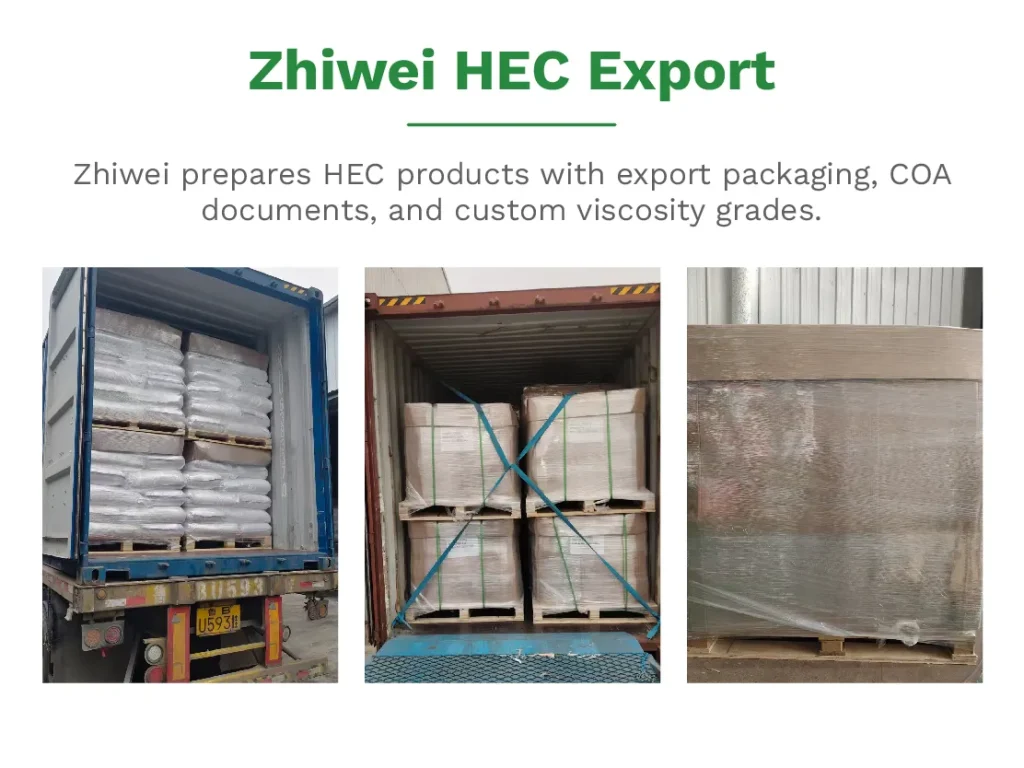
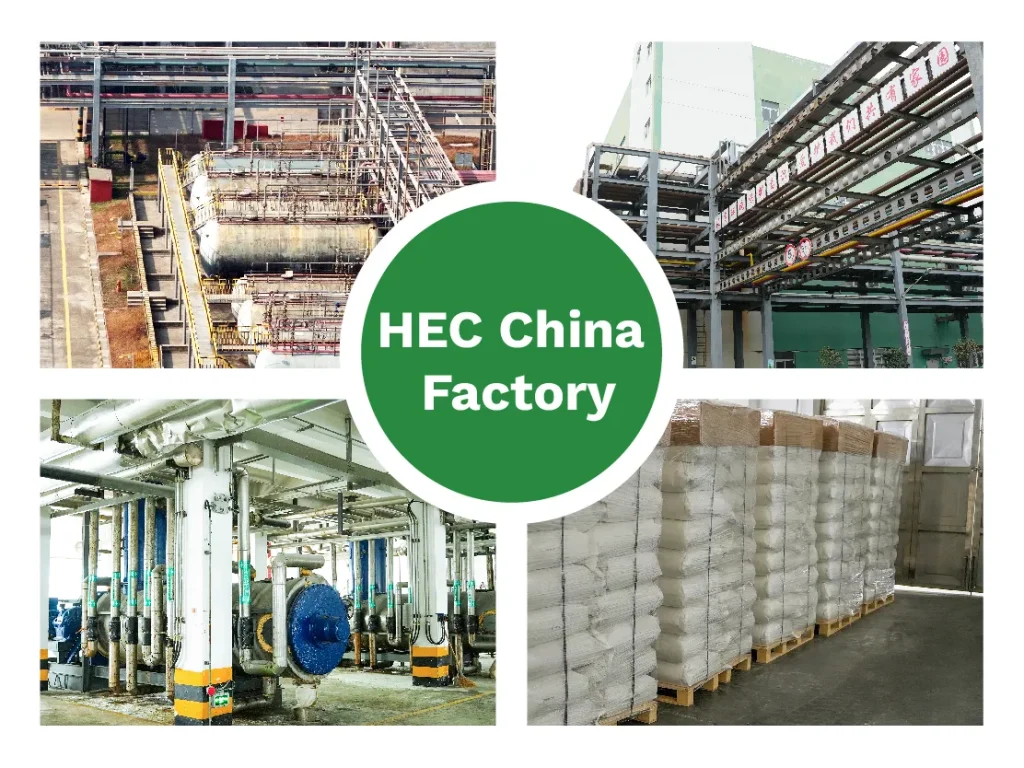
Our company, Zhiwei (Jinan) New Materials Co., Ltd., produces HEC alongside HPMC, HEMC, RDP, and PCE at our manufacturing facility in Zhejiang Province. We established production in 2017 with an annual capacity of 15,000 metric tons.
We produce HEC grades for three main application areas: paints and coatings, construction materials, and personal care products. Our coatings-grade HEC delivers reliable thickening and rheology control in water-based paints. Our construction-grade HEC provides strong water retention in cement mortars and renders. For personal care, our HEC offers smooth texture and clear solutions in gels and lotions.
What makes us different from other Chinese HEC manufacturers is our export-first approach. We built our business around serving international distributors and importers. We understand what overseas buyers need — consistent quality, full COA documentation with every shipment, flexible packaging options, and fast, clear communication.
We also offer OEM services for distributors who need private-label HEC products, and we can customize viscosity grades and particle sizes to match your formulation requirements. Our team works directly with customers to develop custom grades for specific applications and local market conditions. We export to over 30 countries and hold ISO certification across our product lines.
Key facts:
- Location: Jinan, Shandong (Factory in Zhejiang)
- Annual capacity: 15,000 MT
- Products: HEC, HPMC, HEMC, RDP, PCE
- Main industries: Paints and coatings, construction, personal care
- Strengths: Export focus, OEM services, custom viscosity grades, responsive support
Comparison of China’s HEC Manufacturers
| Company | Location | HEC Capacity | Key Markets | Notable Strength |
|---|---|---|---|---|
| Yinying | Gaomi, Shandong | ~15,000 MT | Paints, coatings | Largest domestic market share (~50%) |
| Heda | Zibo, Shandong | 10,000 MT | Construction, coatings | Largest total cellulose ether capacity (85,000 MT) |
| Tianpu | Luzhou/Zhangjiagang | 5,000 MT | PVC, coatings, oilfield | First HEC producer in China, Hercules JV heritage |
| Jinshuo | Henan | ~10,000 MT | Construction, daily chemicals | Competitive pricing, flexible MOQ |
| Zhiwei | Jinan/Zhejiang | 15,000 MT | Paints, construction, personal care | Export focus, OEM services, custom grades |
Trading Companies to Watch Out For
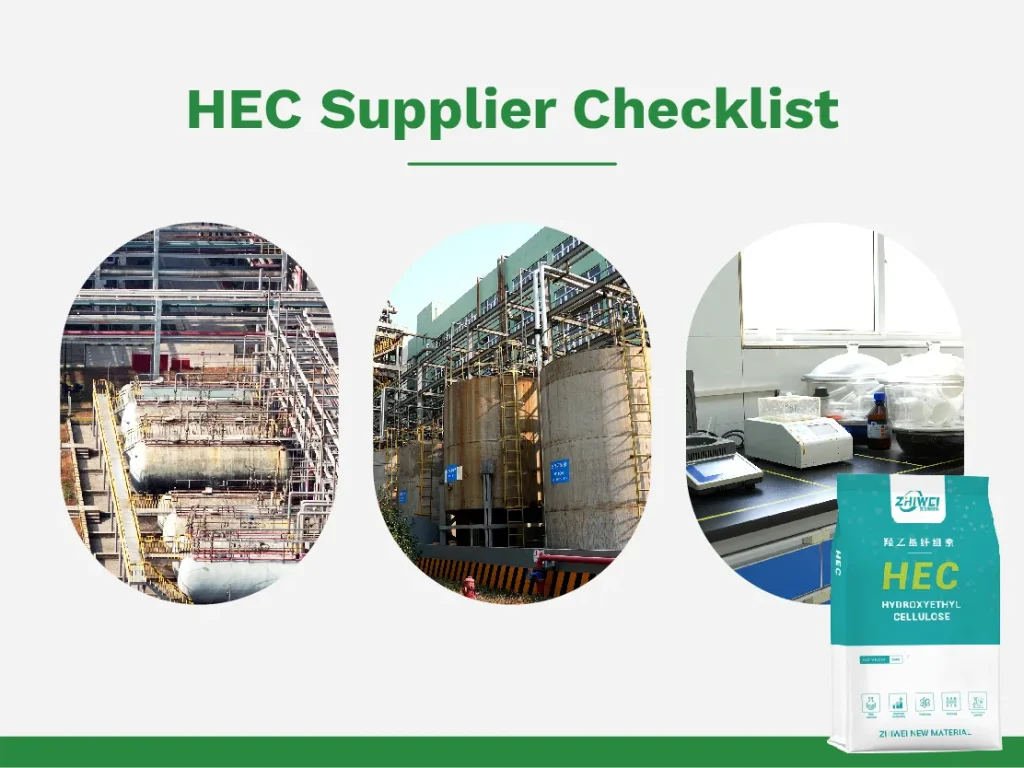
Many companies that appear in search results for “HEC supplier China” are trading companies, not manufacturers. They operate professional websites, list HEC specifications, and offer competitive prices. But they do not own production lines. They buy from one of the five factories above and resell to you.
Common signs of a trading company:
- They offer a very wide range of unrelated chemical products (not just cellulose ethers)
- They cannot provide batch-specific COA data
- They avoid questions about factory location or production equipment
- Their business license shows (trading) rather than (manufacturing)
- They have no verifiable factory address or production capacity figures
Working with a trading company is not always a bad choice — some provide good service and logistics support. But if you need direct quality control, custom formulation support, or the most competitive pricing, you are better off contacting a real manufacturer.
How to Choose the Right Chinese HEC Supplier
With five real manufacturers to choose from, here are the factors that should guide your decision:
1. Match the manufacturer to your application. Yinying and Zhiwei are strong in paints and coatings. Tianpu has deep experience in PVC polymerization and oilfield fluids. Heda offers the broadest cellulose ether product range. Jinshuo provides flexible terms for buyers with smaller orders.
2. Verify certifications for your market. If you sell to the European market, you need REACH-compliant HEC. For pharmaceutical or food applications, check for USP, EP, or food-grade certifications. Not all five manufacturers offer the same certification levels.
3. Test before you commit. Request samples from your shortlisted suppliers and run them in your formulation. Compare viscosity, clarity, dissolution speed, and batch consistency. This step takes time but saves you from costly mistakes later.
4. Ask about export experience. If you are an international buyer, choose a supplier with established export procedures and documentation experience. This reduces the risk of customs delays and documentation errors.
5. Consider technical support and custom grades. If your application needs a specific viscosity or particle size that standard grades do not offer, work with a manufacturer who can develop custom formulations. This is where direct factory access makes a real difference.
6. Evaluate communication and responsiveness. When you have a quality issue or need a rush order, you want a supplier who responds quickly and takes action. Test their responsiveness during the inquiry stage — it tells you a lot about what to expect long-term.
Conclusion
The question “who manufactures hydroxyethyl cellulose in China?” has a clear answer. Only five companies operate real HEC production lines: Yinying, Heda, Tianpu, Jinshuo, and Zhiwei. Each one has distinct strengths — Yinying leads in domestic market share, Heda has the largest total capacity, Tianpu pioneered HEC production in China, and Jinshuo offers competitive flexibility.
We at Zhiwei bring a unique advantage as an export-focused HEC manufacturer. We understand the needs of international distributors and importers because we work with them every day. We provide consistent quality, full documentation, OEM services, and custom viscosity grades for your specific market. Contact us to request free samples or discuss your HEC requirements.