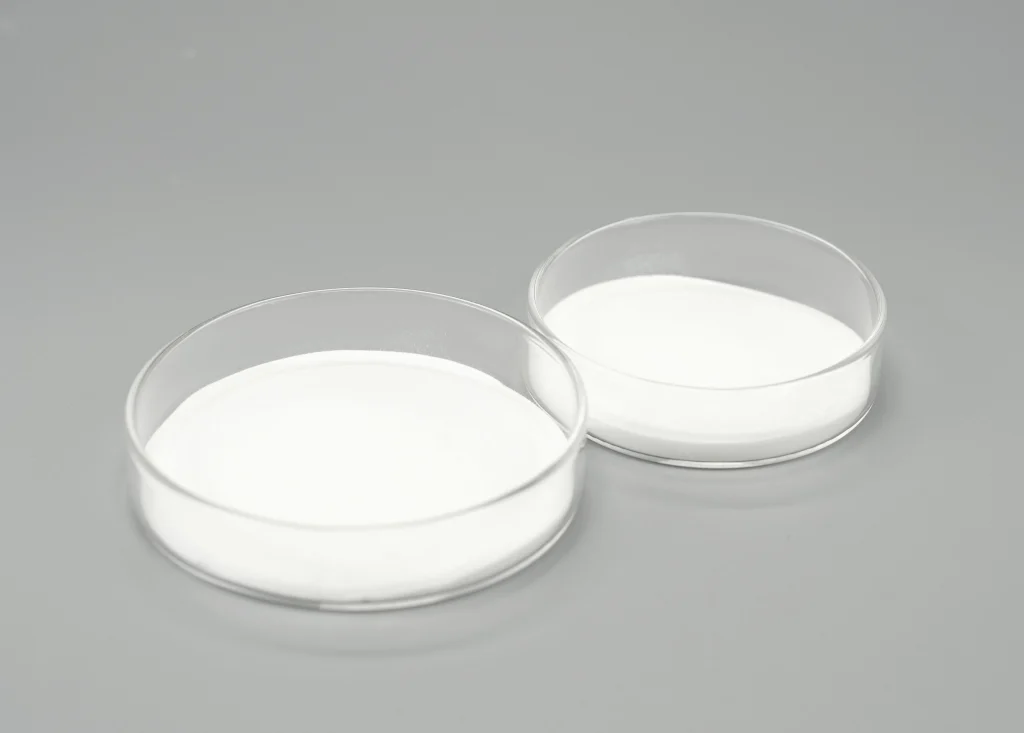
Hydroxyethyl Methyl Cellulose (HEMC) is a non-ionic cellulose ether that can be evaluated in shampoos and lotion systems.
It supports thickening, stability, smoother texture, and more uniform appearance. In many formulations, it can also work as a supportive rheology aid in emulsion systems.
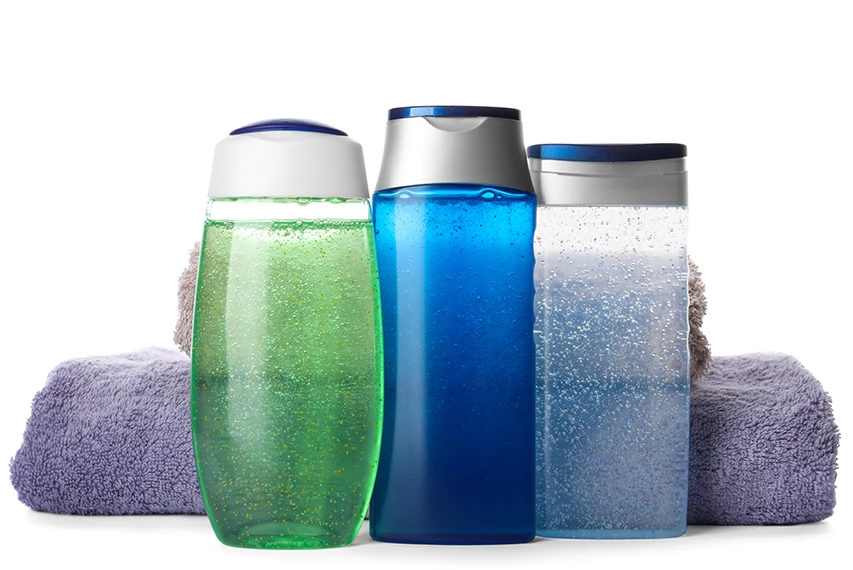
– Thickening for fuller body and smoother dispensing
– Stability support for a more uniform system
– Texture improvement for better in-use feel
– Supportive rheology control in emulsion-based lotions
HEMC can be evaluated in shampoos and lotions when the formula needs stronger body, more stable appearance, and better control of flow behavior during storage and use. In shampoo systems, it can support thickening and a smoother, more structured feel. In lotion systems, it can act as a supportive rheology modifier that helps the emulsion keep a more uniform texture and appearance. Results depend on surfactant type, oil phase, emulsifier package, pH, electrolyte level, temperature, and mixing method. Some processes need careful dispersion to avoid fisheyes during incorporation. A short bench test usually confirms the best approach. Send your product type, target viscosity range, and process details. We will recommend evaluation options.
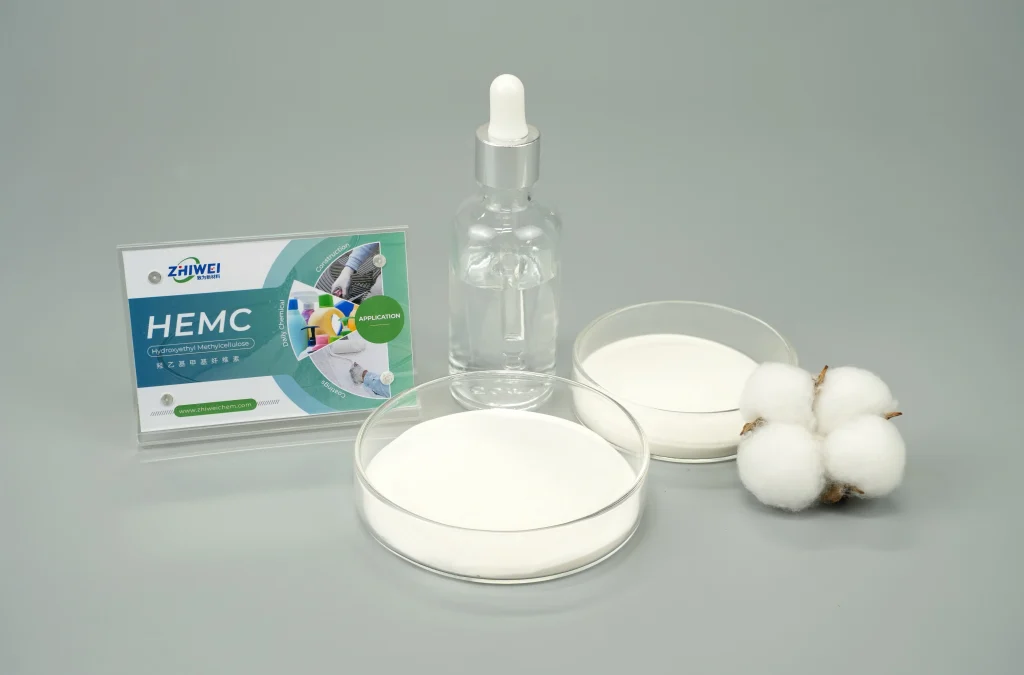
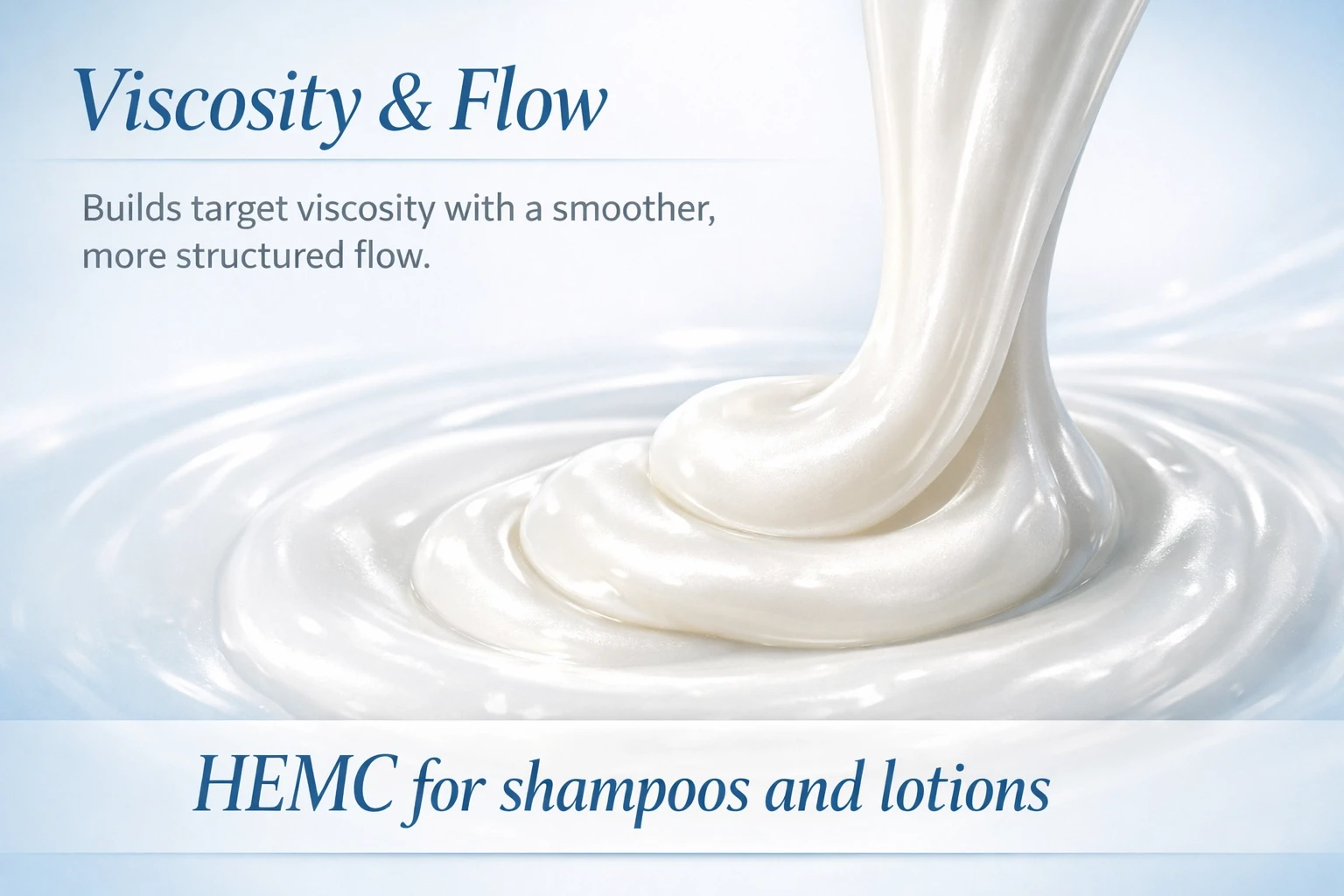
Builds target viscosity with a smoother, more structured flow.

Helps support a more uniform look and steadier storage behavior.
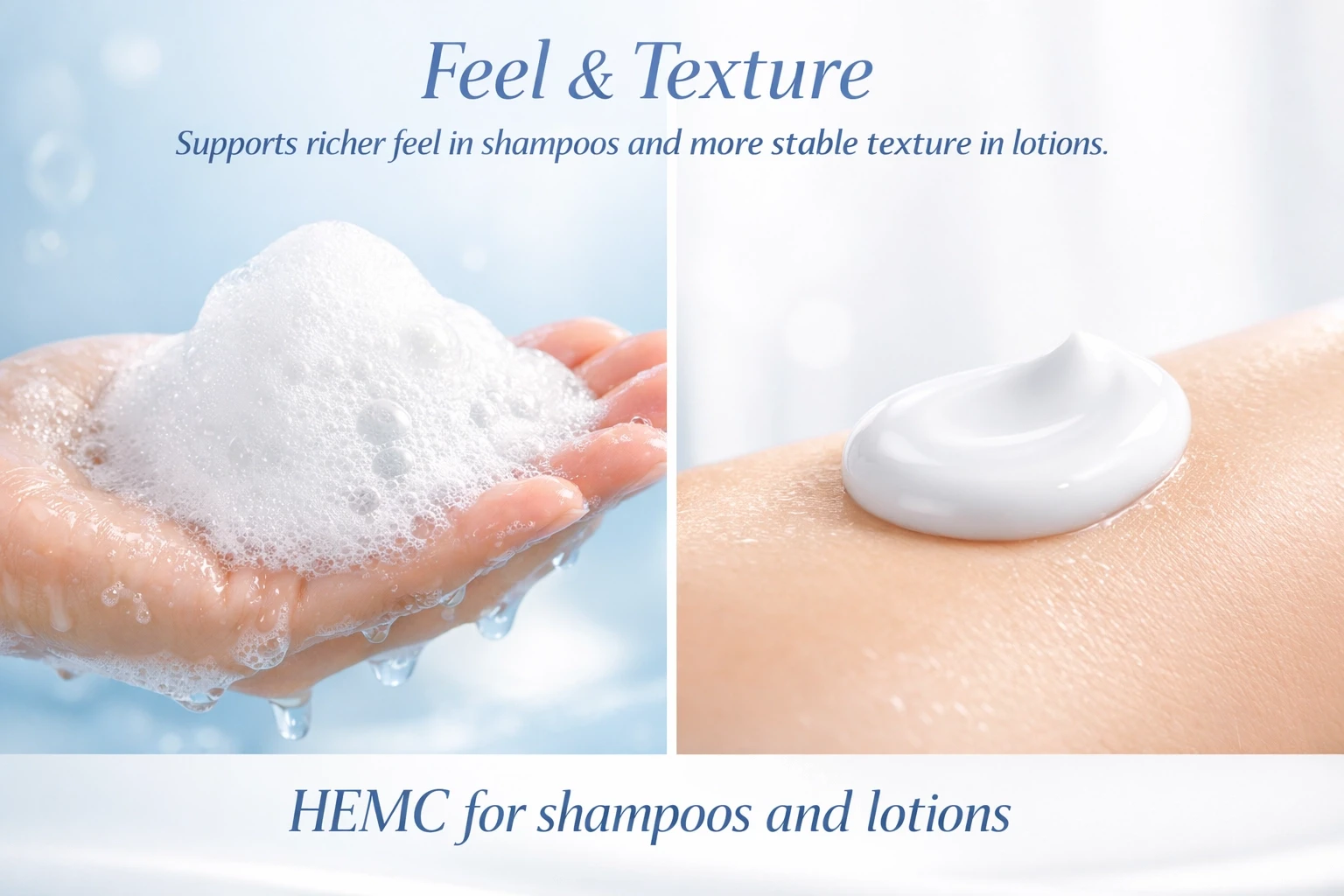
Supports richer feel in shampoos and more stable texture in lotions.

1) Add powder slowly into moving water. Avoid dumping.
2) Maintain steady agitation during addition.
3) Disperse fully before speeding hydration.
4) Add sensitive ingredients later when possible.
5) Check viscosity after rest. Confirm repeatability.
– Product type: shampoo, conditioning shampoo, lotion, body lotion, light cream
– Surfactant system or emulsion type
– Target viscosity range and temperature
– Appearance target: clear, pearly, creamy, opaque
– pH range
– Salt or electrolyte level
– Oil phase, emulsifier, fragrance, preservative package
– Mixing equipment and shear level
– Main issue: low body, instability, phase separation, poor texture, fisheyes, poor dispensing feel
Yes. It can be tested as a non-ionic thickening and stability option in these water-based personal care systems.
Yes. In many systems, viscosity structure directly affects body, dispensing feel, and texture.
In many formulas, better rheology helps improve appearance stability and storage behavior.
It can act as a supportive rheology aid in emulsion systems. Confirm performance in your own base.
In some systems, a more stable viscosity profile can support a richer feel and steadier foam-related appearance.
TDS and SDS. COA is available by batch on request.
Send your base system and targets. Get a clear sample plan.