HEC for lotions and sun care

Hydroxyethyl Cellulose (HEC) is a non-ionic thickener used in skin care emulsions.

It builds viscosity, supports stability, improves slip during rub-in.
Share your formula type and targets. We will suggest a simple test plan.

Colorful lotion and sun care bottles for HEC skincare applications

What HEC Brings to Detergent Formulas

  • Viscosity build for a richer body
  • Slip support for smoother rub-in
  • Clarity options in many water gels
  • Stability support in O/W emulsions

Product Overview

HEC is used in lotions and sun care products to adjust viscosity and control flow behavior. It can improve product feel during dispensing and rub-in. It also supports stable texture during storage. Performance depends on emulsifier system, oil phase level, pH, electrolytes, plus process shear. Some processes prefer cleaner hydration to reduce fisheyes during incorporation. A short bench test usually confirms the best approach. Send your emulsion type, target viscosity range, processing method. We will recommend evaluation options.
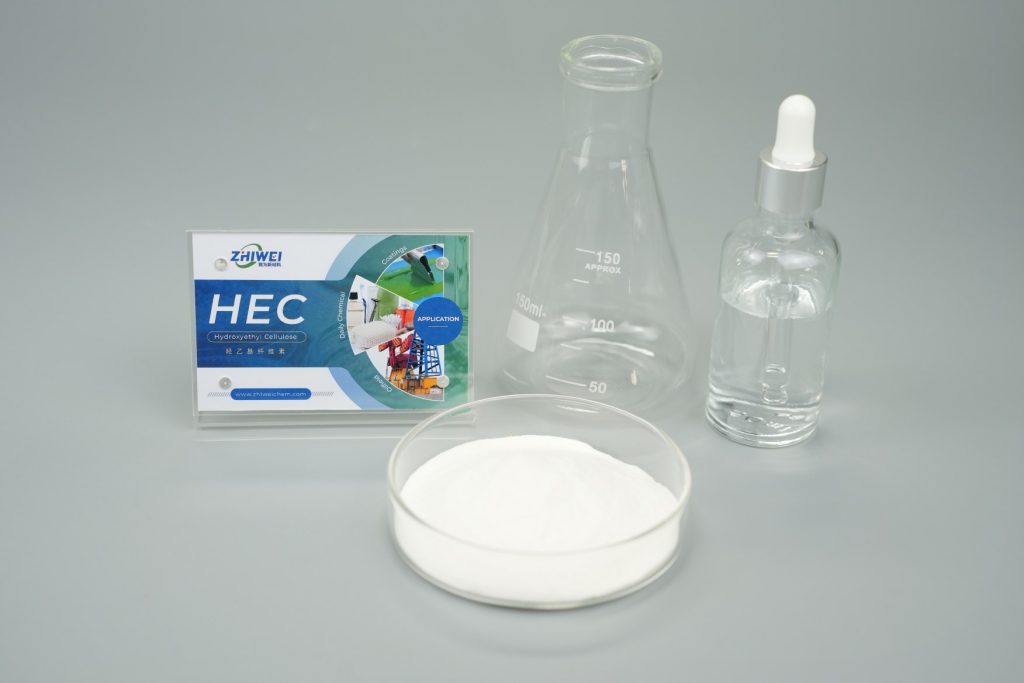
HEC powder sample with product packaging and lab glassware.

Where HEC Fits

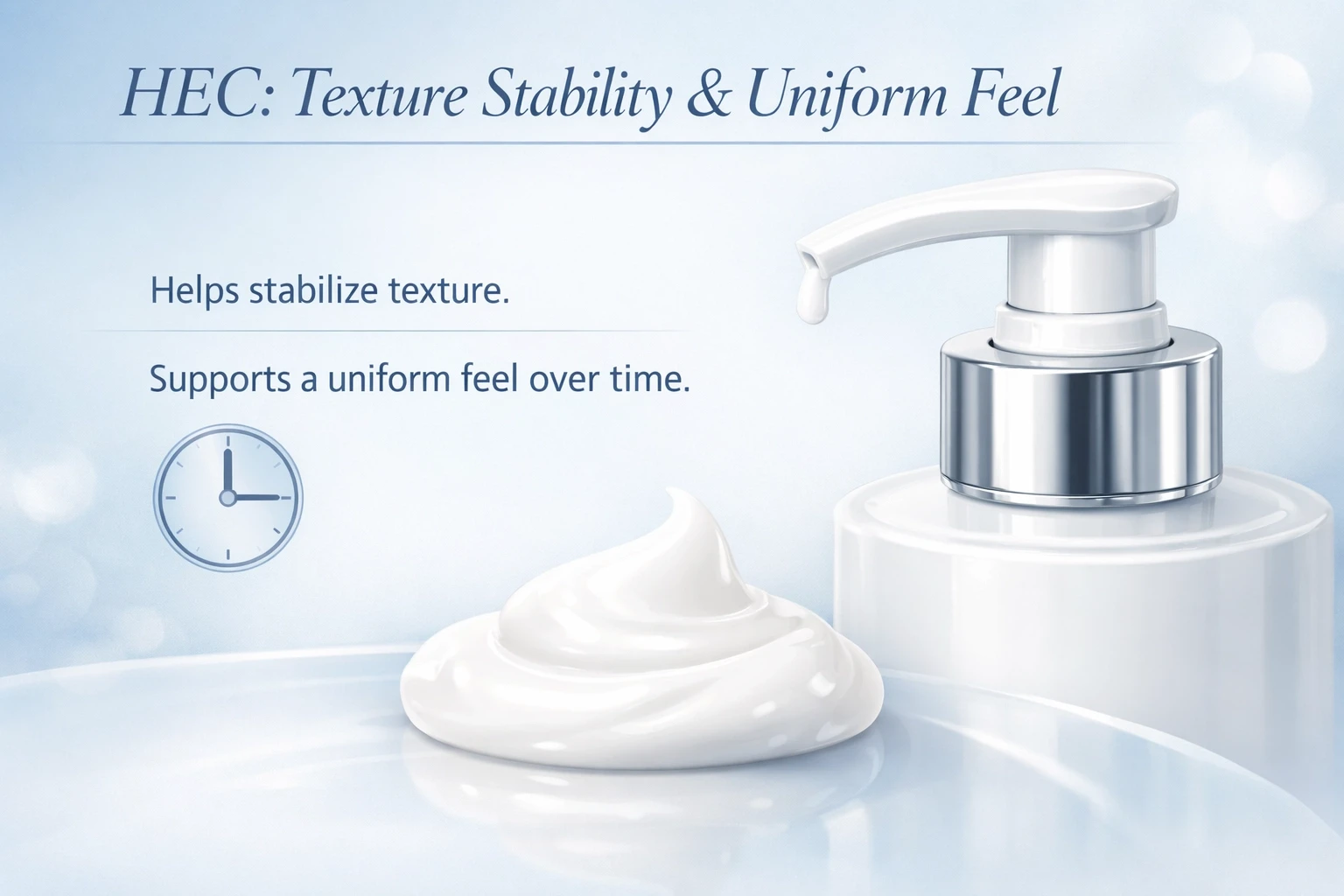
Diagram showing HEC texture stability and uniform feel in lotions and sun care

Emulsion Stability

Helps stabilize texture. Supports a uniform feel over time.
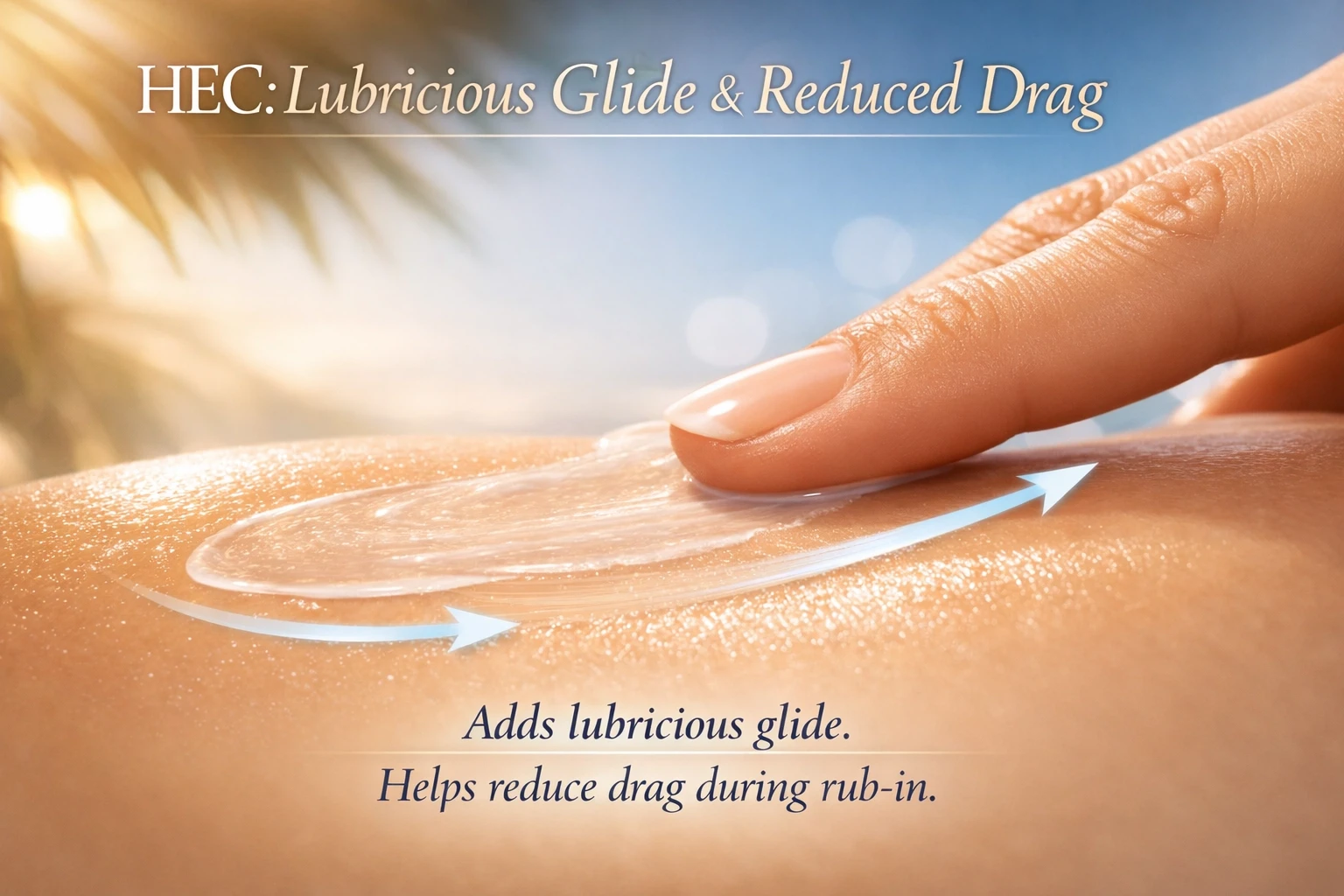
Diagram showing HEC lubricious glide and reduced drag in lotion and sun care formulations

Sensory Slip

Adds lubricious glide. Helps reduce drag during rub-in.
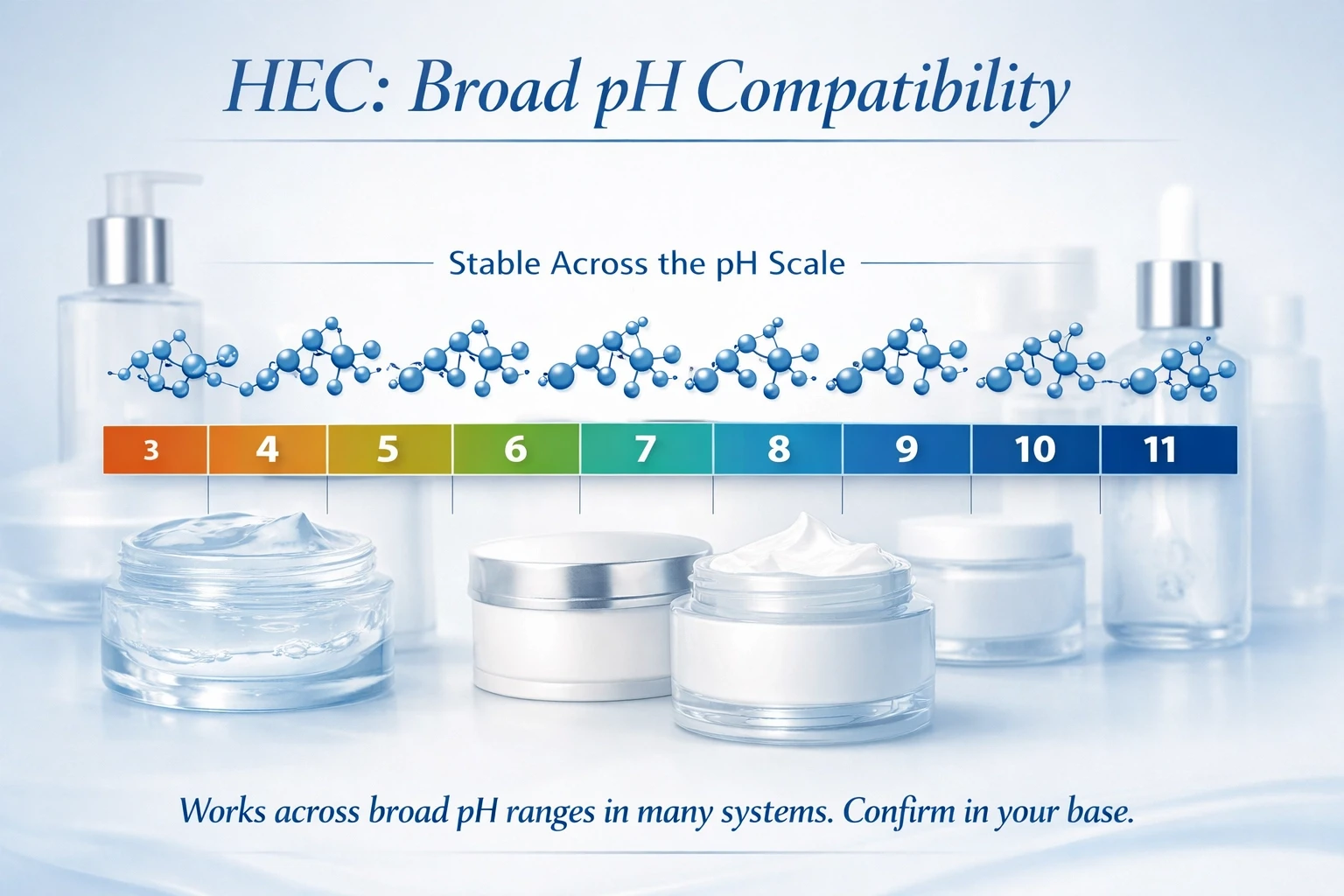
Diagram showing HEC broad pH compatibility in lotions and sun care

Process Flexibility

Works across broad pH ranges in many systems. Confirm in your base.

Modern cellulose ether production base with stable manufacturing capacity

Mixing Tips

  • Add powder slowly into moving water. Avoid dumping.
  • Maintain steady agitation during addition.
  • Allow hydration time before final adjustment.
  • Add oils and emulsifiers after base hydration when possible.
  • Verify viscosity after rest. Check stability.

Send These Details

  • Product type: body lotion, face lotion, sun care lotion, after-sun gel
  • Emulsion type: O/W, gel-cream, clear gel
  • Oil phase level (if available)
  • Emulsifier system (names or type)
  • Target viscosity range, temperature
  • pH range
  • Electrolytes present (salts, neutralizers)
  • UV filter type (organic / mineral) if sun care
  • Mixing method: cold process, hot process, shear level
  • Packaging type: pump, tube, airless
HEC powder sample with product packaging and lab glassware.

Frequently Asked Questions

Is HEC suitable for lotions and skin care products?

It can support stable texture by building viscosity. Confirm with storage tests.

Many systems show better slip and smoother spreading. Confirm with sensory checks.

Many grades work across broad pH conditions. Share your pH range for matching.

Use controlled addition and steady agitation. Allow full hydration before adjustments.

TDS and SDS. COA is available by batch on request.

Ready to Test HEC in Your Lotion or Sun Care Product?

Send your base system and targets. Get a clear sample plan.