
At Zhiwei, we define hydroxypropyl methyl cellulose, or HPMC, as a non-ionic cellulose ether made from refined cotton after alkali treatment, using propylene oxide and methyl chloride as etherification agents through a series of reactions. In practical terms, HPMC is a modified cellulose polymer that dissolves in cold water, forms a viscous solution, and helps improve thickening, water retention, film formation, and cohesion in many industrial systems. On our own product side, we treat HPMC as one of the core cellulose ether materials in our manufacturing range.
That chemical definition is important, but it is only the starting point. The reason HPMC matters in the market is that it is not just a raw powder. It is a functional material. In food regulation, the U.S. FDA lists hydroxypropyl methylcellulose, also called hypromellose, as a substance used as an emulsifier, stabilizer or thickener, surface-finishing agent, texturizer, humectant, and processing aid. In pharmaceutical science, hypromellose is described as a widely used excipient in sustained-release systems, films, and other drug-delivery formats. In construction, HPMC is used in cementitious adhesives and mortars because it improves open time, strength development, adhesion, and workability.
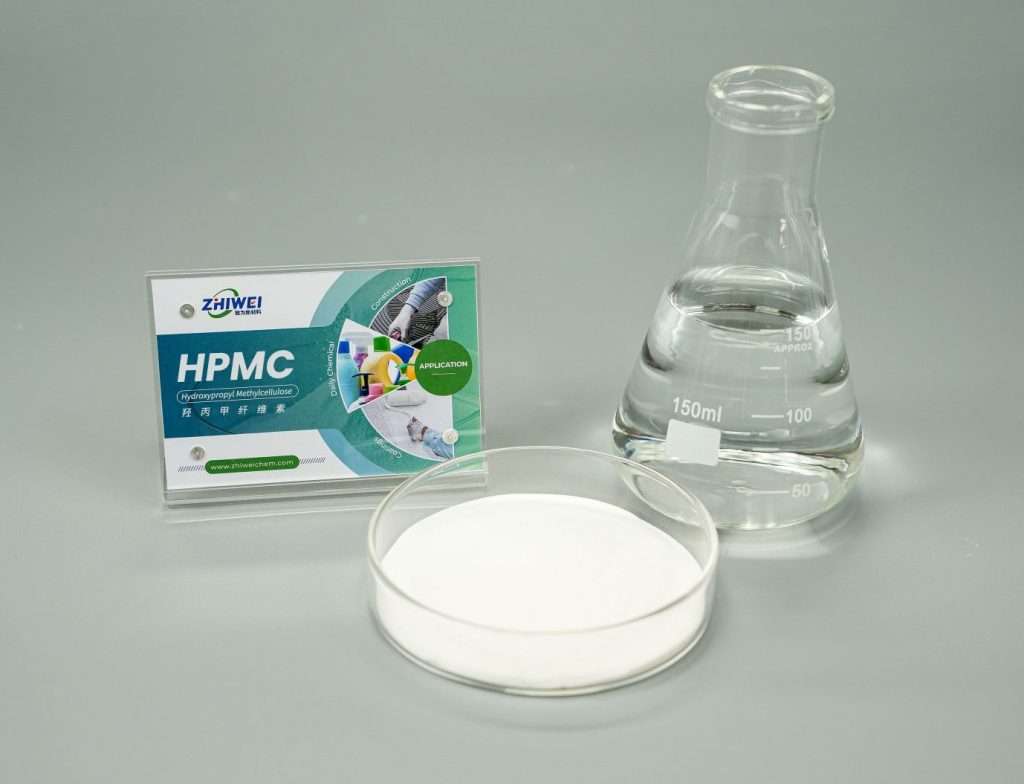
HPMC Is A Modified Form Of Cellulose
HPMC comes from cellulose, but it is not the same as untreated plant fiber. Cellulose on its own has limited direct use in many industrial liquid and dry-mix systems. Once it is chemically modified into hydroxypropyl methyl cellulose, the material gains very different behavior. It becomes water-soluble under the right conditions, forms viscosity in solution, and develops the functional profile that makes it valuable in industrial formulations. From the way our own HPMC product is described and from pharmaceutical literature on hypromellose, the same core point is clear: HPMC is a cellulose-based polymer designed to perform, not just to exist as a chemical name.
At Zhiwei, we present HPMC as a non-ionic mixed cellulose ether. That non-ionic character matters because it helps the material stay stable in many systems and makes it useful across several industries. Our HPMC product description also highlights a high degree of substitution, high methoxy and hydroxypropyl content, low ash, and high transparency. These details help explain why different HPMC grades can serve very different applications even though the chemical family name stays the same.
How Hydroxypropyl Methyl Cellulose Is Made
At Zhiwei, our published route starts with high-quality refined cotton. The cellulose is first treated with alkali, then reacted with propylene oxide and methyl chloride through a series of etherification reactions. This process changes the cellulose backbone and creates the hydroxypropyl and methoxy substitution pattern that gives HPMC its characteristic properties. That is the short manufacturing answer. It is also the core route behind the HPMC we produce.
This production route also explains why HPMC quality depends on process control. The raw material affects purity. The alkali treatment affects activation. The etherification stage affects substitution and final polymer behavior. The downstream finishing steps affect powder form, consistency, and usability. When these steps are controlled well, the result is a stable cellulose ether that can meet real customer needs in construction, food, and pharmaceutical systems. Our company profile places this inside a larger cellulose ether production platform with three production lines and annual production capacity of 10,000 tons of various cellulose ethers.
What HPMC Looks Like And How It Behaves
In our own product description, HPMC is presented as a material that dissolves in cold water to form a viscous pseudoplastic homogeneous solution and remains insoluble in hot water. Its aqueous solution has surface activity, is stable to acids and alkalis, and provides thickening, water retention, moisture retention, film-forming, and cohesive effects. That is the most practical way to understand the material. Customers do not choose HPMC because it has a long chemical name. They choose it because it changes how a formulation behaves.
In other industries, the same idea appears in different words. The FDA food listing shows technical effects such as stabilizer, thickener, emulsifier, texturizer, and surface-finishing agent. In pharmaceutical reviews, hypromellose is described as a release-controlling excipient, a film-forming polymer, and a material with mucoadhesive value. In eye-drop labeling, hypromellose is directly listed as a lubricant. These are different markets, but the common thread is clear: HPMC is a functional cellulose ether used to control texture, water, film behavior, and system stability.
Why HPMC Is So Widely Used In Construction
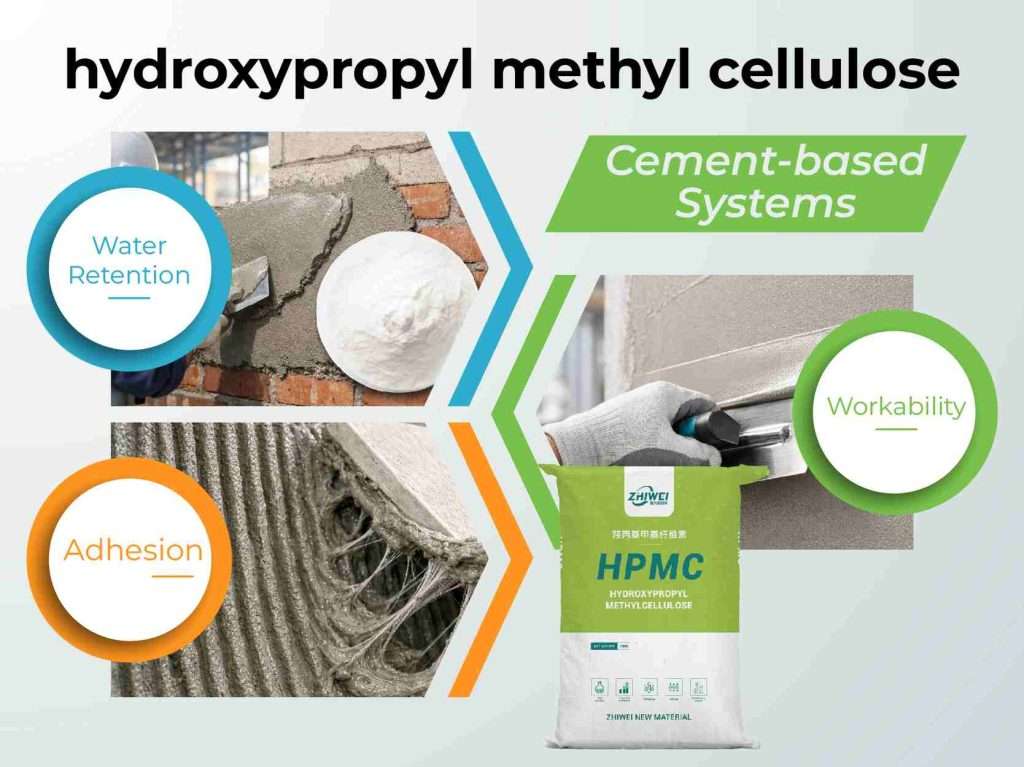
For Zhiwei, construction remains one of the clearest and most practical use areas for HPMC. Our own HPMC product page lists masonry mortar, bonding mortar, interface mortar, anti-cracking mortar, plastering mortar, interior and exterior wall putty, thermal insulation mortar, tile adhesive, grouting material, and self-leveling mortar among the main applications. This positioning fits the wider market well. Dow’s WALOCEL HPMC product pages show the same pattern by placing HPMC in premium cementitious adhesive formulations such as tile adhesives and ETICS mortars.
In these systems, HPMC is valuable because it helps the mix keep water, remain workable, and build a better application feel. Dow highlights benefits such as good or outstanding open time, easy workability, strong adhesion, slip resistance, and strength development in low-clinker cement systems. In other words, HPMC is not only there to make a mortar or adhesive thicker. It is there to improve how the formula behaves during application and how it performs after curing. That is one reason HPMC has become one of the standard additives in modern dry-mix building materials.
HPMC In Tile Adhesive
Tile adhesive is one of the most recognized HPMC applications. In this system, open time, slip resistance, early strength, and adhesion all matter. Dow’s current HPMC grades are designed for premium cementitious adhesive formulations, and the listed benefits match exactly what tile adhesive producers usually look for. A suitable HPMC grade helps the adhesive stay workable long enough for installation, reduces performance loss in changing storage conditions, and supports stronger bonding behavior.
From our point of view at Zhiwei, this is also why HPMC cannot be sold only as a commodity name. The customer usually does not need “some HPMC.” The customer needs an HPMC grade that fits a specific tile adhesive or mortar system. That is a more practical and more professional way to explain the product. Our own application list for HPMC reflects this same logic by tying the material to distinct dry-mix product types rather than treating it as a vague general chemical.
HPMC In Mortar, Putty, And Self-Leveling Systems
HPMC is also widely used in mortar, wall putty, crack-resistant materials, plaster, and self-leveling systems. These products need good water control and consistent application feel. If the formula dries too fast, application becomes difficult and final performance can suffer. If the mix does not hold well, sagging, drag, or unstable flow can appear. HPMC is used in these systems because it helps bring the wet-state balance under control. Our HPMC application range and Dow’s construction-oriented HPMC grades both support this explanation.
HPMC Is Also Known As Hypromellose In Food And Pharmaceuticals
Outside construction, hydroxypropyl methyl cellulose is very often referred to as hypromellose. This naming matters because many buyers in pharmaceutical and food fields know the material under that name rather than under the full industrial abbreviation HPMC. The FDA food-substance listing and the U.S. regulation at 21 CFR 172.874 both identify hydroxypropyl methylcellulose as a permitted food additive with functions such as emulsifier, film former, protective colloid, stabilizer, suspending agent, and thickener. That means HPMC is not only a construction additive. It also has an established place in regulated food systems.
In pharmaceuticals, the role of HPMC is even more established. PubMed reviews describe hypromellose as a traditional pharmaceutical excipient with broad use in oral sustained-release matrix systems, films, mucoadhesive delivery, amorphous solid dispersions, 3D-printed dosage forms, and other modern drug-delivery technologies. Another review states that hypromellose is by far the most commonly employed cellulose ether in hydrophilic matrices and that it can control drug release by forming a hydrated gel layer. These are strong examples of how a single cellulose ether can move far beyond one industry when its properties are properly understood.
HPMC In Eye Drops
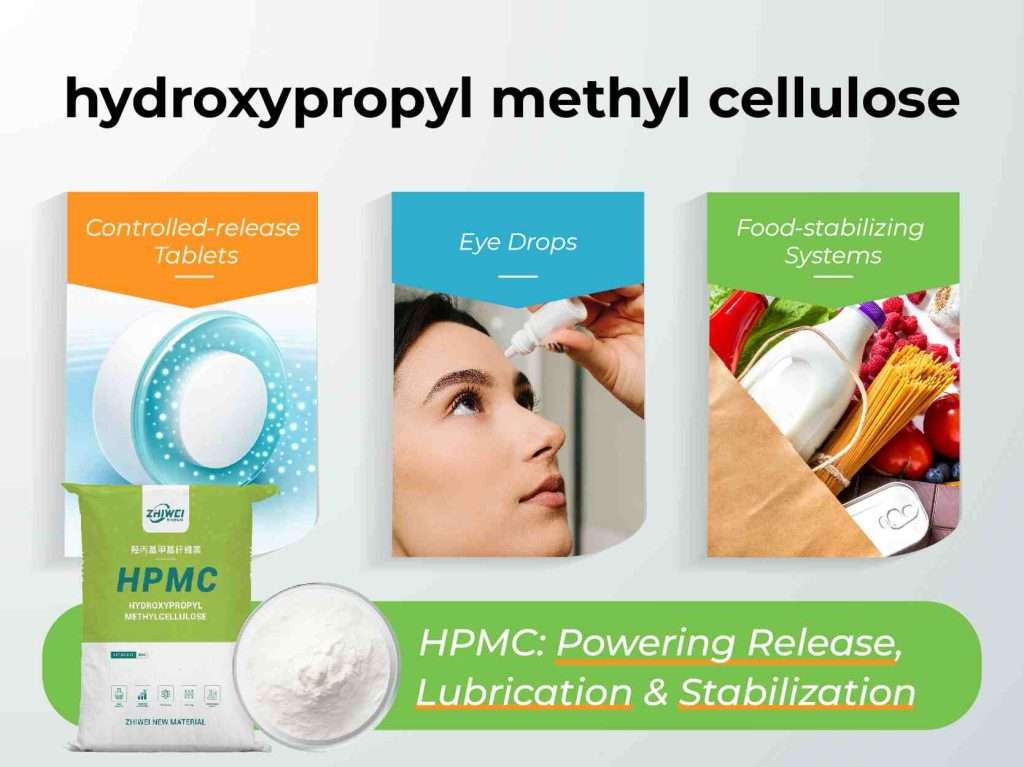
One very direct pharmaceutical example is eye lubrication. DailyMed lists hypromellose as an active lubricant ingredient in eye-drop products used for the temporary relief of burning and irritation due to eye dryness. This is a very different use from tile adhesive or mortar, but it comes from the same broader material behavior: HPMC can form a lubricating, film-supporting solution that helps manage moisture and surface comfort. This example is useful because it shows how flexible the material family really is.
HPMC In Controlled Release And Tablet Systems
In oral drug delivery, HPMC is valued for its gel-forming and release-controlling behavior. Pharmaceutical literature shows that formulators use different viscosity grades and molecular weights to manage how a drug is released over time. This is one reason HPMC remains so important in pharmaceutical development. The material can do more than hold a tablet together. It can actively shape how the finished dosage form works.
HPMC Is A Food Additive Too
The food side of HPMC is often overlooked in industrial discussions, but it is important. The FDA lists hydroxypropyl methylcellulose for technical effects such as anticaking, drying, emulsifying, humectant, processing aid, stabilizer or thickener, surface-finishing, and texturizing. The U.S. regulation also states that it may be safely used in food under good manufacturing practice as an emulsifier, film former, protective colloid, stabilizer, suspending agent, or thickener. In simple terms, HPMC can help food systems hold together, stay stable, and achieve a target texture or surface behavior.
This wider regulatory acceptance is another reason the material has such broad industrial recognition. A polymer that can work in construction, food, and pharmaceuticals is not a narrow specialty chemical. It is a platform material. That does not mean all grades are interchangeable. It means the basic chemistry is versatile enough to support many end uses when the right specifications and manufacturing controls are in place.
Why Different HPMC Grades Matter
One of the most important things to understand about HPMC is that it is not one fixed product. Pharmaceutical reviews emphasize that different viscosity grades and molecular weights lead to different behavior. Our own HPMC description also points to chemical and physical features such as substitution level, ash, transparency, and solution behavior. In practice, this means that one HPMC grade may be a better fit for tile adhesive, while another may fit a tablet matrix or a food application better.
For us at Zhiwei, this is the right way to explain the product. We do not see HPMC as only a name in a catalog. We see it as a cellulose ether family that must be matched to the target application. That is how the market actually buys. Customers usually want performance: better workability, better water retention, better texture, better film formation, or better release control. HPMC only becomes valuable when it delivers those results in the customer’s real system.
What HPMC Means For Zhiwei
At Zhiwei, hydroxypropyl methyl cellulose is one of the core cellulose ethers in our product platform. Our company profile places HPMC alongside HEC, HEMC, and other cellulose ether products in a dedicated production system. We frame cellulose ether as an industrial material with thickening, water solubility, suspension stability, film-forming, water-retention, and adhesion value across many industries. In that system, HPMC is one of the clearest examples of how a cellulose derivative can move from raw material science into real application performance.
That is also why we prefer to explain HPMC in practical terms. It is a non-ionic mixed cellulose ether made from refined cotton through alkali treatment and etherification. It dissolves in cold water, forms a viscous solution, and supports thickening, cohesion, film formation, and water retention. It is then used in real systems such as tile adhesive, mortar, food formulations, tablets, and eye drops. When the explanation stays connected to real use, the product becomes easier for buyers to understand and easier for the brand to communicate clearly.
Conclusion
Hydroxypropyl methyl cellulose is a non-ionic cellulose ether made by chemically modifying cellulose. At Zhiwei, we produce HPMC from refined cotton through alkali treatment and etherification with propylene oxide and methyl chloride. The result is a functional polymer that dissolves in cold water, forms a viscous solution, and provides thickening, water retention, film-forming, and cohesive effects.
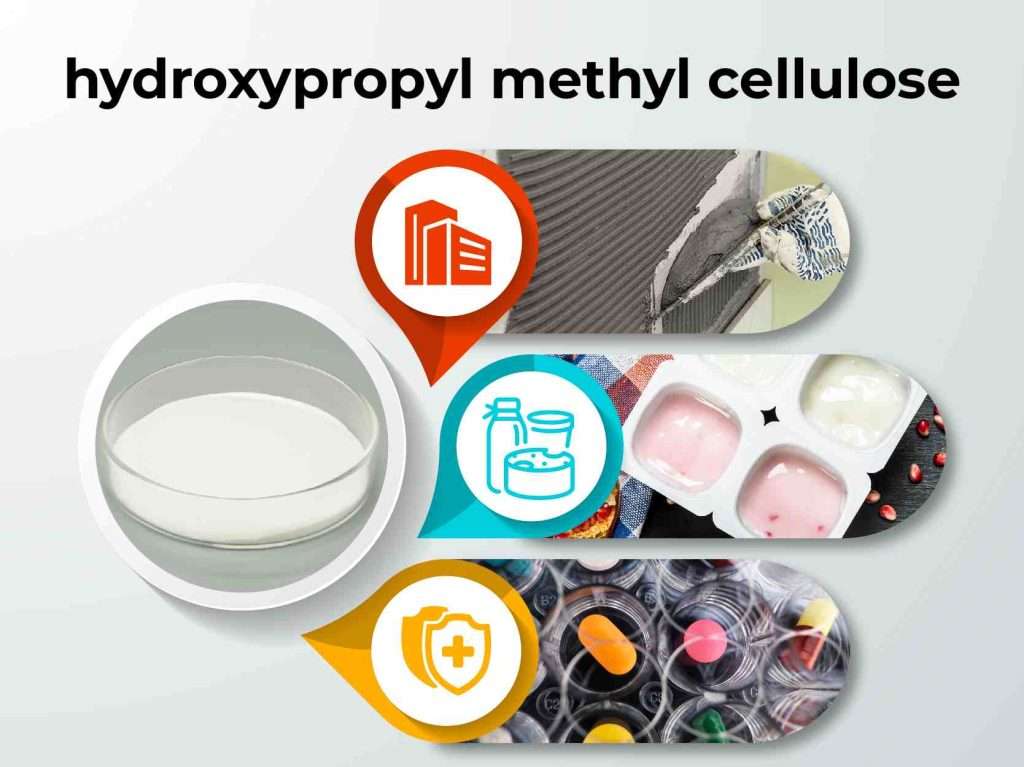
The reason HPMC matters is simple. It is not limited to one market. In construction, it improves workability, open time, and adhesion in dry-mix systems. In pharmaceuticals, it serves as hypromellose in controlled-release tablets, films, and lubricating eye drops. In food, it functions as a stabilizer, thickener, emulsifier, and texturizer. That broad use is what makes hydroxypropyl methyl cellulose one of the most important cellulose ethers in modern industry. For Zhiwei, it is also one of the clearest materials for showing how controlled cellulose ether manufacturing turns chemistry into real application value.