
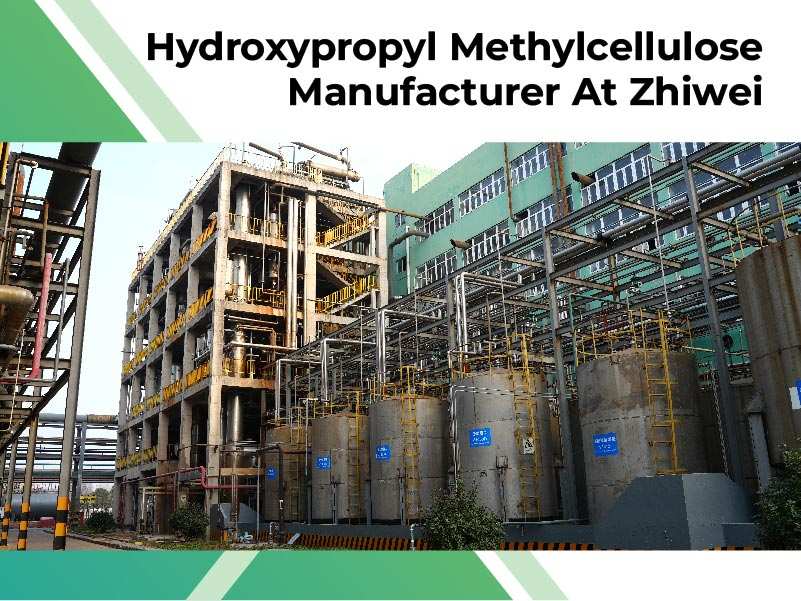
At Zhiwei, we position ourselves as a hydroxypropyl methylcellulose manufacturer first, not only as a trading company. That difference matters. Buyers looking for HPMC usually do not want a vague catalog source. They want stable quality, clear application support, and a factory that can keep supply consistent over time. Our manufacturing base is located in Hangzhou Bay Shangyu Economic and Technological Development Zone in Shaoxing, Zhejiang. The company states that it was founded in February 2017, covers 50 mu, has about 28,000 square meters of building area, employs 150 people, and operates three cellulose ether production lines with annual capacity of 10,000 tons of cellulose ethers. The same official company information also says we use Xinjiang refined cotton as raw material and focus on key indicators such as fineness, viscosity, ash content, and light transmittance.
For us, HPMC is not just another chemical name. It is one of the core cellulose ethers in our product platform. On our official product page, we describe hydroxypropyl methyl cellulose as a non-ionic cellulose mixed ether made from high-quality refined cotton after alkali treatment, using propylene oxide and methyl chloride as etherification agents through a series of reactions. We also describe it as a material with high substitution, low ash, high transparency, cold-water solubility, surface activity, acid and alkali stability, and strong thickening, water-retention, film-forming, and bonding properties. Those are the reasons HPMC has become such an important additive in dry-mix construction systems.
What A Hydroxypropyl Methylcellulose Manufacturer Really Does
A real HPMC manufacturer does more than sell powder. The real job starts much earlier. It starts with raw material choice, reaction control, and the ability to keep the finished product consistent from batch to batch. That is why our factory story matters so much. On our official company pages, we describe cellulose ether as a material family with excellent thickening, water solubility, suspension or latex stability, film forming, water retention, and adhesion. We also describe it as widely used in building materials, medicine, food, textiles, daily chemicals, oil exploitation, mining, paper making, polymerization, and aerospace. In other words, HPMC is part of a broader cellulose ether platform, but it only creates value when the manufacturing side is stable.
This is one reason buyers often distinguish between hydroxypropyl methylcellulose suppliers and true manufacturers. A supplier may offer HPMC from different origins. A manufacturer controls the product from the process side. In our case, the official product description and company profile show a direct connection between raw material, production system, and final application. That matters because the end customer is not buying “some HPMC.” The end customer is buying water retention, workability, open time, film formation, cohesion, and repeatable performance in a real formula.
Our Hydroxypropyl Methylcellulose Factory
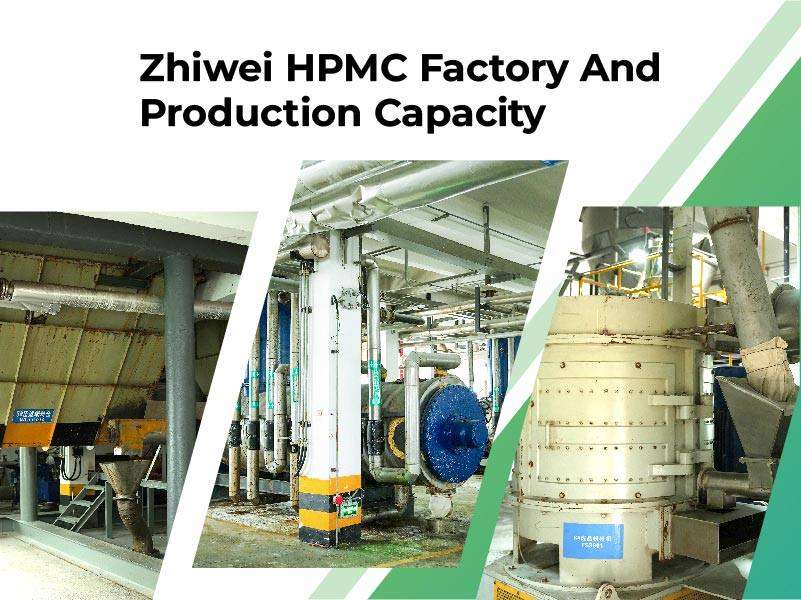
Our hydroxypropyl methylcellulose factory is part of a larger cellulose ether manufacturing system in Shangyu, Zhejiang. The official Chinese company page gives more detail about this base. It says the company has total investment of 290 million RMB, has obtained 13 national patents and 4 Zhejiang provincial scientific and technological achievements, and has built what it describes as the largest cellulose ether production base in Zhejiang Province. The same page also states that our total output and single-line capacity are among the leaders in the sector in the province. These points are important because they show that our HPMC business is built on a real production foundation, not only on sales language.
Our location also supports export and logistics work. The official company page says the factory is close to major highways, national roads, rail links, and both Xiaoshan and Ningbo airports, with travel time under one hour to those airports. That matters for overseas buyers because a strong hydroxypropyl methylcellulose factory is not only about reactors and lines. It is also about how efficiently samples, documents, and finished cargo can move.
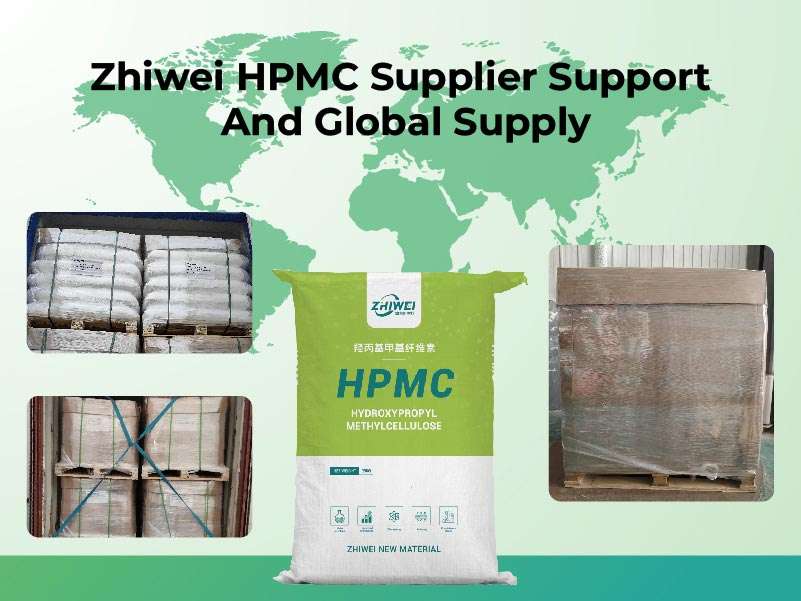
On the same Chinese company page, we also state that our cellulose ethers are sold not only in the domestic market but also in the United States, Europe, Japan, Russia, and more than 40 other countries and regions. The page also says we have become a partner of multiple listed companies and established long-term supply relationships with some internationally known companies. For B2B buyers, this kind of export record matters because it signals practical market experience, not only production capacity on paper.
Why HPMC Is So Important In Dry-Mix Building Materials
At Zhiwei, our HPMC product page puts dry-mix construction materials at the center of the application story. We list masonry mortar, bonding mortar, interface mortar, anti-cracking mortar, plastering mortar, interior and exterior wall putty, thermal insulation mortar, tile adhesive, grouting material, and self-leveling mortar among the core uses. This is a very practical positioning because these are the systems where customers most clearly feel the effect of HPMC in daily production and jobsite performance.
This application logic also matches the broader market. Dow’s current WALOCEL HPMC pages show the same direction. Those official pages describe HPMC grades developed for premium cementitious adhesive formulations such as tile adhesives and ETICS mortars. The stated benefits include good or outstanding open time, excellent strength development, superior adhesion after water immersion, slip resistance in some grades, and easy workability. That matters because it confirms the core reason customers buy HPMC: they buy it for performance in mineral binder systems, not just for a specification sheet.
For us, that is exactly why being a hydroxypropyl methylcellulose manufacturer matters more than only being a reseller. When a customer asks about HPMC for tile adhesive or mortar, the real discussion is about fresh-state balance, open time, adhesion, water retention, and consistency. A factory-backed company can speak to that discussion more directly because the product, the process, and the application are connected.
What Buyers Should Look For In Hydroxypropyl Methylcellulose Suppliers
Many buyers search online for hydroxypropyl methylcellulose suppliers, but the better question is what kind of supplier they are really choosing. A strong supplier should have a real production background or a direct factory link. It should have consistent raw material logic, clear product descriptions, and visible application knowledge. It should also be able to explain why one HPMC grade fits one construction system better than another. From our official pages, these are exactly the areas we emphasize: refined cotton raw material, controlled cellulose ether production, and application performance across mortar, putty, tile adhesive, and self-leveling systems.
Another point buyers should check is whether the supplier can support long-term supply instead of only quoting for one order. On our official company pages, we present Zhiwei as a cellulose ether producer with dedicated capacity, broad product coverage, and long-term export activity. That is important because many international buyers are not only looking for one container. They are looking for a stable hydroxypropyl methylcellulose manufacturer that can support product continuity, repeat orders, and technical follow-up.
Buyers should also look at whether the supplier understands the difference between product name and application result. Our own HPMC page is built around that distinction. It does not stop at defining HPMC chemically. It links HPMC directly to bonding mortar, anti-cracking mortar, tile adhesive, grouting material, and self-leveling mortar. That approach is important because it reflects how the market actually buys. Customers usually buy function first and chemistry second.
Why Zhiwei Stands Out As An HPMC Manufacturer
At Zhiwei, we believe the strongest message is not that we can say “factory direct.” The stronger message is that our factory story, process story, and application story line up. Our official pages show a manufacturing base in Shangyu, three cellulose ether production lines, 10,000 tons of annual capacity, refined-cotton raw material, and product positioning built around real end uses. The Chinese company page also states our operating principle clearly: to treat customers with sincerity and win the market through quality. That is the right foundation for a serious hydroxypropyl methylcellulose manufacturer.
We also stand out because our product range is broader than one single cellulose ether. Our official company pages list HEC, HPMC, and HEMC among the main cellulose ether products. This matters for distributors and industrial buyers because supply relationships often start with one product but do not end there. A company that understands the wider cellulose ether family can usually support customer development more effectively than a source that only repeats one product name.
Our manufacturing base, product scope, and export experience also help us support both direct buyers and channel partners. Some customers work with us as end users. Others work more like regional hydroxypropyl methylcellulose suppliers who need a reliable factory behind them. In both cases, the core requirement is the same: stable product, clear communication, and credible production capability. That is the standard we want our HPMC business to represent.
Hydroxypropyl Methylcellulose Manufacturer, Suppliers, And Factory: Why The Difference Matters
These three search terms sound similar, but they are not exactly the same in business use. A hydroxypropyl methylcellulose manufacturer is judged by production control. Hydroxypropyl methylcellulose suppliers are judged by sourcing reliability, service, and continuity. A hydroxypropyl methylcellulose factory is judged by whether it can actually make stable HPMC at scale. The strongest companies are the ones that can meet all three expectations at the same time. That is the position we want Zhiwei to hold in the market.
For that reason, our article title is not just an SEO phrase. It describes how we want customers to understand us. We are not presenting HPMC as a vague commodity. We are presenting it as a performance material backed by a real cellulose ether manufacturing system. That is a stronger message for international buyers, and it is also a more accurate one.
Conclusion
At Zhiwei, we approach HPMC from the manufacturing side. Our official company information shows a dedicated cellulose ether base in Shangyu, Zhejiang, with three production lines, annual capacity of 10,000 tons, refined-cotton raw material, and product coverage that includes HEC, HPMC, and HEMC. Our HPMC product page defines hydroxypropyl methyl cellulose as a non-ionic cellulose mixed ether with strong thickening, water-retention, film-forming, and bonding properties, and links it directly to practical construction uses such as mortar, putty, tile adhesive, grouting, and self-leveling materials.
That is why we present ourselves not only as one of many hydroxypropyl methylcellulose suppliers, but as a true hydroxypropyl methylcellulose manufacturer with a real hydroxypropyl methylcellulose factory behind the product. For buyers, that difference can decide product stability, technical support, and long-term supply confidence. For us, it is also the clearest way to explain what Zhiwei stands for in the HPMC market.