
Introduction
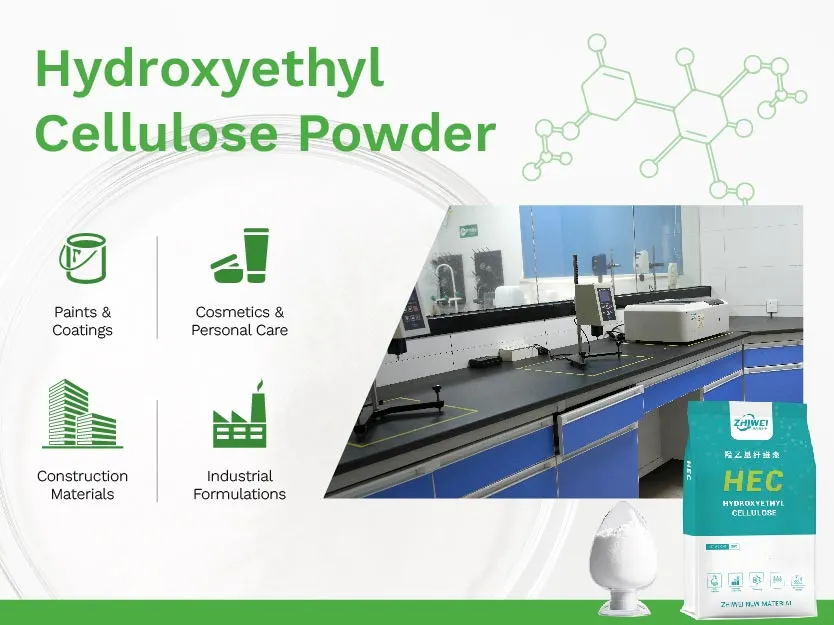
Hydroxyethyl cellulose (HEC) is one of the most widely used water-soluble polymers in the world. You will find it in paints, cosmetics, construction materials, oilfield fluids, and pharmaceutical products. Global demand keeps rising, and the HEC market is projected to grow steadily through 2030.
But who actually produces hydroxyethyl cellulose? The list is shorter than you might think. HEC production requires highly specialized equipment, carefully controlled reaction conditions, and strict quality control. Not every cellulose ether manufacturer can make it well.
This article answers the question directly. We profile the top hydroxyethyl cellulose manufacturers around the world, cover what HEC is and where it gets used, and share practical advice on how to choose the right HEC supplier for your business.
Whether you are a paint formulator, a construction materials buyer, or a cosmetics manufacturer, understanding who produces HEC — and how they differ — will help you source better and avoid costly formulation problems.
What Is Hydroxyethyl Cellulose (HEC)?
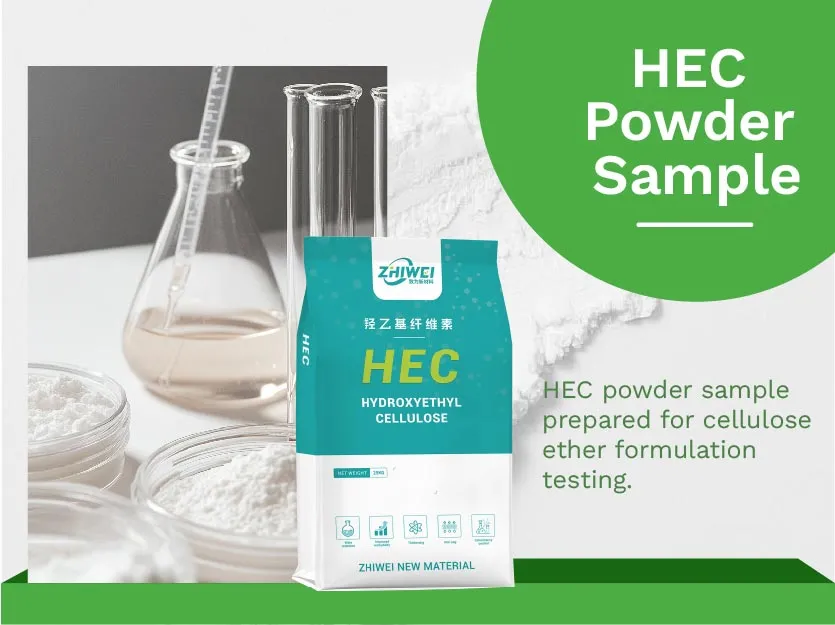
HEC is a non-ionic, water-soluble cellulose ether. Manufacturers produce it by reacting alkali cellulose with ethylene oxide. The result is a white to off-white powder that dissolves readily in both cold and hot water.
Unlike HPMC (hydroxypropyl methylcellulose), which is more common in construction applications, HEC stands out for its clarity in solution and its broad compatibility with other ingredients. These traits make it the preferred cellulose ether in paints, cosmetics, and personal care — markets where visual clarity and texture matter a lot.
What makes HEC special is its versatility. Here are the key properties that drive demand across so many industries:
- Thickening power. HEC increases viscosity efficiently even at low concentrations. This is why it is a go-to thickener in water-based paints, shampoos, and lotions.
- Water retention. HEC holds water in formulations, which improves workability in cement-based products and extends open time in coatings.
- Film formation. HEC forms clear, flexible films. This property is essential in paint formulations and personal care products.
- Pseudoplastic behavior. HEC solutions thin under shear and recover when shear stops. This makes them easy to apply (think paint rollers or cosmetic pumps) but stable at rest.
- Compatibility. HEC is non-ionic, so it works well with other ingredients — salts, surfactants, and pigments — without causing precipitation.
Where HEC gets used:
| Industry | Application |
|---|---|
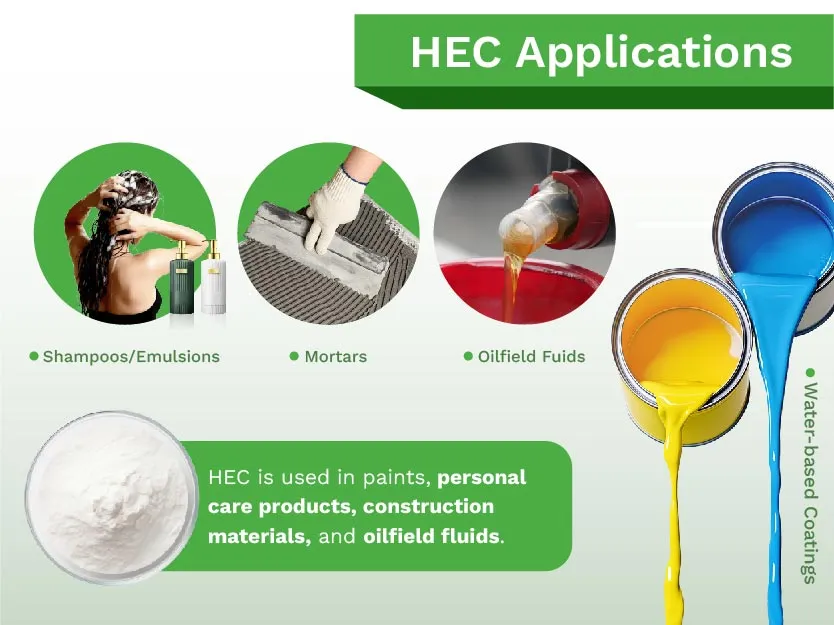
| Paints and coatings | Thickener, stabilizer, rheology modifier in water-based paints |
| Personal care and cosmetics | Thickener in shampoos, lotions, creams, and gels |
| Construction | Water retention agent in cement mortars, tile adhesives, and renders |
| Oilfield | Fluid loss control in drilling fluids and fracturing fluids |
| Pharmaceuticals | Binder, film-coating agent, and controlled-release matrix in tablets |
| Textile and paper | Sizing agent, thickener in printing pastes |
The global HEC market was valued at over USD 800 million and continues to grow at a CAGR of 3–5%. This growth comes from rising demand in construction, personal care, and oilfield applications, especially in emerging markets.
Top Hydroxyethyl Cellulose Manufacturers
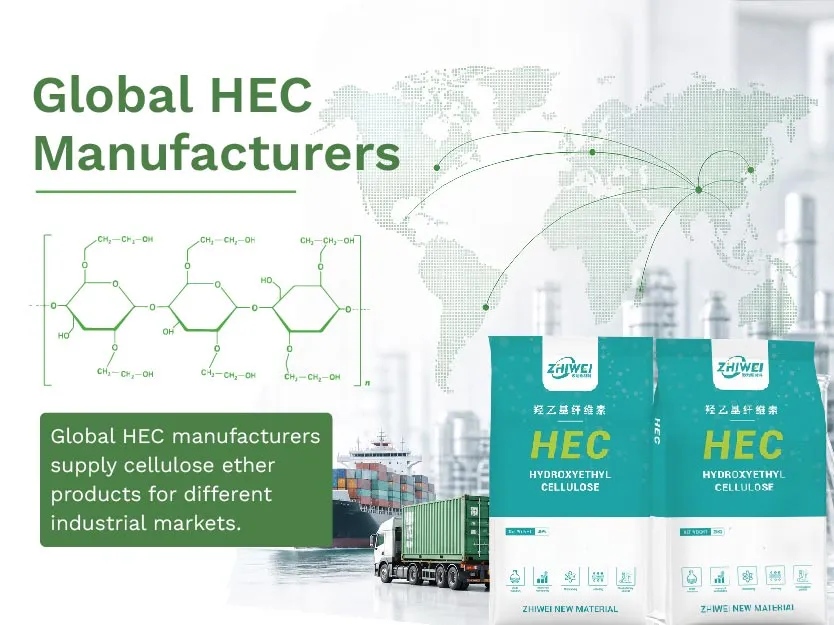
Below are six of the most important hydroxyethyl cellulose manufacturers in the global market. Each one has distinct strengths.
Ashland Inc.
Ashland is the largest HEC producer in the world by market share. Headquartered in Wilmington, Delaware, USA, Ashland operates three dedicated HEC production sites across North America, Europe, and Asia.
Their flagship HEC brand is Natrosol™, which covers the widest viscosity range available in the industry. Natrosol HEC grades range from low viscosity (for spray applications) to very high viscosity (for thick gels and pastes). Ashland also offers Aquaflow™ for industrial water treatment and Pharmaceose™ for pharmaceutical applications.
One advantage of Natrosol HEC is its consistent batch-to-batch performance. Formulators who switch between production lots rarely need to adjust their recipes, which saves time and reduces waste on the production line.
Ashland serves over 5,000 customers globally. Their pharmaceutical-grade HEC meets FDA requirements, and their personal care grades are widely used by major cosmetic brands.
Key facts:
- Headquarters: Wilmington, Delaware, USA
- Brand: Natrosol™, Aquaflow™, Pharmaceose™
- Main industries: Pharmaceuticals, personal care, construction
- Known for: Widest viscosity range, FDA-approved pharma grades, global production footprint
Shin-Etsu Chemical Co., Ltd.
Shin-Etsu is the world’s largest cellulose derivatives manufacturer. Based in Tokyo, Japan, Shin-Etsu produces HEC under the Tylose H-series brand.
Shin-Etsu operates seven HEC production lines with a combined annual capacity exceeding 80,000 metric tons. Their HEC grades cover viscosity from 15 to 300,000 mPa·s, and their production achieves a viscosity tolerance of just ±2% through automated process control.
Their pharmaceutical-grade HEC meets USP, EP, and JPE standards. Shin-Etsu also holds a patent for low-dust HEC, which improves workplace safety during handling.
Key facts:
- Headquarters: Tokyo, Japan
- Brand: Tylose® H-series
- Annual capacity: 80,000+ MT
- Main industries: Pharmaceuticals (ophthalmic and injectable), industrial
- Known for: Highest purity (99.9%+), tightest viscosity tolerance, low-dust innovation
Dow Chemical
Dow produces HEC under the CELLOSIZE™ brand. Based in Midland, Michigan, USA, Dow focuses on construction and specialty applications.
Dow’s HEC grades are engineered for specific end uses. Their hydrophobically modified HEC works in waterproofing systems and delivers 96% water retention in cementitious applications. Dow supports over 400 building product manufacturers worldwide and dominates the North American mortar and tile adhesive market for HEC-based formulations.
Dow has also invested in blockchain-tracked sustainable cellulose sourcing, which appeals to buyers who need verified supply chain transparency.
Key facts:
- Headquarters: Midland, Michigan, USA
- Brand: CELLOSIZE™
- Main industries: Construction, waterproofing, building products
- Known for: Hydrophobically modified HEC, water retention performance, sustainability programs
Nouryon
Nouryon, headquartered in Amsterdam, Netherlands, produces HEC under the Bermocoll® brand. Nouryon operates three European production sites.
Nouryon’s HEC has a strong position in oilfield applications. Their Bermocoll EHM series provides fluid loss control in drilling fluids and fracturing fluids. These grades are stable at temperatures above 150°C and salinity levels exceeding 200,000 ppm — conditions common in deep well operations. The EHM series prevents fluid loss in 78% of North Sea drilling operations.
Nouryon also supplies HEC for construction and coatings. All products are REACH-compliant for European market access. Their technical team works directly with oilfield operators to optimize HEC formulations for specific well conditions, which is a big advantage for drilling contractors who need site-specific solutions.
Key facts:
- Headquarters: Amsterdam, Netherlands
- Brand: Bermocoll®
- Main industries: Oilfield, fracturing fluids, construction, coatings
- Known for: High-temperature tolerance, salt resistance, REACH compliance
SE Tylose GmbH and Co. KG
SE Tylose is Europe’s largest independent HEC producer. Based in Wiesbaden, Germany, SE Tylose is a subsidiary of Shin-Etsu Chemical. Their annual capacity reaches 65,000 metric tons.
SE Tylose sells HEC under the Tylose® brand. Their grades serve the paints and coatings, cosmetics, and construction industries. SE Tylose operates a zero-liquid-discharge production facility, which aligns with strict European environmental standards and appeals to buyers who prioritize sustainability in their supply chain.
Their HEC products include low-VOC grades for architectural coatings and GMO-free certified grades for cosmetics. They also use bio-based ethylene oxide sourcing through mass balance certification.
Key facts:
- Headquarters: Wiesbaden, Germany
- Brand: Tylose®
- Annual capacity: 65,000 MT
- Main industries: Paints and coatings, cosmetics, construction
- Known for: Zero-liquid-discharge facility, low-VOC grades, European quality standards
Zhiwei (Jinan) New Materials Co., Ltd.
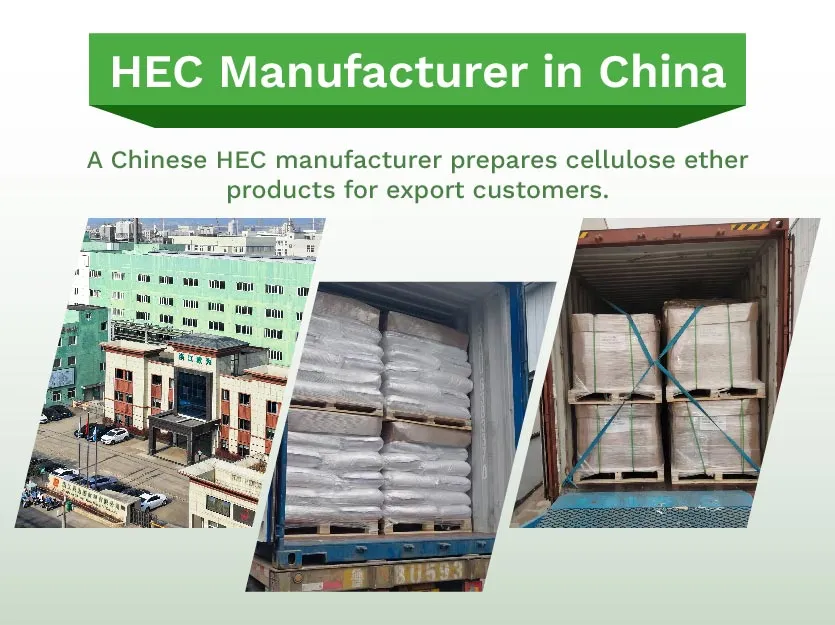
Our company, Zhiwei (Jinan) New Materials Co., Ltd., produces HEC alongside HPMC, HEMC, RDP, and PCE at our manufacturing facility in Zhejiang, China. We established production in 2017 with an annual capacity of 15,000 metric tons.
We produce HEC grades for three main application areas: paints and coatings, construction materials, and personal care products. Our construction-grade HEC provides excellent water retention in cement mortars and renders. Our coatings-grade HEC delivers reliable thickening and rheology control in water-based paints. For personal care, our HEC offers smooth texture and clear solutions in gels and lotions.
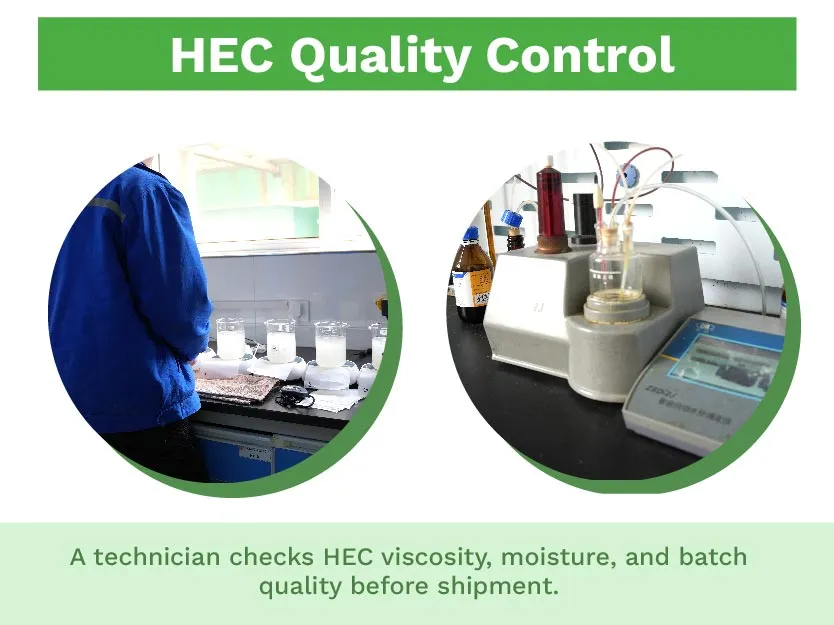
Our HEC production follows strict quality control at every step. We test raw materials before they enter the production line, and we test finished products before they leave the warehouse. We provide full COA documentation with every shipment, and we can customize viscosity grades and particle sizes to match your formulation requirements.
We also offer OEM services for distributors who need private-label HEC products. Our team works directly with customers to develop custom grades for specific applications and local market conditions. We export to over 30 countries and hold ISO certification across our product lines.
Key facts:
- Location: Jinan, China (Factory in Zhejiang)
- Annual capacity: 15,000 MT
- Products: HEC, HPMC, HEMC, RDP, PCE
- Main industries: Paints and coatings, construction, personal care
- Strengths: Export focus, OEM services, custom viscosity grades, responsive support
How to Choose the Right HEC Manufacturer
HEC is not a simple commodity. Different manufacturers produce different quality levels, and the wrong choice can cause real problems in your formulations. Here are the factors that matter most:
1. Viscosity grade and range
HEC comes in many viscosity grades, from low (around 15 mPa·s) to very high (over 300,000 mPa·s). Make sure the manufacturer offers the specific grade your application needs. Paints usually need mid-range viscosity. Oilfield fluids need high-viscosity grades with salt tolerance. Cosmetics often need low to mid viscosity with clear solution properties.
2. Purity and substitution degree
The degree of substitution (DS) affects solubility, thickening efficiency, and salt tolerance. For pharmaceutical and personal care applications, you need high-purity HEC with consistent DS. For construction and industrial uses, standard purity may be sufficient.
3. Quality consistency
Ask for COA samples from multiple batches. Check viscosity, moisture content, ash content, and DS values. A reliable manufacturer delivers consistent results across production runs.
4. Technical support
HEC behaves differently in different formulations. A supplier who provides technical support — formulation advice, viscosity troubleshooting, custom grade development — adds real value beyond the product itself.
5. Regulatory compliance
If you produce paints or cosmetics for the European market, REACH compliance is mandatory. For pharmaceutical applications, you need USP, EP, or JP compliance. Verify that the manufacturer holds the certifications your market requires.
6. Supply reliability and export experience
Check the supplier’s track record with international shipments. A manufacturer with established export procedures, proper documentation, and reliable logistics partnerships will save you time and reduce the risk of supply disruptions.
7. Pricing and minimum order quantity (MOQ)
HEC pricing varies a lot depending on grade, purity, and order volume. Pharmaceutical and cosmetic grades cost more than construction grades. Ask about MOQs upfront — some large manufacturers only accept orders above 10 tons, while smaller specialists may offer flexible quantities for trial orders. If you are testing a new formulation, a supplier with low MOQs and sample availability is a better starting point.
Conclusion
The question “who produces hydroxyethyl cellulose?” has a clear answer. A small group of specialized manufacturers dominate the global market, and each one brings something different. Ashland leads in market share and product range. Shin-Etsu and SE Tylose offer precision and purity. Dow focuses on construction innovation. Nouryon excels in oilfield applications.
We at Zhiwei bring a different strength to the table — dedicated export support, custom HEC grades, and flexible OEM services for international buyers. Whether you need HEC for paints, construction materials, or personal care formulations, we can supply the right grade with full documentation and responsive service at competitive pricing.
Contact us today to request free samples or discuss your specific HEC requirements.