
At Zhiwei, we describe hydroxypropyl methylcellulose, or HPMC, as a non-ionic cellulose mixed ether made from high-quality refined cotton after alkali treatment, with propylene oxide and methyl chloride used as etherification agents through a series of reactions. In simple terms, it is a modified cellulose polymer that dissolves in cold water, forms a viscous solution, and helps improve thickening, water retention, film formation, and bonding in many systems. In our product range, HPMC is one of the core cellulose ethers we manufacture for industrial use.
The safety answer is also clear, but it needs to be said carefully. Hydroxypropyl methylcellulose is generally considered safe when it meets the relevant specifications and is used as intended in approved food, pharmaceutical, or similar applications. In the United States, FDA regulations state that hydroxypropyl methylcellulose may be safely used in food as an emulsifier, film former, protective colloid, stabilizer, suspending agent, or thickener under good manufacturing practice. In Europe, EFSA concluded that there was no need for a numerical acceptable daily intake for modified celluloses including hydroxypropyl methyl cellulose, and that there was no safety concern at the reported uses and use levels. A published food-safety assessment also noted that JECFA established an ADI of “not specified” for food uses.
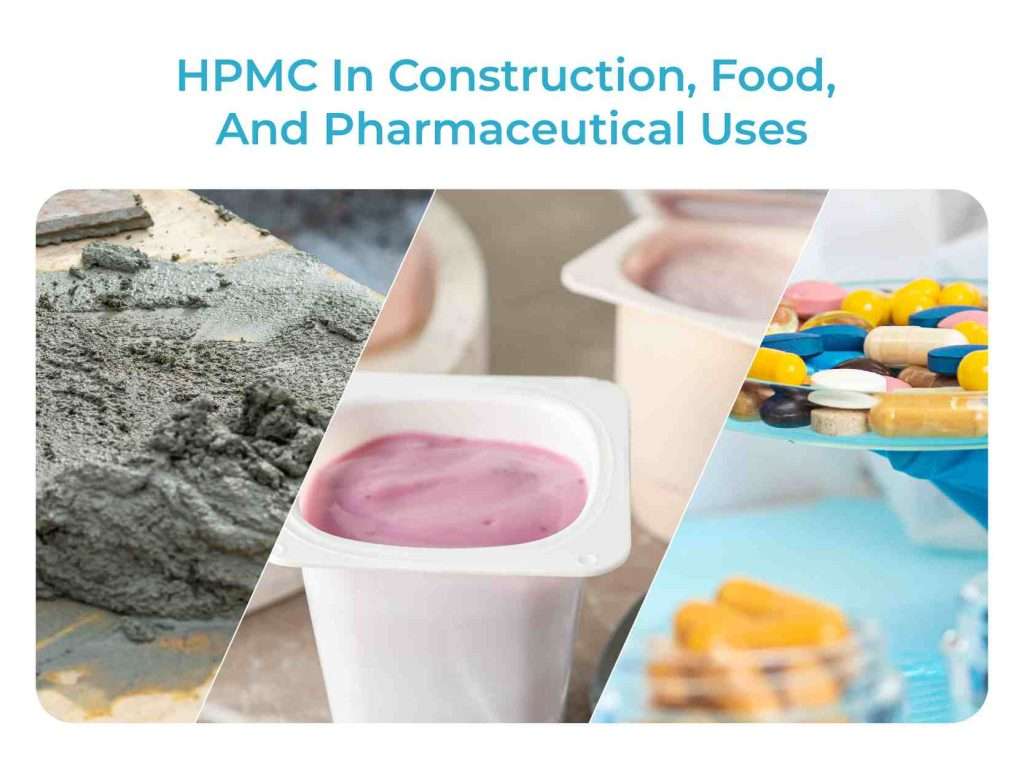
What Hydroxypropyl Methylcellulose Is
Hydroxypropyl methylcellulose starts with cellulose, but it is not the same as untreated plant fiber. Once cellulose is chemically modified, it gains a new performance profile. That is what gives HPMC its value. It becomes water-soluble under the right conditions, develops viscosity in solution, and can act as a thickener, film former, binder, stabilizer, or water-retention agent depending on the grade and application. Our HPMC product page and broader company profile both present it in this practical way: as a cellulose ether that improves how finished products perform.
In food and pharmaceutical settings, the same material is often called hypromellose. FDA inventory records list hydroxypropyl methylcellulose under that name as well as under other related names, and pharmaceutical literature uses hypromellose as the standard term in many dosage-form discussions. That difference in naming can confuse buyers, but the material family is the same. In business terms, HPMC and hypromellose usually point to the same core cellulose ether, although the required specifications and grade standards depend on the final use.
How We Make HPMC At Zhiwei
At Zhiwei, our published manufacturing route begins with refined cotton. The cellulose is first treated with alkali. It is then etherified with propylene oxide and methyl chloride through a series of reactions. That route creates the hydroxypropyl and methoxy substitution pattern that gives HPMC its final behavior. Our published description also highlights high substitution, high methoxyl and hydroxypropyl content, low ash, and high transparency as key features of the finished product.
This production route matters because HPMC performance depends on more than chemistry on paper. Raw material quality affects purity. The alkali stage affects activation. The etherification stage affects substitution and solution behavior. Downstream finishing affects the powder form and final consistency. Our company profile places this work inside a dedicated cellulose ether manufacturing base with three production lines and an annual capacity of 10,000 tons of various cellulose ethers. For us, that is an important part of the product story, because HPMC quality is built through process control, not added at the end.
What Makes HPMC Useful
At Zhiwei, we describe HPMC as a material that dissolves in cold water to form a viscous pseudoplastic homogeneous solution and stays insoluble in hot water. We also describe its aqueous solution as surface-active, acid- and alkali-stable, and useful for thickening, water retention, moisture retention, film forming, and bonding. Those are not abstract lab terms. They explain why HPMC works so well across different industries.
The same pattern appears in external regulatory and scientific sources. FDA rules describe its food functions as emulsifying, film forming, stabilizing, suspending, and thickening. Pharmaceutical reviews describe hypromellose as a major excipient in controlled-release systems, films, and oral or oromucosal delivery. When these different sources are read together, the message is very consistent: HPMC is useful because it controls texture, water, structure, and film behavior inside a formulation.
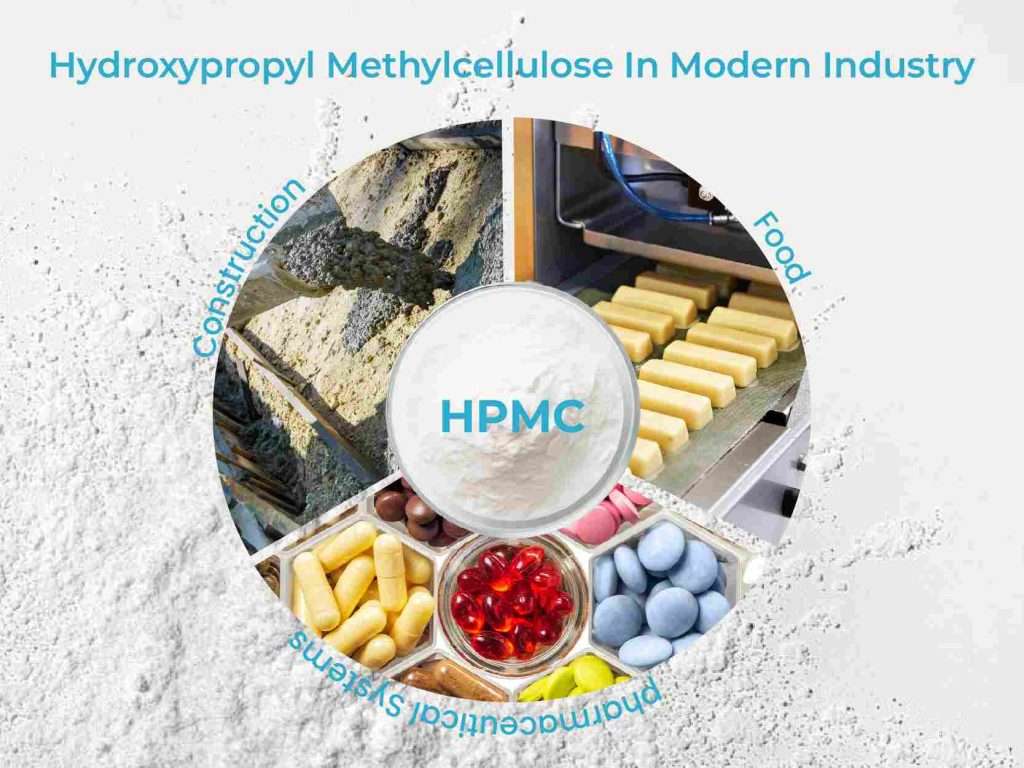
Where HPMC Is Used
For Zhiwei, one of the clearest use areas is construction. Our HPMC product page places the material in masonry mortar, bonding mortar, interface mortar, anti-cracking mortar, plastering mortar, interior and exterior wall putty, thermal insulation mortar, tile adhesive, grouting material, and self-leveling mortar. That application range matches the wider market well. Dow’s current WALOCEL HPMC materials are also positioned for premium cementitious adhesive formulations such as tile adhesives and ETICS mortars.
In construction systems, HPMC is valuable because it changes fresh-state behavior. It helps keep water in the system, improves workability, supports open time, and helps the mix develop a more stable application feel. Dow describes its HPMC grades with benefits such as open time, workability, strength development, and adhesion under demanding conditions. This is why HPMC is not usually bought as a simple commodity in dry-mix building materials. It is bought for performance.
HPMC In Food
HPMC is also used in food. FDA regulations explicitly state that hydroxypropyl methylcellulose may be safely used in food if it complies with the required definition and specifications and is used in accordance with good manufacturing practice. The permitted technical roles include emulsifier, film former, protective colloid, stabilizer, suspending agent, and thickener. That means HPMC has an established regulatory place in food systems, not just in industrial construction materials.
The safety side of the food question is also strong. EFSA’s reevaluation of celluloses, including E464, concluded that there was no need for a numerical ADI and that there would be no safety concern at the reported uses and use levels. The same opinion noted that acute toxicity was low and that there was no genotoxic concern. The older food-safety review in Food and Chemical Toxicology also reported that JECFA established an ADI of “not specified” for HPMC in food use. Taken together, those are strong signals that compliant food-grade HPMC has a well-established safety profile.
HPMC In Pharmaceuticals And Eye Drops
In pharmaceuticals, HPMC is usually discussed as hypromellose. A 2020 review in the Journal of Controlled Release describes it as a traditional pharmaceutical excipient with broad use in oral sustained-release matrix systems and modern oral and oromucosal drug delivery. A 2025 review in Pharmaceutics describes it as a key excipient used as a binder in controlled-release tablets, a film-forming agent in orodispersible and mucoadhesive films, and a release modifier in extended- or modified-release dosage forms. That is a major role, and it shows how widely trusted the material is in regulated dosage systems.
A very direct example is eye lubrication. DailyMed labels for hypromellose eye products identify hypromellose as the active lubricant ingredient and state that it is used for the temporary relief of burning and irritation due to dryness of the eye and as a protectant against further irritation. This is helpful because it turns the safety discussion into something very practical. HPMC is not only approved in theory. It is used in real over-the-counter ophthalmic products.
So, Is Hydroxypropyl Methylcellulose Safe?
The honest answer is yes, when we are talking about the right grade, the right specifications, and the right use. Food-grade HPMC that meets the relevant specifications and is used as allowed by regulation is generally considered safe. Pharmaceutical-grade hypromellose is widely used in regulated dosage forms. Ophthalmic hypromellose is used as an active lubricant in OTC eye products. European and international safety reviews support this overall picture, especially for food use.
At the same time, “safe” does not mean “ignore the label” or “all grades are interchangeable.” DailyMed labels for hypromellose eye products still include warnings. They say the product is for external use only, and they tell users to stop use and ask a doctor if eye pain, vision changes, or persistent irritation occur. That is a good reminder that safe regulated use still depends on correct use. The same logic applies in food and pharmaceutical manufacturing. The material has to meet the right specification, and it has to be used in the intended way.
This point is especially important for industrial buyers. Construction-grade HPMC should not be casually treated as food-grade or pharmaceutical-grade material. FDA rules tie safe food use to compliance with specifications and good manufacturing practice. That means the material name alone is not enough. Grade, purity, documentation, and end use all matter. At Zhiwei, this is also how we prefer to explain the product: HPMC is a cellulose ether family, and the correct grade has to match the application.
Finished HPMC And Manufacturing Chemistry Are Not The Same Thing
There is one more safety point that matters, especially in manufacturing discussions. The safety profile of finished HPMC is not the same thing as the hazard profile of the chemicals used to make it. Our published HPMC route uses propylene oxide and methyl chloride as etherification agents. Occupational safety sources show that those chemicals require careful control in industrial settings. OSHA lists propylene oxide as a substance with significant health and fire hazards, and OSHA and CDC/NIOSH describe methyl chloride as a hazardous gas with strict exposure limits in the workplace.
This does not weaken the safety case for compliant finished HPMC. It simply makes the discussion more complete. A finished food-grade or pharmaceutical-grade polymer can have a good safety profile, while the manufacturing plant still has to manage hazardous reagents under strict industrial controls. For a serious manufacturer, that distinction is normal. Safe end use depends on compliant product quality, and safe production depends on disciplined process control.
What This Means For Zhiwei
For us at Zhiwei, hydroxypropyl methylcellulose is more than a chemical term. It is one of the core cellulose ethers in our product platform. Our company profile presents cellulose ether as a material family with thickening, water solubility, suspension stability, film-forming, water-retention, and adhesion value across construction, medicine, food, textiles, daily chemicals, oil exploitation, mining, paper making, polymerization, and other sectors. Within that system, HPMC is one of the clearest examples of how controlled cellulose ether manufacturing turns raw cellulose into application value.
This is also why we prefer a direct answer to the title question. Hydroxypropyl methylcellulose is a non-ionic cellulose ether made from refined cotton through alkali treatment and etherification. It is widely used because it improves texture, water control, film behavior, and stability in many systems. And yes, it is generally considered safe in approved food and pharmaceutical uses when it meets the proper specifications and is used correctly. That is the clearest way to explain the product without making it sound vague or overcomplicated.

Conclusion
Hydroxypropyl methylcellulose is a non-ionic cellulose ether made by modifying cellulose. At Zhiwei, we produce HPMC from refined cotton through alkali treatment and etherification with propylene oxide and methyl chloride. The result is a functional polymer that can thicken, retain water, form films, and improve cohesion in many systems. It is widely used in construction materials, and under the name hypromellose it is also widely used in food and pharmaceuticals.
As for safety, the most accurate answer is this: hydroxypropyl methylcellulose is generally considered safe when it meets the right specifications and is used as intended in approved applications. FDA food rules, EFSA safety reviews, JECFA conclusions, and real OTC eye-drop labels all support that view. The important caveat is that grade and use matter. Food-grade, pharmaceutical-grade, and construction-grade HPMC should not be treated as if they are automatically interchangeable. For buyers and formulators, that is the professional way to understand both the product and its safety.