
What Is Hydroxyethyl Methyl Cellulose?
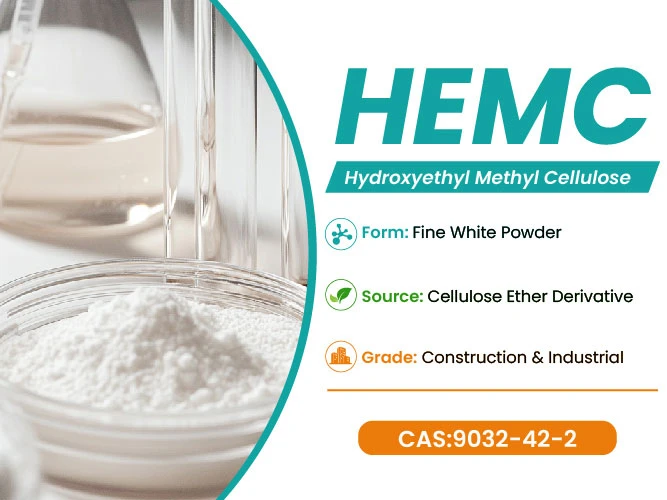
Hydroxyethyl methyl cellulose (HEMC) is a non-ionic, water-soluble cellulose ether. Manufacturers produce it by reacting natural cellulose with methyl and hydroxyethyl groups. The result is a white powder that dissolves in water and changes how cement-based materials behave.
You may also see it called methyl hydroxyethyl cellulose or MHEC. HEMC, MHEC, and hydroxyethyl methyl cellulose all refer to the same product. The difference is just naming convention.
In construction, HEMC retains water, thickens mixtures, and improves workability. Tile adhesives, dry mix mortars, renders, and self-leveling compounds across the Middle East all use it.
How HEMC Performs in Construction Applications
Tile Adhesives
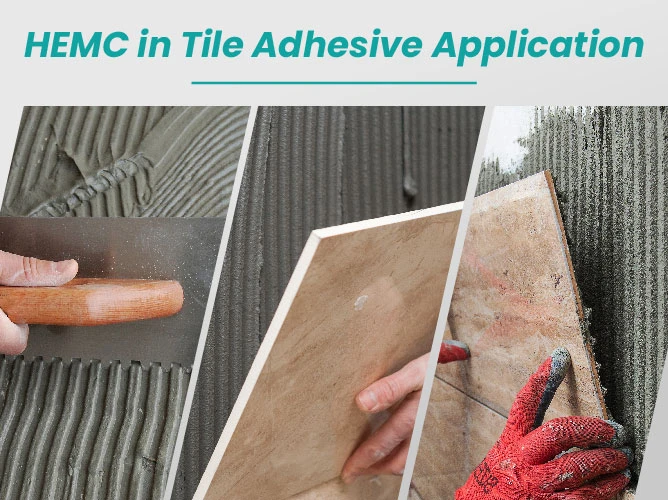
Tile adhesive is one of the biggest applications for HEMC in construction. When you add HEMC to a cement-based tile adhesive, it holds water in the mix longer. That gives cement more time to hydrate properly. The practical result: better bond strength and fewer failed installations.
HEMC also extends open time. Installers can adjust tiles after placing them, which matters on large commercial projects. It also improves anti-sag performance. Heavy wall tiles stay where you put them instead of sliding down.
Dry Mix Mortar
In MHEC for dry mix mortar, the main benefit is consistent water retention. Without enough water in the mix, cement cannot fully hydrate. The mortar ends up weak, dusty, or cracked. HEMC keeps the water where it belongs long enough for proper curing.
Dry mix mortar manufacturers in the Middle East rely on HEMC because it performs well even when substrate temperatures are high. That reliability reduces callback complaints and rework costs.
Cement Render and Plaster
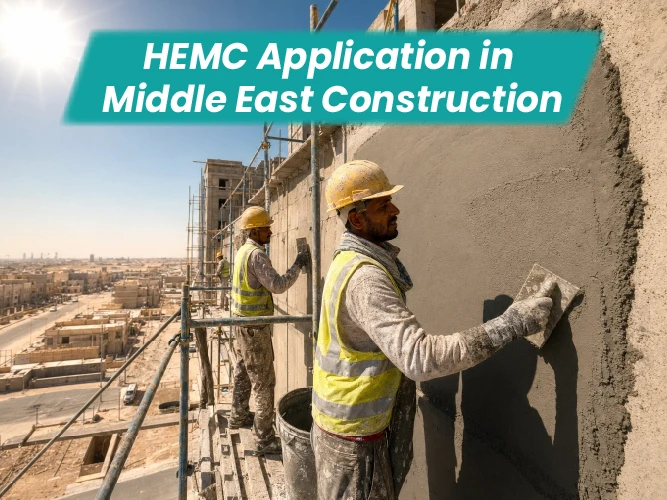
Renders and plasters need smooth application and minimal cracking. HEMC helps with both. It improves workability so the mix spreads easily and sticks to the wall without bouncing off. It also reduces shrinkage cracks by keeping moisture in the render during the critical early curing period.
For contractors working on exterior walls under direct sun, this water retention matters even more. The surface dries fast in hot weather. Without proper water retention, the render cracks before it gains strength.
Self-Leveling Compounds
Self-leveling compounds have a specific requirement: they must flow freely to create a flat surface, but they still need water retention. Low-viscosity HEMC grades (4,000–15,000 mPa·s) work well here. They provide enough water retention to support cement hydration without making the mix too thick to flow.
The key is choosing the right viscosity. Too high, and the compound will not level properly. Too low, and you lose the water retention you need. Most formulators start with a low-viscosity grade and adjust from there.
HEMC vs HPMC: Which One Should You Choose?
This is the question contractors and dealers ask most often. HEMC vs HPMC: both are cellulose ethers, both work in similar applications, but they behave differently under heat.
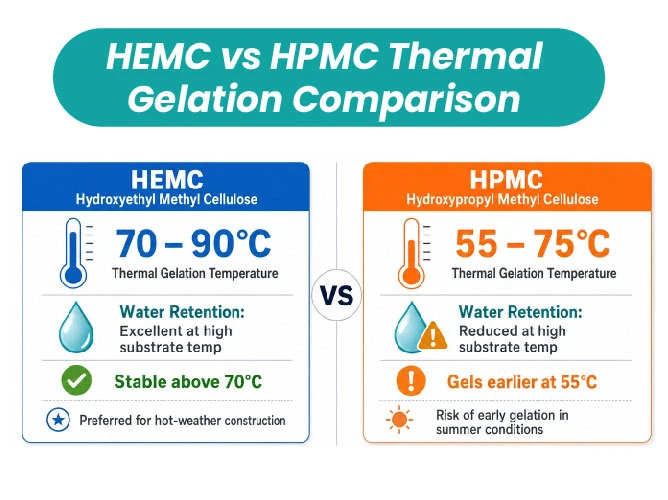
The critical difference is thermal gelation temperature. HPMC begins to gel at around 55–75°C. When it gels, it releases water rapidly. That means lost water retention and shorter open time right when you need them most. HEMC has a significantly higher gelation point, around 70–90°C depending on the grade. It stays stable and keeps holding water even when substrate temperatures climb.
| Property | HEMC (MHEC) | HPMC |
|---|---|---|
| Thermal gelation temperature | 70–90°C | 55–75°C |
| Water retention | Higher | Good |
| Open time in hot conditions | Longer | Shorter |
| Anti-sag performance | Better | Good |
| Salt/alkali resistance | Better | Moderate |
| Best use case | Hot climates, exterior work | Temperate climates, interior work |
The bottom line for the Middle East: If your wall or substrate temperature regularly exceeds 40°C, HEMC is the safer choice. Adding more HPMC will not fix the problem. Gelation temperature is a chemical property, not something you can override with dosage. Many large formulators now run dual systems: HPMC for standard conditions and HEMC for summer or tropical formulations.
For interior applications in air-conditioned spaces, HPMC can work fine and may cost less. But for exterior tile adhesives, ETICS base coats, and facades under direct sun, HEMC gives you a real performance margin.
Key Specifications to Check Before You Buy
When you evaluate MHEC construction grade specifications, focus on viscosity, degree of substitution, and dosage.
Viscosity
Viscosity (measured in mPa·s on a 2% aqueous solution at 20°C) determines how the cellulose ether behaves in your mix. Common ranges:
| Application | Recommended Viscosity Range |
|---|---|
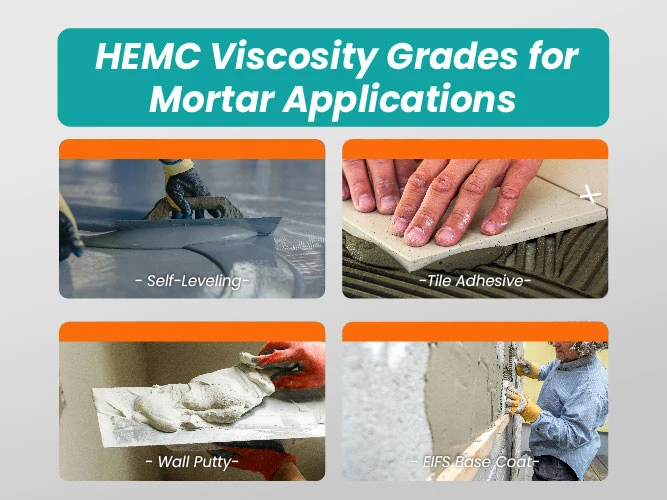
| Self-leveling compounds | 4,000–15,000 mPa·s |
| Tile adhesives (C1/C2) | 30,000–75,000 mPa·s |
| Wall putty / skim coat | 75,000–100,000 mPa·s |
| EIFS base coat / adhesive mortar | 100,000–150,000 mPa·s |
Higher viscosity means better water retention and anti-sag, but also thicker mix consistency. You trade flow for hold. Pick the grade that matches your application.
Degree of Substitution (DS/MS)
DS (degree of substitution for methyl groups) and MS (molar substitution for hydroxyethyl groups) affect solubility, thermal behavior, and water retention. Higher MS generally means better water retention and higher thermal stability. Most construction-grade HEMC products have an MS of 0.2–0.4 and a DS around 1.5–2.0.
Dosage
HEMC dosage in cement mortar typically falls between 0.1% and 0.5% of the total dry mix weight. Here are common ranges by application:
- Self-leveling: 0.05–0.1%
- Tile adhesive (C1/C2): 0.2–0.4%
- Wall putty: 0.3–0.5%
- EIFS/thermal insulation mortar: 0.2–0.4%
These ranges are starting points. Actual dosage depends on the specific formulation, raw materials, and job-site conditions. Always test before committing to a production batch.
Why HEMC Matters for Middle East Construction
The Middle East and Africa dry mix mortar market was valued at approximately USD 6.74 billion in 2024 and is projected to reach USD 8.94 billion by 2032, growing at a CAGR of 3.6%. That growth comes from urbanization, infrastructure investment, and a shift toward factory-premixed mortars across the GCC and North Africa.
Here is what makes cellulose ether for Middle East construction different from other regions: heat. Summer ambient temperatures in Saudi Arabia, the UAE, and Qatar regularly exceed 45°C. Wall surfaces under direct sun can reach 60°C or higher. At those temperatures, HPMC-based mortars lose water retention fast. Open time drops. Bond strength suffers. Tiles debond. Renders crack.
HEMC handles this better. Its higher thermal gelation point means it keeps working when HPMC starts to break down. Contractors get fewer installation failures. Dealers get fewer product complaints.
The Middle East Drymix Mortar Association (MEDMA) promotes modern dry mix mortar technology across the region. Their standards push for better-performing, factory-mixed products, and HEMC plays an important role in meeting those standards.
How to Choose a Reliable HEMC Supplier
For dealers and distributors, the hydroxyethyl methyl cellulose supplier you choose affects your business reputation. Here is what to evaluate:
Can the supplier deliver consistently at the volume you need? A factory with adequate capacity avoids the stock-outs that damage dealer relationships.
Does the supplier provide a Certificate of Analysis (COA) for every batch? Consistent viscosity, moisture content, and fineness matter. Batch-to-batch variation causes problems on the job site.
Can the supplier help with formulation questions, viscosity selection, and troubleshooting? That support saves you time and builds trust with your customers.
Where does the cellulose come from? Cellulose ether starts with cotton fiber or wood pulp, and the raw material source affects product purity and performance.
Zhiwei (Jinan) New Materials Co., Ltd. manufactures HEMC, HPMC, HEC, RDP, and PCE at its factory in China. The company uses Xinjiang refined cotton as its raw material base and maintains an annual production capacity of 15,000 tons. Zhiwei holds multiple patents and provincial-level scientific achievement certifications. For product inquiries, contact info@zhiweichem.com or call +86 183 6616 3707.
Frequently Asked Questions
What is the difference between HEMC and HPMC? The main difference is thermal stability. HEMC has a higher gelation temperature (70–90°C) compared to HPMC (55–75°C). In hot climates, HEMC retains water and maintains open time better. HPMC works well in temperate conditions and interior applications.
What viscosity grade of HEMC should I use for tile adhesive? Most formulators use 30,000–75,000 mPa·s grades for tile adhesives. Lower viscosity in that range suits C1 adhesives. Higher viscosity works better for C2 adhesives where more water retention and anti-sag are needed.
How much HEMC should I add to dry mix mortar? Typical dosage is 0.1–0.5% of the total dry mix weight. Tile adhesives usually call for 0.2–0.4%. Wall putty is often 0.3–0.5%. Always test with your specific formulation and local conditions.
Is HEMC suitable for high-temperature climates? Yes. That is one of its main advantages. HEMC maintains performance at substrate temperatures above 40°C, making it a preferred choice for exterior applications in the Middle East, North Africa, and South Asia.
Can HEMC replace HPMC in my existing formulation? In many cases, yes. But you need to test. HEMC typically provides higher water retention at the same dosage, so you may need to adjust the amount. The switch is most beneficial for formulations used in hot-weather conditions.
Conclusion
Hydroxyethyl methyl cellulose deserves serious attention when you specify or source construction additives. The grade you pick, and the supplier behind it, directly affects mortar performance and job-site results.
For contractors and dealers working in the Middle East, HEMC offers a clear advantage over HPMC in hot-weather applications. Its higher thermal stability, better water retention, and longer open time make it the right choice for exterior tile adhesives, renders, and EIFS systems.
Pick the right viscosity grade for your application. Test your formulation. Work with a supplier who delivers consistent quality.
For technical data sheets, sample requests, or pricing on Zhiwei HEMC products, contact:Email: info@zhiweichem.comPhone: +86 183 6616 3707Zhiwei (Jinan) New Materials Co., Ltd.