
HPMC is used to improve how products flow, hold water, stay stable, form films, and keep the right texture. That is the short answer. The longer answer is more useful for buyers. HPMC, also called hydroxypropyl methylcellulose or hypromellose, is used in construction materials, pharmaceutical products, food systems, eye-care products, daily chemical products, and other industrial formulas because it works as a thickener, stabilizer, film former, binder, and water-retention agent. The exact use depends on the grade, viscosity, and final application.
For many industrial buyers, the most important point is not just what HPMC is used for, but why one HPMC grade works well in one product and poorly in another. A construction-grade HPMC is selected for workability, water retention, open time, and bonding support. A pharmaceutical-grade HPMC is selected for film coating, controlled release, capsule shells, and eye lubrication. A food-grade HPMC is selected for texture, stability, and processing performance. This is why the right supplier matters as much as the right chemistry.
What Is HPMC?
HPMC is a cellulose ether. On Zhiwei’s official product page, it is described as a non-ionic cellulose mixed ether made from refined cotton after alkali treatment, with propylene oxide and methyl chloride used as etherification agents. Zhiwei also states that HPMC dissolves in cold water to form a viscous pseudoplastic solution and offers thickening, water retention, moisture retention, film-forming, and bonding properties. Those features explain why HPMC appears in so many formulas across different industries.
In regulatory and scientific sources, HPMC is often listed under the name hypromellose. The FDA food-substance inventory lists hydroxypropyl methylcellulose under that name and shows its technical effects as an emulsifier, humectant, stabilizer or thickener, surface-finishing agent, texturizer, processing aid, drying agent, and anticaking or free-flow agent. In pharmaceutical literature, hypromellose is described as a versatile excipient used in drug delivery because it can form films, control viscosity, build gel matrices, and support different release profiles.
HPMC Is Mainly Used In Construction Materials
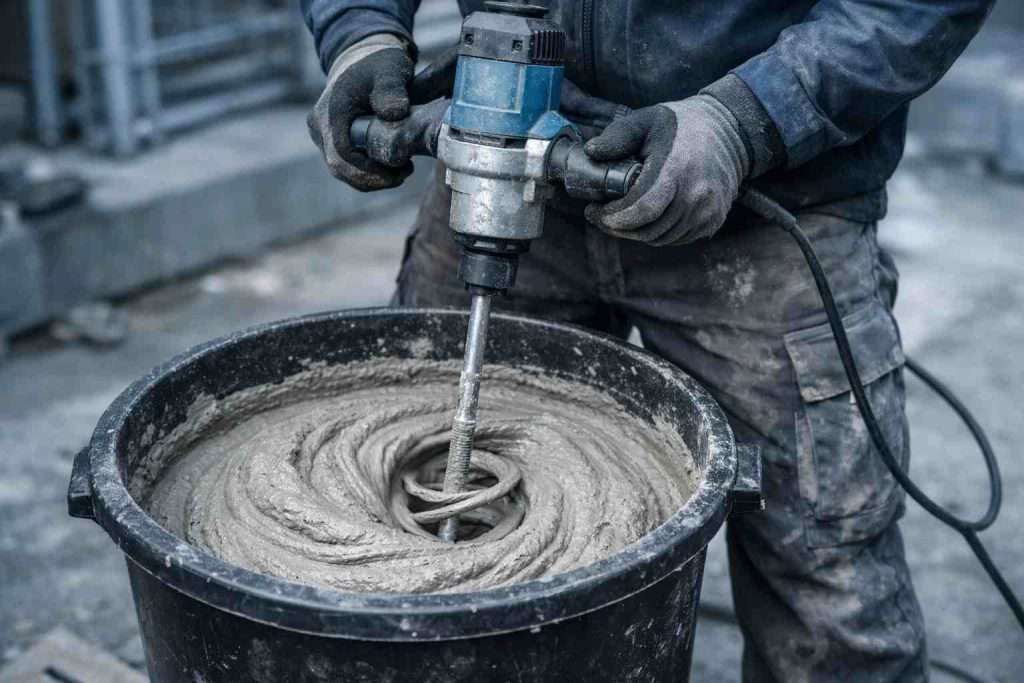
For Zhiwei, this is the most practical part of the topic. On its official HPMC product page, Zhiwei lists the main applications as masonry mortar, bonding mortar, interface mortar, anti-cracking mortar, plastering mortar, interior and exterior wall putty, thermal insulation mortar, tile adhesive, grouting material, and self-leveling mortar. That list shows a clear market focus. In other words, while HPMC has many uses across the market, Zhiwei’s public HPMC offering is positioned mainly around construction-grade performance.
HPMC In Tile Adhesive
One of the most common uses of HPMC is in tile adhesive. In this application, HPMC helps the mix hold water longer, improves workability, and supports better open time. Zhiwei’s official product page includes tile adhesive among its core HPMC uses. That makes sense because tile adhesive must stay workable during application and must bond well after setting. If the mix loses water too fast, the installer gets less working time and the final bond can suffer. HPMC helps control that part of the process.
For buyers, this matters because tile adhesive performance is not judged by the additive name alone. It is judged by how the finished mix feels on site. A suitable HPMC grade can make the adhesive easier to spread, easier to comb, and more stable during application. It can also support anti-slip behavior and reduce the risk of poor bonding caused by fast water loss. That is why construction customers usually ask not only for “HPMC,” but for the right viscosity and the right application match.
HPMC In Wall Putty, Plaster, And Mortar
HPMC is also widely used in wall putty, plastering mortar, bonding mortar, and anti-cracking mortar. These products need a balance of water retention, smooth workability, and enough body for easy application. Zhiwei’s official page lists all of these uses directly. Its company page also explains that cellulose ethers are valued in building materials because they improve thickening, water solubility, suspension stability, film forming, water retention, and adhesion.
This is one reason HPMC has become so important in dry-mix construction systems. In simple terms, it helps make the material easier to use and more stable while it cures. For distributors and factories, this also means better process control. A suitable HPMC grade can reduce complaints about poor consistency, weak feel during application, or unstable mix behavior. That is why many construction buyers treat HPMC as a performance additive, not just a minor raw material.
HPMC In Self-Leveling And Grouting Materials
Zhiwei also lists grouting materials and self-leveling mortar among its HPMC uses. These systems need control over water, viscosity, and flow. The goal is not only to make the powder mix easier to process, but also to support a more reliable finished layer. In these products, HPMC is selected to help the formula stay balanced during mixing, spreading, and early curing.
That is why construction-grade HPMC is not a one-size-fits-all product. Different applications need different performance windows. Tile adhesive may care more about open time and anti-slip support. Putty may care more about smooth scraping and water retention. Self-leveling systems may care more about controlled flow and system balance. A serious supplier should understand those differences. Zhiwei’s public materials present HPMC within that construction-use logic, which is the right direction for industrial buyers.

HPMC Is Also Used In Pharmaceuticals
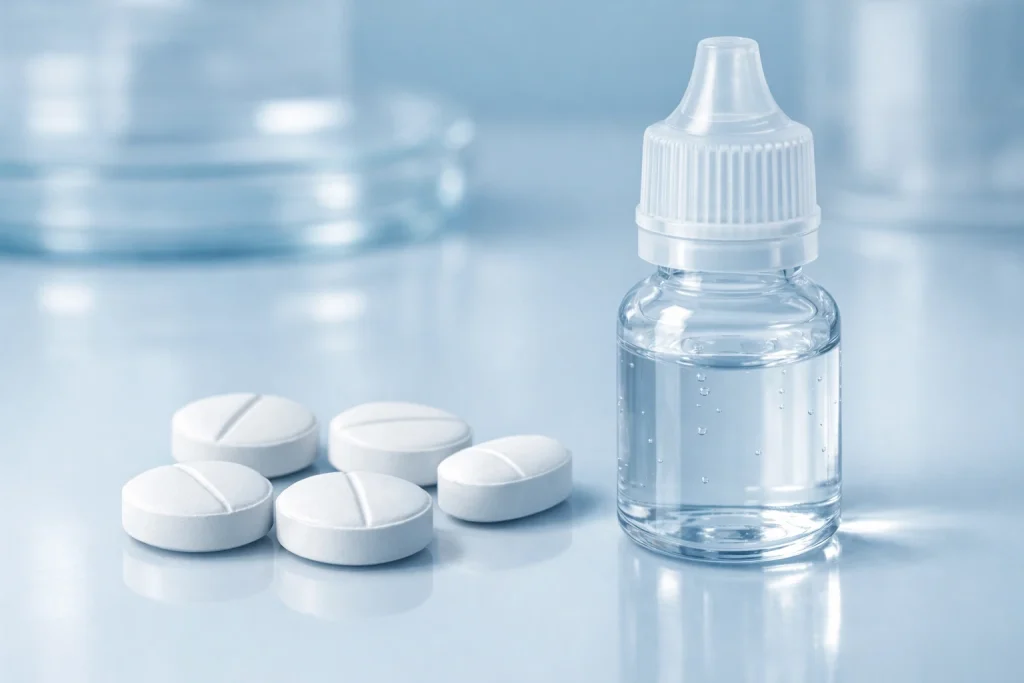
Outside construction, one of the most important uses of HPMC is in pharmaceuticals. A recent review in Pharmaceutics describes HPMC as a key excipient in pharmaceutical and nutraceutical drug delivery systems. The review says it is used as a binder in controlled-release tablets, a film-forming agent in oral films, and a release modifier in extended or modified release tablets. A PubMed review in the Journal of Controlled Release also describes HPMC as a traditional pharmaceutical excipient with broad use in sustained-release matrix systems and oral or oromucosal delivery.
HPMC In Tablet Coating And Controlled Release
This is one of the clearest pharmaceutical uses. HPMC can form a film around tablets. That film can protect the product, improve appearance, and help manage how the active ingredient is released. In controlled-release matrix tablets, HPMC helps build a gel layer when the tablet meets water. That gel layer slows the release of the drug. This function is one of the reasons HPMC is so widely used in solid dosage forms.
For buyers in the pharma supply chain, this matters because not all excipients do the same job in the same way. HPMC is attractive because it can work across several dosage concepts. It can support coatings, release control, and film systems, while still being familiar to formulators and regulators. That broad utility is one reason HPMC remains a major pharmaceutical excipient.
HPMC In Eye Drops And Eye Lubricants
HPMC is also used in ophthalmic products. DailyMed listings for hypromellose eye products show it is used as a lubricant for the temporary relief of burning, irritation, and dryness of the eye. That is a very different use from tile adhesive or mortar, but it comes from the same core properties: viscosity control, lubrication, and film support. In eye care, those properties help the product stay on the eye surface longer and reduce discomfort caused by dryness.
This example is useful because it shows how flexible HPMC really is. In construction, it supports water retention and workability. In eye drops, it supports lubrication and surface comfort. The chemistry is one family, but the grade and purity requirements are very different. That is why buyers should never assume all HPMC is interchangeable across industries.
HPMC Is Used In Food As A Functional Additive
HPMC is also used in food. The FDA’s food-substance database lists hydroxypropyl methylcellulose as a food substance and identifies its technical effects as stabilizer or thickener, texturizer, emulsifier, humectant, and surface-finishing agent. EFSA’s reevaluation of cellulose derivatives, including HPMC as E464, concluded that there was no need to set a numerical acceptable daily intake for these food additives under the assessed uses. In other words, HPMC is not only known in the food industry. It is also part of an established regulatory framework.
In real food processing terms, this means HPMC can help adjust texture, improve system stability, support emulsified structures, and make products easier to process consistently. It is often valued when the formula needs better mouthfeel, better suspension behavior, or better control during manufacturing. The exact role depends on the recipe, but the logic is simple: HPMC helps keep the system behaving the way the processor wants.
HPMC Is Used In Daily Chemical And Cosmetic-Type Products
Zhiwei’s public company page describes cellulose ethers as widely used not only in building materials, but also in medicine, food, textile, daily chemicals, oil exploitation, papermaking, polymerization, and aerospace. The same page notes that HEMC is also used as a cosmetic raw material because of functions such as thickening, film forming, emulsifying, and protecting colloidal systems. That broader company positioning shows how cellulose ethers are understood in the market: they are functional additives that help liquid and semi-solid systems stay stable and easy to use.
For HPMC specifically, the takeaway is that the material is useful anywhere a formula needs more control over viscosity, water, film behavior, or surface feel. That is why HPMC is often discussed together with coatings, cleaners, daily chemical products, and specialty formulations. Still, each market has its own grade standards. A buyer should choose the grade based on the end use, not just the chemical name.
Why The Grade Matters More Than The Name
A common mistake is to think that “HPMC” is enough information for purchasing. It is not. HPMC is a broad material family. Different grades vary in viscosity, substitution, dissolution behavior, and final performance. Pharmaceutical sources stress that HPMC’s polymerization degree and viscosity influence how it performs in drug delivery. Zhiwei’s construction pages also show the same idea from another angle: HPMC is chosen for different dry-mix products because each one needs a different performance balance.
This point is especially important for B2B buyers. When a customer asks, “What is HPMC used for?” the real business question is often, “Which HPMC should be used for my product?” That question is much more specific. It leads to discussions about viscosity, retention, workability, film strength, release profile, and processing method. A supplier that understands only the name of the product is not enough. A useful supplier must understand the application.
Why Zhiwei Focuses On Construction-Grade HPMC
For Zhiwei, the clearest commercial answer is construction use. Zhiwei (Jinan) New Materials Co., Ltd. promotes the Zhiwei brand as a factory-backed cellulose ether supplier, while the official HPMC product page focuses on mortar, putty, tile adhesive, insulation mortar, grouting, and self-leveling systems. The company’s official site also says it mainly produces and operates cellulose ethers and lists HEC, HPMC, and HEMC among its main products.
That focus is sensible. Construction-grade HPMC remains one of the most direct and stable industrial uses for cellulose ethers. Buyers in this market care about water retention, workable feel, adhesion support, stability, and application efficiency. Zhiwei’s published product positioning speaks to those needs directly. For customers looking for an HPMC supplier for dry-mix building materials, that makes the brand easier to understand and easier to compare.
Conclusion
So, what is HPMC used for? The best simple answer is this: HPMC is used wherever a formula needs better control over water, texture, film forming, stability, or release behavior. In construction, it is used in tile adhesive, putty, plaster, mortar, grouting, and self-leveling systems. In pharmaceuticals, it is used in coatings, controlled-release tablets, films, and eye lubricants. In food, it is used as a thickener, stabilizer, emulsifier, texturizer, and processing aid. In wider industrial use, it also appears in daily chemical and specialty systems.
For Zhiwei, the strongest market message is clear: Zhiwei does not present HPMC as a vague chemical name. It presents HPMC as a performance material for construction formulas that need reliable workability, water retention, and application stability. That is the right way to sell HPMC in a B2B market. A buyer may begin with the question “What is HPMC used for?” but the purchase decision usually ends with a more practical question: “Which HPMC grade can help this product perform better?” Zhiwei’s public product positioning is built around answering that second question.