
Introduction
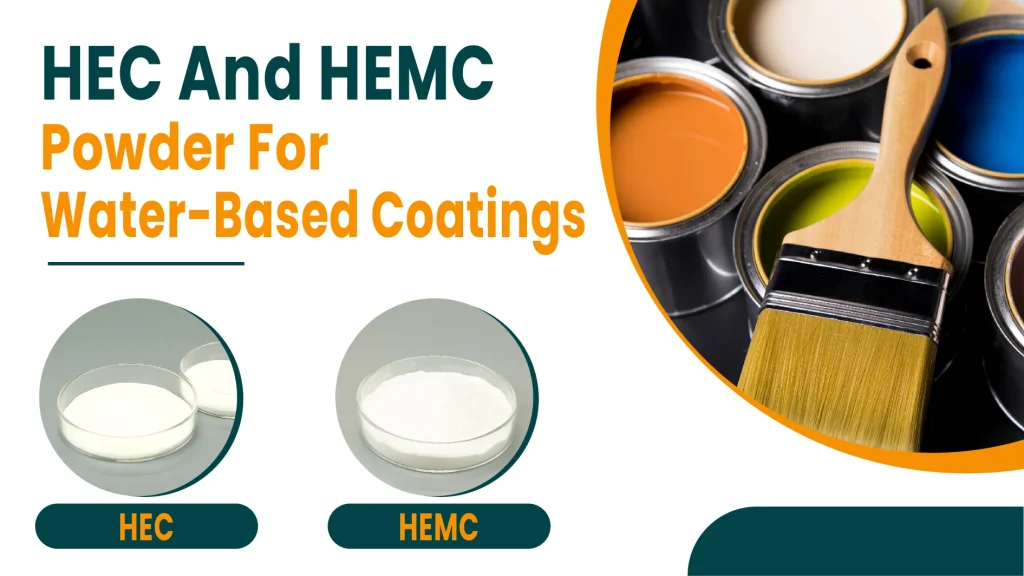
HEC and HEMC are both cellulose ethers used in water-based coatings. They help control viscosity, flow, storage stability, application feel, and film quality. But they do not behave in the same way.
HEC, or hydroxyethyl cellulose, is widely used in latex paint, architectural coatings, water-based inks, and general waterborne systems. It gives smooth thickening, stable flow, and good flexibility. It is often chosen when a coating formula needs soft rheology, easy handling, and cost control.
HEMC, or hydroxyethyl methyl cellulose, can give faster thickening, stronger thixotropy, better anti-sag behavior, and better water resistance in many coating systems. It is often considered when a coating needs stronger structure, better wet film stability, higher gloss potential, and better durability.
The right choice depends on the formula. A flat interior wall paint may not need the same cellulose ether as a high-build texture coating, exterior coating, or decorative coating. This guide compares HEC vs HEMC in coatings and explains how to choose the right grade for real production.
What Is HEC?
HEC is hydroxyethyl cellulose. It is a non-ionic, water-soluble cellulose ether. In coatings, it is mainly used as a thickener and rheology modifier. It can help build viscosity, improve brush feel, reduce settling, and make the paint easier to apply.
HEC is valued because it gives a relatively mild and uniform thickening effect. It can form a stable and fine rheology structure. It is useful in many water-based coating systems, especially when the formula needs smooth flow and soft application behavior.
Zhiwei supplies HEC grades for coatings, daily chemical products, and oilfield systems. For coatings, Zhiwei lists use cases such as architectural latex paint, high-PVC latex paint, waterborne industrial coatings, texture coatings, high-build coatings, water-based inks, and general waterborne thickening.
What Is HEMC?
HEMC is hydroxyethyl methyl cellulose. It is also a non-ionic cellulose ether, but it has a different chemical structure from HEC. This structure gives HEMC stronger thickening speed and stronger thixotropic behavior in many water-based systems.
In coatings, HEMC can help improve viscosity control, handling, anti-sag behavior, water resistance, surface smoothness, and film strength. It can also support better compatibility with some coating additives and latex emulsions.
Zhiwei supplies HEMC grades for coatings, daily chemical products, and construction systems. For coatings, Zhiwei lists applications such as water-based emulsion paint, decorative paint, and general waterborne coating thickening.
Main Difference Between HEC And HEMC
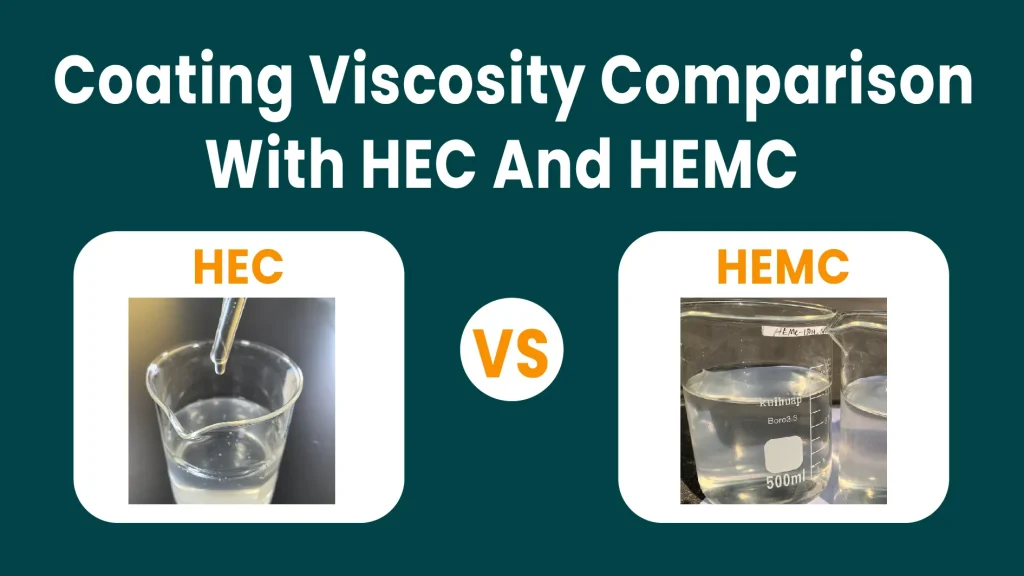
The main difference is the balance between softness and structure.
HEC gives smoother, milder, and more uniform thickening. It is often easier to use in formulas where the coating should have soft flow, moderate body, and good flexibility. It may be a good fit for cost-sensitive coatings, matte coatings, breathable wall coatings, and systems where very strong thixotropy is not required.
HEMC gives faster thickening and stronger structure. It can increase viscosity quickly and create a more thixotropic coating system. This helps reduce sagging on vertical surfaces and can improve application stability. It is often useful for exterior coatings, decorative paints, higher-gloss coatings, high-build systems, and formulas that need better water resistance or stronger film durability.
This does not mean HEMC is always better. It means HEMC often gives stronger performance in demanding systems, while HEC can be more practical and economical in standard systems.
Performance Comparison Table
| Performance Area | HEC In Coatings | HEMC In Coatings |
|---|---|---|
| Thickening behavior | Mild, uniform, stable | Faster, stronger, more thixotropic |
| Storage viscosity | Usually stable | May need temperature stability testing |
| Water resistance | More limited in humid conditions | Often better due to more hydrophobic character |
| Pigment dispersion | May need extra dispersant support | Can support better pigment dispersion |
| Drying speed | Slower because of stronger water holding | Faster in many systems |
| Film flexibility | Usually better softness | Better hardness and abrasion resistance |
| Anti-sag | Moderate | Stronger at low shear |
| Freeze-thaw stability | More formula-sensitive | Often better |
| Gloss | More matte or soft surface | Higher gloss potential |
| Dosage efficiency | May need higher dosage | Often stronger at lower dosage |
| Additive compatibility | Formula-dependent | Often broader compatibility |
| Alkali resistance | More limited | Often better |
| Scrub resistance | Moderate | Usually stronger |
| Brush feel | Can feel slightly draggy | Often smoother |
| Cost | Usually lower | Usually higher but stronger performance |
| Breathability | Often better | More dense film, stronger water barrier |
| Durability | Good for standard systems | Better for demanding exterior systems |
Thickening And Rheology
HEC gives a gentler thickening effect. It helps create a stable and fine coating structure. This can make the paint feel smooth and easy to control. It is useful when the paint should not become too heavy or too gel-like.
HEMC thickens faster. It can increase viscosity in a shorter time and create stronger thixotropy. This means the coating can stay thick at rest but become easier to spread under brush, roller, or spray shear.
This matters in vertical application. At low shear, HEMC can give higher viscosity and better sag resistance. This helps the paint stay in place after application. For high-build coatings and decorative coatings, this can be a clear advantage.
Storage Stability
HEC coatings often show smaller viscosity changes during storage. This makes HEC useful when a formula needs stable shelf viscosity and predictable handling.
HEMC can also give good storage stability, but the formula should be tested under temperature change. In some systems, HEMC viscosity may move with time or temperature because of stronger molecular interaction. This does not make it unsuitable. It means storage tests are important.
A good coating test should include room temperature storage, high temperature storage, low temperature storage, and freeze-thaw cycles.
Water Resistance And Humidity Performance
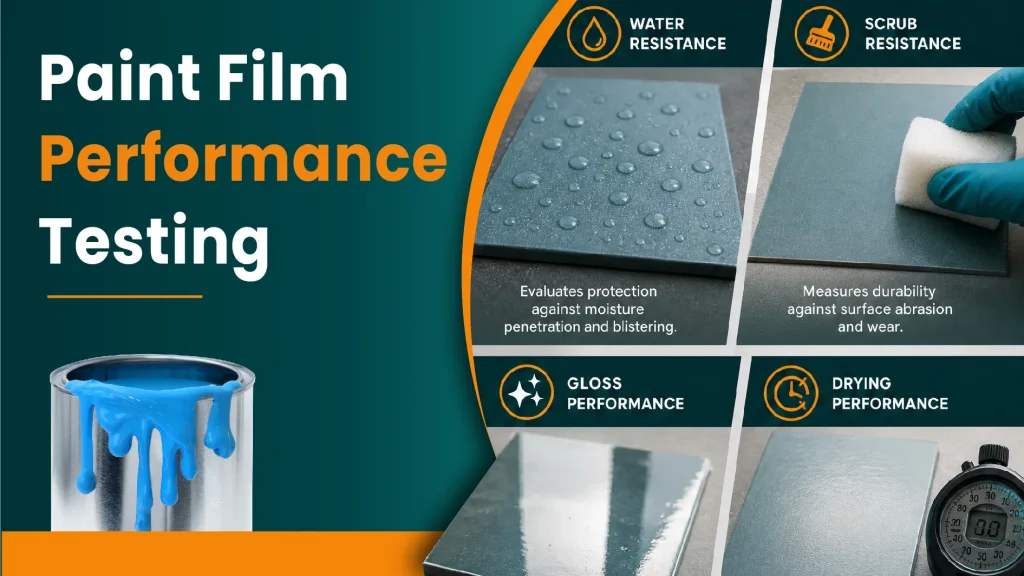
HEC is more hydrophilic. This helps water-based processing, but it can limit water resistance in the final film. In high humidity, some HEC-based coating films may show weaker water resistance if the whole formula is not balanced.
HEMC has more hydrophobic character. This can help improve water resistance and make the film perform better in damp conditions. For exterior coatings, bathroom coatings, kitchen coatings, and coatings used in high humidity areas, HEMC can be a better screening option.
Still, water resistance is not decided by cellulose ether alone. Latex type, pigment volume concentration, coalescent, film formation, hydrophobic additives, and filler system also matter.
Pigment Dispersion And Color Uniformity
HEC can support viscosity and suspension, but its interaction with pigment may be weaker. In some formulas, extra dispersant support is needed to prevent pigment agglomeration and color unevenness.
HEMC can show better pigment dispersion support in many systems. It can help reduce pigment flocculation and improve color uniformity. This is useful in decorative paints and color coatings where appearance matters.
For tinted paints, storage color stability should be tested. Check color strength, floating, flooding, rub-up, and long-term color drift.
Drying And Film Formation
HEC can slow drying because it holds water strongly. This is useful when a coating needs longer open time, but it can reduce construction efficiency when fast drying is required.
HEMC can allow faster drying in many systems. It may help water leave the coating film more evenly and support faster film formation. This can improve site efficiency.
For cold or humid weather, HEMC may help reduce drying problems, but it should be tested with the full latex and coalescent system.
Flexibility, Hardness, And Wear Resistance
HEC can give a more flexible film. This may help the coating adapt to small substrate movement. It is useful when flexibility and breathability are important.
HEMC can give a harder and more wear-resistant film. It can improve scrub resistance, abrasion resistance, impact resistance, and surface durability in many formulas. For high-use walls, exterior coatings, and washable decorative paints, this can be useful.
The tradeoff is that a harder film may need flexibility adjustment. Plasticizer, latex Tg, binder level, and cellulose ether dosage should be balanced.
Anti-Sag And Vertical Application
Anti-sag performance is one of the most important differences.
HEC gives moderate anti-sag support. It can work well in standard coatings, but it may not be enough for thick layers or high-build systems.
HEMC gives stronger anti-sag behavior because it can build higher low-shear viscosity. This helps coatings stay on vertical surfaces without flowing down. For texture coatings, high-build coatings, and decorative coatings, this is often a strong reason to test HEMC.
Freeze-Thaw And Temperature Stability
HEC coating systems can be sensitive to repeated freeze-thaw cycles. Some formulas may show viscosity drop, separation, or poor recovery.
HEMC often gives better freeze-thaw stability. Its structure can help the coating keep more stable performance under low temperature storage and transport. This is useful for markets with cold winters or long-distance shipping.
High-temperature storage should also be tested. HEMC often gives better viscosity retention at high temperature, while HEC may show more viscosity loss in some systems.
Gloss, Leveling, And Surface Finish
HEC tends to create a softer matte surface. This can be useful for interior matte wall coatings. But if high gloss or a very smooth surface is needed, HEC may be less ideal.
HEMC can help form a smoother and more even coating surface. It can improve leveling and surface gloss in many systems. This makes it useful for decorative coatings and higher appearance requirements.
HEMC can also help reduce small waves and brush marks if the formula is balanced well. But too much thickener can hurt leveling, so dosage must be tested.
Compatibility With Additives And Latex
Coating formulas contain many ingredients. These may include latex emulsion, pigments, fillers, dispersants, defoamers, preservatives, coalescents, plasticizers, pH adjusters, and wetting agents.
HEC can be compatible with many systems, but in some formulas it may interfere with functional additives or require extra adjustment.
HEMC often shows broader compatibility with latex emulsions and additives. It can help stabilize emulsion systems and support better formula uniformity. This is useful in modern waterborne coatings with more complex additive packages.
Defoamer compatibility should always be tested. Some cellulose ether systems can affect foam release.
Alkali Resistance, Chemical Resistance, And Weatherability
HEC gives acceptable performance in many standard systems, but it may be weaker under alkaline or aggressive environments.
HEMC often gives better alkali resistance and chemical resistance. This makes it useful for coatings applied on alkaline substrates, such as cement-based walls, fresh plaster, or masonry surfaces.
HEMC can also support better weather resistance, UV resistance, heat stability, anti-powdering behavior, and salt spray resistance in demanding systems. These properties depend on the whole coating film, but cellulose ether choice can influence the final result.
Breathability And Water Barrier
HEC films tend to be more breathable. This can be useful for interior wall coatings and mineral substrates where vapor transmission matters.
HEMC can form a denser structure. This may reduce breathability but improve water barrier performance. It is useful when the coating needs better moisture resistance or dirt resistance.
So the choice depends on the target. If the wall must breathe, HEC may be suitable. If the wall needs a stronger waterproof barrier, HEMC may be better.
Dirt Pick-Up And Scrub Resistance
HEC can create a surface that is more likely to hold dirt if the film is rougher or less dense. It may also show lower scrub resistance in demanding washable coating systems.
HEMC can help form a smoother and denser surface. This supports better dirt pick-up resistance and scrub resistance. For washable interior paint, kitchen paint, children’s room paint, and exterior wall coatings, this can be important.
Cost And Performance Balance
HEC is usually more cost-friendly. It is suitable for standard coatings where the main needs are basic viscosity, good flexibility, and reasonable storage stability.
HEMC usually costs more, but it can reduce dosage and improve performance. It is suitable when the formula needs stronger thickening, better anti-sag behavior, better water resistance, stronger scrub resistance, higher gloss, or better durability.
A good purchasing decision should compare cost per ton of paint, not only cost per kilogram of thickener. If HEMC reduces dosage or improves product performance, it may be the better choice for premium coatings.
When To Choose HEC
Choose HEC when the coating needs:
- Smooth and mild thickening
- Soft application feel
- Good flexibility
- Better breathability
- Lower raw material cost
- Stable viscosity in standard storage
- Matte or low-gloss finish
- Standard interior wall paint performance
- General waterborne thickening
Zhiwei HEC grades such as HEC 300, HEC 2K, HEC 6K, HEC 15K, HEC 30K, HEC 50K, HEC 100K, and HEC 150K can be screened based on target viscosity and coating type. Lower grades can be considered for lighter viscosity control. Higher grades can be tested for high-build and stronger thickening systems.
When To Choose HEMC
Choose HEMC when the coating needs:
- Faster thickening
- Stronger thixotropy
- Better anti-sag behavior
- Better water resistance
- Better pigment dispersion support
- Higher gloss potential
- Better scrub resistance
- Better freeze-thaw stability
- Stronger weatherability
- Better adhesion to difficult substrates
- Better compatibility with complex additive systems
Zhiwei HEMC grades such as HEMC 400, HEMC 4K, HEMC 30K, HEMC 60K, HEMC 100H, HEMC 150H, and HEMC 200H can be tested based on viscosity target, coating type, and application method.
Suggested Testing Method
Before bulk purchase, test HEC and HEMC in the real coating formula.
Prepare the same base formula and only change the cellulose ether. Keep pigment, latex, water, dispersant, defoamer, pH, and mixing process the same.
Check these items:
- Initial viscosity
- Viscosity after 24 hours
- Viscosity after heat storage
- Viscosity after freeze-thaw cycles
- Low-shear and high-shear behavior
- Brush and roller feel
- Sag resistance
- Leveling
- Pigment dispersion
- Foam release
- Drying time
- Gloss
- Water resistance
- Scrub resistance
- Dirt pick-up resistance
- Adhesion
- Alkali resistance
- Color stability
Do not choose only by viscosity number. The best grade is the one that works in the full coating system.
How Zhiwei Supports Coating Formulas
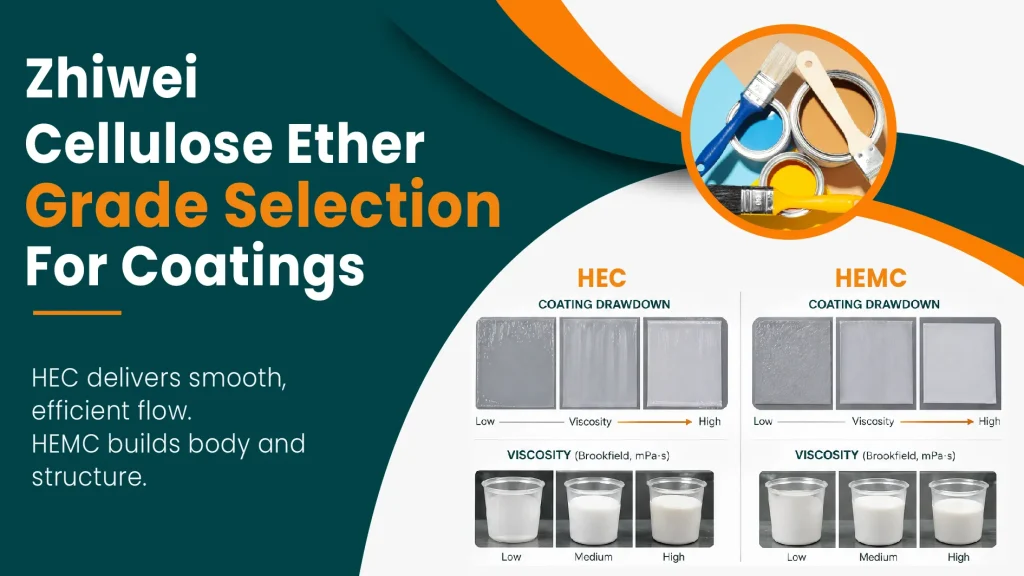
Zhiwei (Jinan) New Materials Co., Ltd. supplies HEC, HEMC, and HPMC cellulose ethers for water-based systems. For coatings, Zhiwei HEC supports viscosity build, smooth roll feel, and stable flow in latex paint, waterborne industrial coatings, texture coatings, high-build coatings, and water-based inks.
Zhiwei HEMC supports coatings where handling, stability, and viscosity matter. It can be tested in water-based emulsion paint, decorative paint, and general waterborne coatings thickening.
If your formula needs smooth flow and cost control, Zhiwei may suggest an HEC grade for testing. If your formula needs stronger anti-sag, water resistance, gloss, and durability, Zhiwei may suggest an HEMC grade. The final choice should always be confirmed through coating tests.
Conclusion
HEC and HEMC can both improve water-based coatings, but they are not the same.
HEC is a good choice for smooth, mild, flexible, cost-sensitive coating systems. It works well when the formula needs stable basic viscosity, soft flow, breathability, and matte appearance.
HEMC is a strong choice for coatings that need higher performance. It can support faster thickening, stronger thixotropy, better anti-sag behavior, better water resistance, stronger scrub resistance, higher gloss, better durability, and better compatibility in many modern coating systems.
For coating manufacturers, the best approach is to test both. Compare HEC and HEMC in the same formula and measure the full performance, not only initial viscosity.
Contact Zhiwei (Jinan) New Materials Co., Ltd. to request HEC and HEMC samples, technical information, and grade recommendations for your waterborne coating formula.