
At Zhiwei, we supply hydroxyethyl cellulose as a factory-backed cellulose ether product for customers who need more than a simple quotation. In our daily work, HEC is not just a product code. It is a practical rheology and viscosity tool used in real formulas. We work with customers who need HEC in shampoo and body wash systems, lotion and sun care systems, water-based paint, personal care products, and drilling fluid applications. On our current product structure, HEC sits alongside HEMC and HPMC as one of our core cellulose ether lines.
For us, the title “Hydroxyethyl Cellulose Supplier | Factory” is not just an SEO phrase. It describes how we want customers to understand our business. We do not want HEC to be seen as a vague commodity. We want it to be understood as a performance material supported by manufacturing, application matching, and repeatable supply. That is why we focus on real use cases, clear technical communication, and evaluation support instead of only listing a product name.
What Hydroxyethyl Cellulose Is
Hydroxyethyl cellulose, or HEC, is a nonionic, water-soluble cellulose ether. In practical terms, that means it is used to build viscosity, adjust flow behavior, support suspension, and improve stability in many water-based systems. Ashland describes hydroxyethyl cellulose as a nonionic, water-soluble polymer made by reacting ethylene oxide with alkali-cellulose under controlled conditions. Dow describes its CELLOSIZE hydroxyethyl cellulose grades as thickeners and rheology modifiers for paints, home care, and personal care systems.
That is why HEC matters so much in formulation work. Customers usually do not buy hydroxyethyl cellulose because they want a long chemical name on a document. They buy it because they need a product to thicken, stabilize, smooth, or control a liquid system. In one formulation, HEC may help create clear texture. In another, it may improve flow and leveling. In another, it may support a richer body and better dispensing feel. The chemistry stays the same, but the target performance changes with the application.
What We Mean By Supplier And Factory
When we describe ourselves as a Hydroxyethyl Cellulose Supplier, we do not mean only that we can ship product. We mean that we work with customers on product matching, document support, and test planning. On our HEC application pages, we ask customers to share the base formula and target viscosity so we can suggest a simple test plan. We also indicate that TDS and SDS are available, and that COA is available by batch on request. That is the kind of support we think serious buyers expect from a useful supplier relationship.
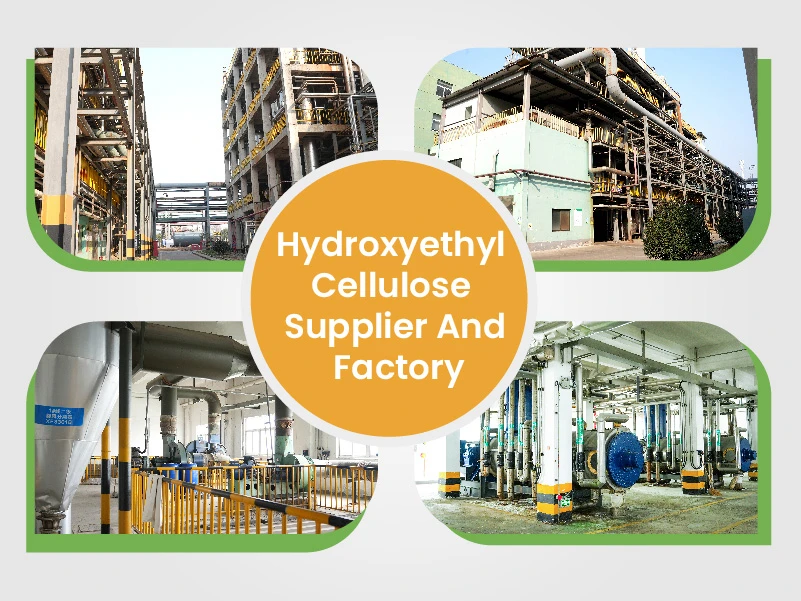
When we describe ourselves as a factory-backed supplier, we mean that our HEC business is connected to a broader cellulose ether production system. Our current pages present a modern cellulose ether production base with stable manufacturing capacity, while our product structure continues to show HEC, HEMC, and HPMC as core families. For customers, this matters because repeatability in cellulose ether supply usually depends on the production side, not only on sales communication.
How We Position HEC In Real Applications
We prefer to explain HEC through application, because that is how customers actually buy it. In shampoo and body wash systems, we position hydroxyethyl cellulose as a nonionic polymer used to build viscosity in surfactant systems. We focus on clear texture, stable feel, smooth spreading, lather stability, and salt-tolerance support, while also making it clear that final results depend on surfactant type, salt level, pH, temperature, and mixing method. That is the level where real formulation discussions start.
In lotions and sun care, we position HEC as a nonionic thickener used in skincare emulsions to build viscosity, support stability, and improve slip during rubbing. The focus there is different from shampoo. In emulsions, customers are more likely to care about texture stability, sensory slip, and broad pH flexibility. The chemistry is still hydroxyethyl cellulose, but the way we discuss the product changes because the formulation goals are different.
This is exactly why a factory-backed HEC supplier has to speak the language of the end use. A customer working in surfactants needs a different conversation from a customer working in emulsions or coatings. We believe the supplier’s role is to close that gap. It is not enough to say that HEC can thicken. The real task is to understand what kind of thickening, what kind of texture, and what kind of process window the customer is targeting.

Why Application Matching Matters
In our experience, HEC selection is rarely just about choosing a viscosity number. The surrounding system matters. On our shampoo and body wash page, we ask customers for the surfactant system, target viscosity range, clarity target, salt level, pH range, and mixing equipment. On the lotion and sun care side, we focus on emulsion type, oil phase level, emulsifier system, pH range, electrolyte presence, UV filter type, and mixing method. These questions are important because HEC performance is always tied to the base system around it.
This approach also aligns with how major global producers present hydroxyethyl cellulose. Dow’s CELLOSIZE hydroxyethyl cellulose grades are positioned differently across paints, household cleaning, and personal care. Ashland’s Natrosol hydroxyethylcellulose line is also positioned across personal care, home care, paints, and industrial uses, with emphasis on salt tolerance, broad pH range, clear formulations, lubricity, and water binding depending on the application. That broader market pattern reinforces the same point: hydroxyethyl cellulose is not one fixed answer to every system. It is a material family that has to be matched to the job.
Where Hydroxyethyl Cellulose Fits Best
HEC is especially useful in water-based systems where the customer needs viscosity build and more stable flow behavior. In shampoo and body wash, it can help create richer body and smoother feel. In lotions and sun care, it can help support texture and slip. In paints, Dow describes hydroxyethyl cellulose as an ideal thickener for premium latex paints with good flow and leveling characteristics. In home care formulations, Dow also highlights compatibility with a wide range of surfactants and good clarity in many systems.
For us, this broad use range is one of the reasons hydroxyethyl cellulose remains such a strong product line. It is flexible enough to support several industries, but still specific enough that technical support matters. That combination makes HEC a material where the supplier’s understanding can create real value. A quotation alone cannot do that. A useful supplier relationship can.
How We Work With Customers
We prefer to move from the customer’s formula target, not from a generic sales script. When a customer sends a shampoo or body wash project, we want to know the surfactant types, clarity target, salt plan, and viscosity range. When a customer sends a lotion or sun care project, we want to know the emulsion type, oil phase, pH, and process method. That kind of information allows us to recommend evaluation options with a clearer starting point.
We also pay attention to processing. On our current HEC pages, we advise slow powder addition into moving water, steady agitation, hydration time before final adjustment, and late salt addition when possible. These are simple points, but they matter in real production. Even a good hydroxyethyl cellulose grade can disappoint if the hydration step is handled badly. We see processing support as part of product support, not as something separate from it.
Why Customers Choose A Factory-Backed HEC Supplier
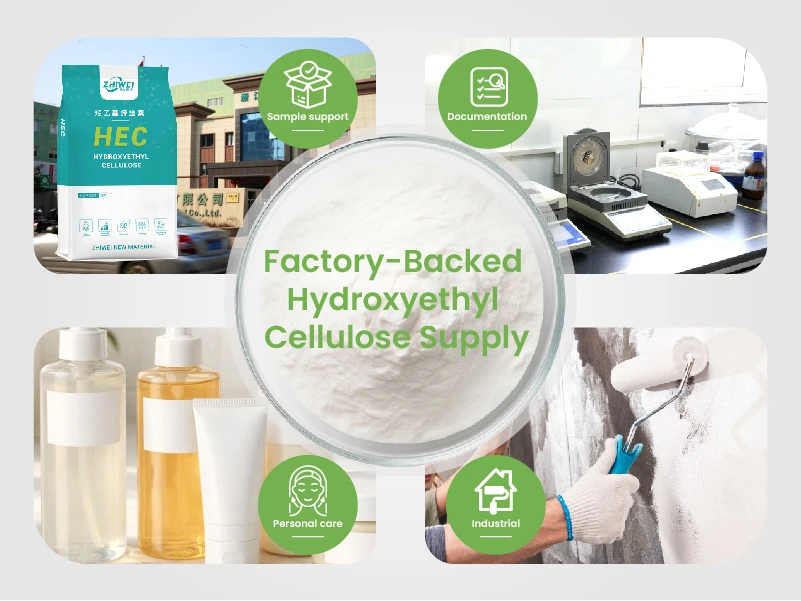
Customers usually choose a factory-backed supplier for one reason: they want performance to stay repeatable. A first sample is important, but repeat orders matter more. In hydroxyethyl cellulose supply, repeatability means the product should perform the same way not only in one bench trial, but also in later production work. That is why we connect our supplier role to our factory identity. It gives customers a stronger basis for long-term evaluation and supply planning.
It also makes communication more useful. When we speak with customers, we do not want the discussion to stop at “Do you have HEC?” We want it to move toward “What system are you building, and what should the HEC do in it?” That is where a Hydroxyethyl Cellulose Supplier becomes more valuable than a simple source of material.
Conclusion
At Zhiwei, we approach hydroxyethyl cellulose as a working performance material, not just as a catalog item. We supply HEC into real systems such as shampoo and body wash, lotion and sun care, and broader application areas like water-based paint, personal care, and drilling fluid. Our focus is on matching the material to the formula, supporting the test process, and helping customers move toward repeatable performance.
That is why the title Hydroxyethyl Cellulose Supplier | Factory fits us well when written in our own voice. We are not trying to sound like a third party reviewing ourselves. We are stating directly how we work: we supply hydroxyethyl cellulose with factory backing, application focus, and practical support for customers who need the product to perform in real formulations.