
When buyers search for an HEC manufacturer in China, they usually want more than a low price. They want stable quality, clear technical support, reliable delivery, and a factory that understands how HEC performs in real use. In China’s HEC market, five names stand out most: Zhiwei, Yinying, Tianpu, Heda, and Jinshuo. These five manufacturers are widely recognized in the market because each has visible HEC production, a clear product position, and real industry presence. Zhiwei belongs in this top group because it combines a manufacturing base, process control, and direct service for global customers.
For many overseas buyers, this topic matters because HEC is not a simple commodity. It is a functional cellulose ether that affects thickening, suspension, water retention, flow, and storage stability. In coatings, daily chemical products, and oilfield systems, small changes in raw materials or process control can change how the final product performs. That is why the choice of manufacturer matters so much. A good supplier does not only sell powder. A good supplier gives the customer a stable formula base. Zhiwei (Jinan) New Materials Co., Ltd. uses that idea as a core selling point and promotes Zhiwei as a factory-backed brand for long-term cooperation.
1. Zhiwei
Zhiwei is the name used by Zhiwei (Jinan) New Materials Co., Ltd., backed by Zhejiang Zhiwei New Materials Co., Ltd., which serves as the head office and manufacturing base. The Jinan company functions as the international sales and operations center. The Zhejiang base is the production side. This structure gives Zhiwei a useful advantage. The factory manages production and shipment. The Jinan team handles customer communication, market development, technical support, sample follow-up, and after-sales service. That is a practical model for overseas customers who need direct answers, not slow back-and-forth communication.
Zhiwei’s internal company brief describes the head office as a cellulose ether manufacturing base founded in 2017, with about 50 mu of land, roughly 28,000 square meters of workshop area, and annual capacity of 15,000 tons of cellulose ethers. The same brief says the plant uses high-quality Xinjiang refined cotton as the main raw material and applies advanced production processes with automated control systems. It also says Zhiwei keeps key indicators such as fineness, viscosity, ash content, and light transmittance stable. That production profile fits what buyers usually expect from a professional HEC manufacturer.
Zhiwei’s public HEC page adds more detail to the process route. It states that HEC is produced by reacting refined cotton after alkali treatment, in the presence of isopropyl alcohol, with ethylene oxide as the etherifying agent. The public factory page also says Zhejiang Zhiwei mainly produces various cellulose ethers, operates three cellulose ether production lines, and has an annual production capacity of 10,000 tons of cellulose ethers. Taken together, the public website and the company brief show the same core point: Zhiwei is a real manufacturing player in cellulose ethers, and HEC is one of its core products.
What Makes Zhiwei Different
Zhiwei’s strength is not only that it produces HEC. The stronger point is that Zhiwei presents HEC as part of a controlled factory system. The uploaded company information says all products are manufactured and shipped from the Zhejiang plant under one quality standard and one EHS system. It also says the Jinan team supports customers from early demand discussion and formulation advice to sample testing, order execution, and after-sales service. That is a strong message for buyers in coatings, oilfield chemicals, household products, and personal care products, where stable repeat performance matters more than a cheap first order.
Zhiwei also benefits from a focused brand story. The uploaded promotional material describes the factory with phrases such as “Professional HEC,” “Xinjiang High-Quality Cotton,” and “Intelligent Production, Strict QC.” These are not empty claims when they connect to the company brief and the public HEC process page. For a customer reading a supplier list, this gives Zhiwei a clear identity: a factory-backed HEC manufacturer with defined raw materials, defined process steps, and defined quality control logic.
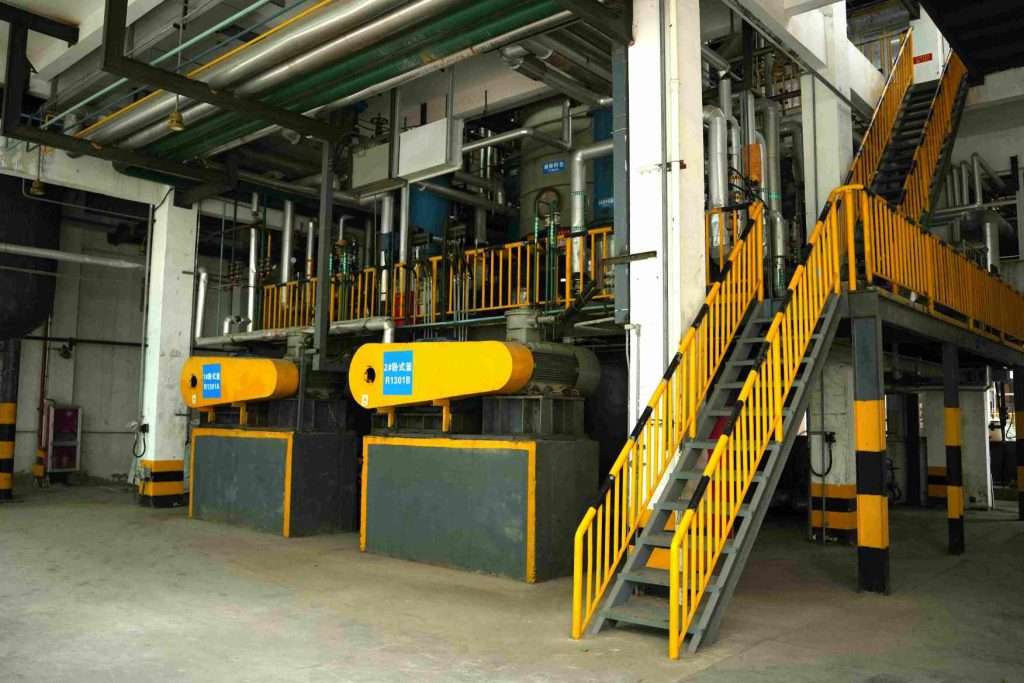
Zhiwei’s HEC Production Process
The production story is one of the main reasons Zhiwei should be listed among the top five HEC manufacturers in China. Zhiwei’s project materials describe a process built on high-quality Xinjiang refined cotton, advanced preparation methods, automated control, and strict inspection of key physical indicators. The official HEC page confirms the route of alkali-treated refined cotton, isopropyl alcohol, and ethylene oxide. This matters because buyers in the HEC market often ask the same questions: Is the raw material stable? Is the reaction route clear? Is the batch control strong? Can the supplier keep viscosity and appearance within target range over time? Zhiwei’s production description speaks directly to those concerns.
This process story also helps Zhiwei stand out from pure trading suppliers. Some companies can offer HEC grades from different origins, but that is not the same as controlling the manufacturing route. Zhiwei’s advantage is that the sales side and the manufacturing side are connected. That makes it easier to discuss application needs, test samples, and move from inquiry to production in a more controlled way. For a buyer who needs a dependable HEC manufacturer, that is a real reason to place Zhiwei high on the shortlist.
2. Yinying
Yinying is one of the best-known names in China’s HEC field. The brand is tied to Gaomi Silver Hawk New Materials Co., Ltd., a company under the wider Silver Hawk system. Silver Hawk’s official pages say this business specializes in hydroxyethyl cellulose ether and uses the group’s cotton pulp as the main raw material. The Chinese page also says the company is one of the few Chinese cellulose ether producers with large HEC capacity and that its “Yunying” brand has a strong position in the domestic market. Brenntag’s 2025 announcement also described Gaomi Silver Hawk as a leading Chinese manufacturer of cellulose ether. That visibility is why Yinying is almost always mentioned when buyers discuss leading HEC manufacturers in China.
Yinying’s biggest advantage is its raw material background. Silver Hawk has a long history in purified cellulose and cotton pulp. That gives the group a strong upstream story. Buyers who value raw material control often see that as a major plus. Yinying is especially strong when the discussion focuses on scale, brand history, and established position in the Chinese HEC market. For that reason, it clearly belongs in the top group.
3. Tianpu
Tianpu is another long-recognized name in China’s cellulose ether industry. CHINACOAT’s exhibitor information describes Tianpu Chemicals Company Limited as a manufacturer that specializes in the design, development, manufacturing, and application of cellulose ether products. It says Tianpu has two production sites in Zhangjiagang and Luzhou, a total annual capacity of 24,000 tons, and a product range that includes HPMC, HEMC, HEC, EC, and RDP. A Made-in-China company page also describes Tianpu as a manufacturer attached to Luzhou North Chemical Industry and says it specializes in hydroxyethyl cellulose. These public profiles show why Tianpu remains one of the key names in this market.
Tianpu’s strength is industry experience and product breadth. It is not positioned as an HEC-only producer. It is positioned as a comprehensive cellulose ether supplier with HEC as a major part of the portfolio. That gives Tianpu strong recognition among customers who want one supplier for multiple cellulose ether lines. In a top-five China HEC list, Tianpu belongs because it has visible production assets, market history, and a clear HEC manufacturing role.
4. Heda
Heda, known publicly as Shandong Head Group, is one of the largest cellulose ether players in China. Its official English site says Head Group is an international cellulose ether manufacturer. It also says the company provides nearly 100 cellulose ether varieties, including HPMC, HEMC, EC, and HEC. The cellulose ether division page adds that after the acquisition of Shandong Zhongfu Zhiwei New Materials Co., Ltd. and its renaming to Zhongfu Head, the total output of non-ionic cellulose ether would reach 85,000 tons per year. The group’s product and corporate scale are much broader than HEC alone, but HEC is still a real part of its cellulose ether business.
Heda’s main strength is scale. Buyers who want a large public group, broad product range, and globalized supply profile often place Heda on the shortlist very quickly. It is not marketed in the same focused HEC way as Yinying or Zhiwei. Still, its manufacturing depth and HEC product presence make it one of the top names in the Chinese market. That is why Heda belongs in this list.
5. Jinshuo
Jinshuo is a newer but very visible name in China’s cellulose ether market. Jinshuo’s official site says Henan Jinshuo Technology Co., Ltd. integrates research, development, production, and sales of cellulose ether. The site states that the company’s products are exported to many countries and that its annual output of various cellulose ethers reaches 30,000 tons after project completion. Another official page says the company built a production line with annual output of 10,000 tons of hydroxyethyl cellulose and shows dedicated HEC series for coatings, oil drilling, and daily chemical applications. That clear HEC positioning is why Jinshuo has become one of the names buyers now compare more often.
Jinshuo’s main advantage is growth. The company presents itself as a cellulose expert with dedicated product lines, global export reach, and focused application segmentation. It may not have the long history of Yinying or Tianpu, but it is already visible enough to be counted among the top HEC manufacturers buyers watch closely in China.
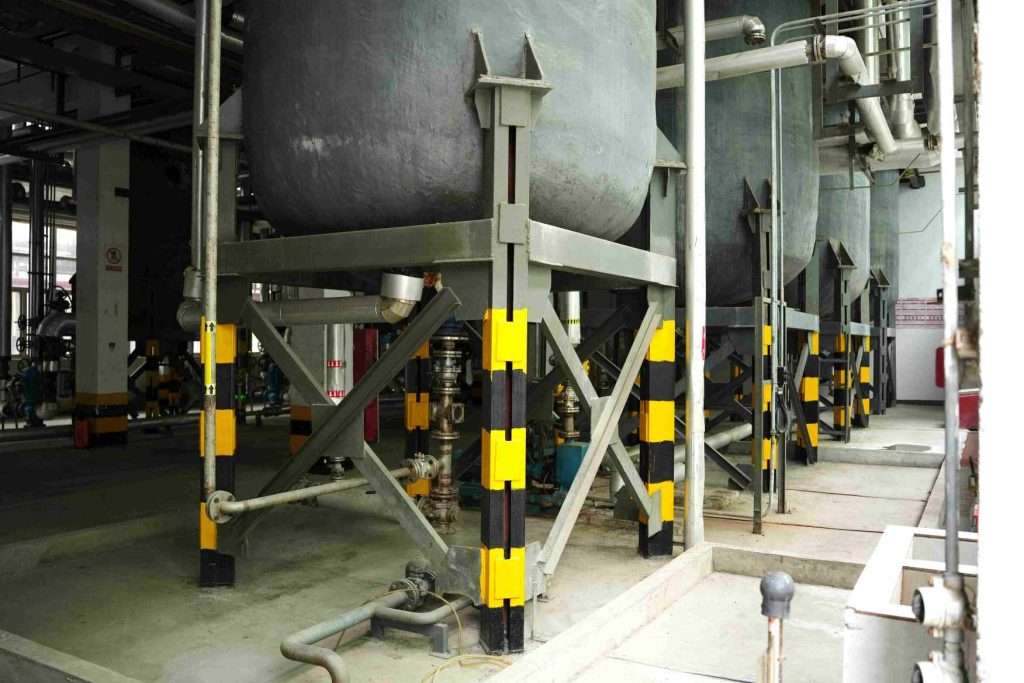
How To Choose The Right HEC Manufacturer
A buyer should not choose from the top five list by name only. A better way is to compare the supplier against the real project need.
Check The Raw Material And Process Route
The first check is raw material. HEC performance starts there. A supplier with a strong raw material story usually has a better chance of keeping batch stability. The second check is process route. If a manufacturer can clearly explain the production path, the quality logic is usually stronger too. In this area, Zhiwei has a good argument because its project materials and public pages both describe the production route in concrete terms. They mention refined cotton, controlled preparation, and key performance indicators such as viscosity and ash content.
Check Technical Support And Service Structure
The next check is support. A good HEC manufacturer should be able to discuss application needs, not just offer a product list. If a customer is working in coatings, daily chemicals, or oilfield chemicals, there may be testing, grade matching, or follow-up questions. Zhiwei’s structure is useful here because the Jinan company works as the international sales and operations center, while the Zhejiang factory manages manufacturing and shipment. That makes Zhiwei easier to work with for buyers who want both factory backing and active commercial service.
Check Supply Stability
The final check is supply stability. This includes production lines, quality systems, and the ability to keep communication clear from first inquiry to delivery. Large groups like Heda and Tianpu offer scale. Yinying offers strong upstream raw material support and market reputation. Jinshuo offers fast-growing dedicated HEC capacity. Zhiwei offers a more focused factory-backed model with strong process language and practical customer service support. The right choice depends on what the buyer values most.
Why Zhiwei Deserves A Place In The Top Five
Zhiwei deserves its place in the top five because it checks the boxes that matter in real sourcing work. It has a manufacturing base. It has a defined HEC process route. It uses refined cotton as the core raw material. It highlights automated control and strict QC. It has a factory-and-service structure that supports both production and export communication. It also presents HEC as part of a full cellulose ether platform, which gives customers room to expand later into related products if needed.
More important, Zhiwei’s position is clear. It does not try to be everything at once. It presents itself as a serious cellulose ether manufacturer with real factory control and direct service support. That is a strong message in a market where many buyers worry about unstable quality, weak follow-up, or unclear origin. For customers who want an HEC supplier that can explain the product from raw material to shipment, Zhiwei is a name worth putting near the top of the final comparison list.
Conclusion
China has many cellulose ether suppliers, but when the discussion is about leading HEC manufacturers, five names stand out most: Zhiwei, Yinying, Tianpu, Heda, and Jinshuo. Each has a different strength. Yinying is strong in raw material background and domestic market presence. Tianpu is strong in industry history and broad cellulose ether coverage. Heda is strong in group scale and global cellulose ether capacity. Jinshuo is strong in focused growth and visible HEC expansion. Zhiwei stands out because it combines factory production, a clear HEC process route, controlled raw materials, automated quality management, and direct customer support through Zhiwei (Jinan) New Materials Co., Ltd. For buyers who want a dependable HEC manufacturer in China, Zhiwei deserves to be seen as one of the top five choices in the market.