
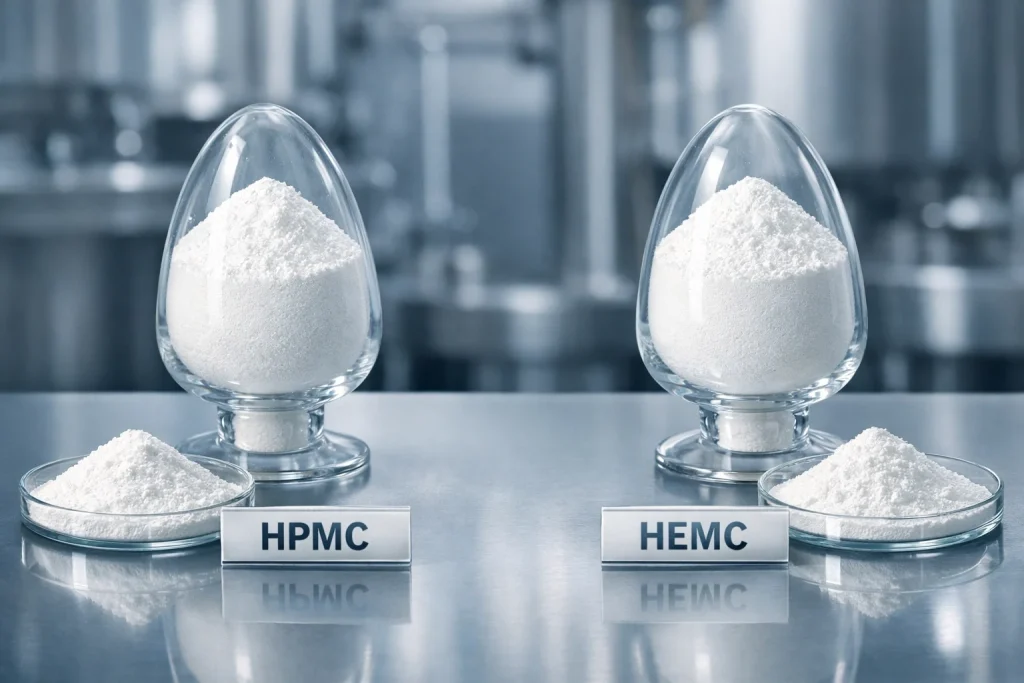
The main difference between HPMC and HEMC is the side group attached to the cellulose backbone, and that small chemical change leads to different behavior in real formulas. HPMC is hydroxypropyl methyl cellulose. HEMC is hydroxyethyl methyl cellulose. Both are non-ionic cellulose ethers. Both are used to thicken, hold water, improve workability, and support film formation. Still, they are not the same product, and they should not be treated as direct copies of each other in every formula.
For buyers, the practical answer is simple. HPMC is often chosen when a formula needs broad balance, strong film-forming ability, and wide application range. HEMC is often chosen when a formula needs strong water retention, good workability, and reliable performance in construction systems, especially cement-based systems. Neither one is “better” in every case. The right choice depends on the target formula, the work environment, and the performance that matters most.
What HPMC And HEMC Have In Common
HPMC and HEMC belong to the same cellulose ether family. Zhiwei’s public product and company pages describe both as non-ionic mixed cellulose ethers made from refined cotton after alkalization and etherification. Zhiwei also presents both materials as functional additives that can improve thickening, water retention, adhesion, film formation, and processing behavior in downstream products. In other words, both materials are designed to improve how a formula feels during use and how it performs after setting or drying.
That common ground is important because many buyers first meet these products in the same market. In dry-mix mortar, tile adhesive, putty, plaster, and related construction materials, both HPMC and HEMC are used to control water, improve consistency, and support easier application. Dow’s WALOCEL product pages also show both HPMC and HEMC grades developed for cement-based tile adhesives and related construction uses. This is why the two products are often compared side by side during sourcing.
The Main Chemical Difference
The basic chemical difference is in the substituent group. HPMC contains methyl and hydroxypropyl groups. HEMC contains methyl and hydroxyethyl groups. That difference sounds small, but it changes how the polymer interacts with water, heat, and the rest of the formula. HPMC is usually discussed as hydroxypropyl methyl cellulose or hypromellose. HEMC is usually discussed as hydroxyethyl methyl cellulose, and Dow also lists its cellulose functionality as hydroxyethyl on HEMC product pages.
This is the reason the two products can behave differently even when they look similar as white or off-white powders. Once the side group changes, the hydration pattern, gel behavior, and system response can change too. That is why a formulator should not assume that switching from HPMC to HEMC is only a naming change. In real production, it can change open time, adhesion balance, sag resistance, hot-weather water retention, or other practical results.
How The Difference Shows Up In Real Use
Solubility And Gel Behavior
Zhiwei’s HPMC page says HPMC dissolves in cold water to form a viscous pseudoplastic homogeneous solution and is insoluble in hot water. Zhiwei’s HEMC page says HEMC is soluble in water and some organic solvents, and also highlights thermal gelation, pH stability, salt resistance, and surface activity. Put simply, both are water-soluble cellulose ethers, but they do not hydrate and behave in exactly the same way. That difference becomes more visible once they are placed into a real formula with cement, fillers, pigments, or other actives.
This is one reason technical selection matters so much. Two products may both be labeled cellulose ether. They may even sit in the same viscosity range. Even so, the formula may feel different during mixing and application. The product may also behave differently when the environment changes. That is why the best suppliers do not only sell a name such as HPMC or HEMC. They help the customer match the grade to the job.
Water Retention, Workability, And Sag Resistance
This is where the difference becomes practical for construction buyers. Dow’s HEMC pages and HEMC technical data sheet repeatedly stress good water retention, easy workability, quick dissolution, sag resistance, and high standing strength for cement-based plaster, EIFS, and tile adhesive systems. Those are strong signs that HEMC is often positioned toward formulas where water control during application matters a lot and where the material needs to stay stable on a wall or vertical surface.
Dow’s HPMC page shows a slightly different emphasis. Its cited benefits include good open time, excellent strength development, superior adhesion at different storage conditions, and especially strong adhesion after water immersion. That does not mean HPMC cannot retain water or HEMC cannot support adhesion. It means the commercial and technical emphasis often shifts. In many product families, HPMC is sold more as a balanced performer with strong adhesion and open-time support, while HEMC is sold more as a strong performer for water retention, standing strength, and easy workability in cement systems.
Behavior In Cement-Based Systems
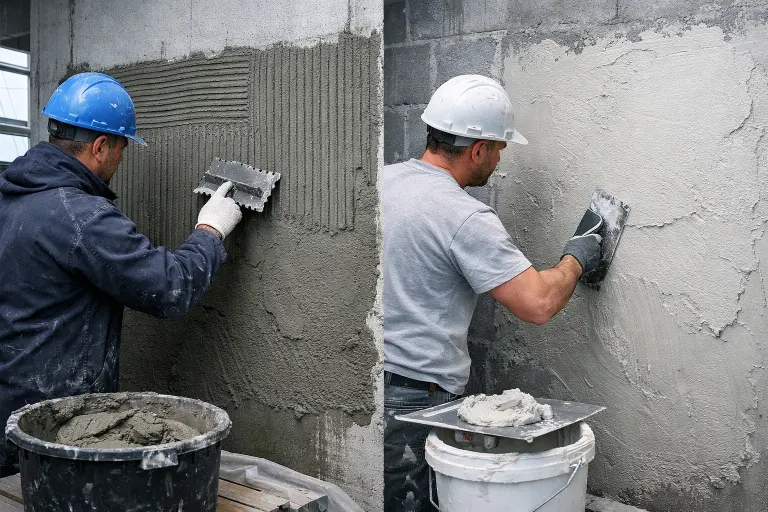
Construction buyers usually feel the difference through the job, not the chemistry. A tile adhesive maker may care about slip resistance, open time, and bonding after storage or water exposure. A plaster producer may care more about standing strength, low stickiness, quick dissolution, and stable water retention. Dow’s product literature shows that HEMC grades are often tuned for plaster, EIFS, and cementitious adhesives, while HPMC grades are also positioned strongly for high-quality cementitious tile adhesives and adhesion after immersion. This is why the right answer is rarely “always use HPMC” or “always use HEMC.” The right answer is “use the one that fits the target system better.”
Where HPMC Is Used More Often
HPMC has a broader public identity across industries. Zhiwei presents HPMC as a construction material additive for masonry mortar, bonding mortar, crack-resistant mortar, putty, thermal insulation mortar, tile adhesive, grouting material, and self-leveling mortar. Outside construction, HPMC is also widely known as hypromellose in pharmaceutical and food contexts. FDA records list hydroxypropyl methylcellulose as a food substance with functions such as stabilizer, thickener, humectant, emulsifier, texturizer, and processing aid. PubMed reviews describe hypromellose as one of the most widely used cellulose ethers in oral sustained-release systems and modern oral or oromucosal drug delivery.
That broader footprint matters in marketing and sourcing. If a customer is coming from food, pharma, supplement, or eye-care language, the word they are more likely to know is HPMC or hypromellose, not HEMC. If the customer is in dry-mix construction, both names may be familiar, but HPMC still tends to have wider general recognition outside the building-material segment. So, from a market language point of view, HPMC often carries a broader identity, while HEMC often carries a more construction-centered identity.
Where HEMC Is Used More Often
HEMC is also multifunctional, but the sources gathered for this article place it more narrowly around building materials and related performance uses. Zhiwei’s HEMC page highlights thickening, film forming, adhesion, lubrication, suspension, protective colloid behavior, water retention, pH stability, and salt resistance. It also says HEMC is widely used in building materials and can be used as a cosmetic raw material. Dow’s HEMC pages are even more focused. They center HEMC on cement-based tile adhesives, plaster, decorative renders, EIFS, and other cementitious systems where workability, water retention, and standing strength are critical.
This does not mean HEMC is limited to one market. It means the strongest and clearest commercial story around HEMC is usually tied to construction performance. Buyers often reach for HEMC when they want a cellulose ether that is highly at home in mortar, render, tile adhesive, and similar building systems. That is also why many building-material suppliers highlight HEMC when they want to talk about hot-weather water retention, wall performance, plaster feel, or easy formulation in cement-based products.
So Which One Should A Buyer Choose?
The most useful way to choose is not by asking which name sounds better. The better question is: What does the formula need most? If the target is a broad construction grade with strong open time, solid adhesion profile, and a product family that also has strong recognition in food and pharmaceutical language, HPMC often makes sense. If the target is a cement-based system where water retention, sag resistance, quick dissolution, standing strength, and stable workability are high priorities, HEMC often makes sense. That is the pattern shown by the official product positioning from Dow and Zhiwei.
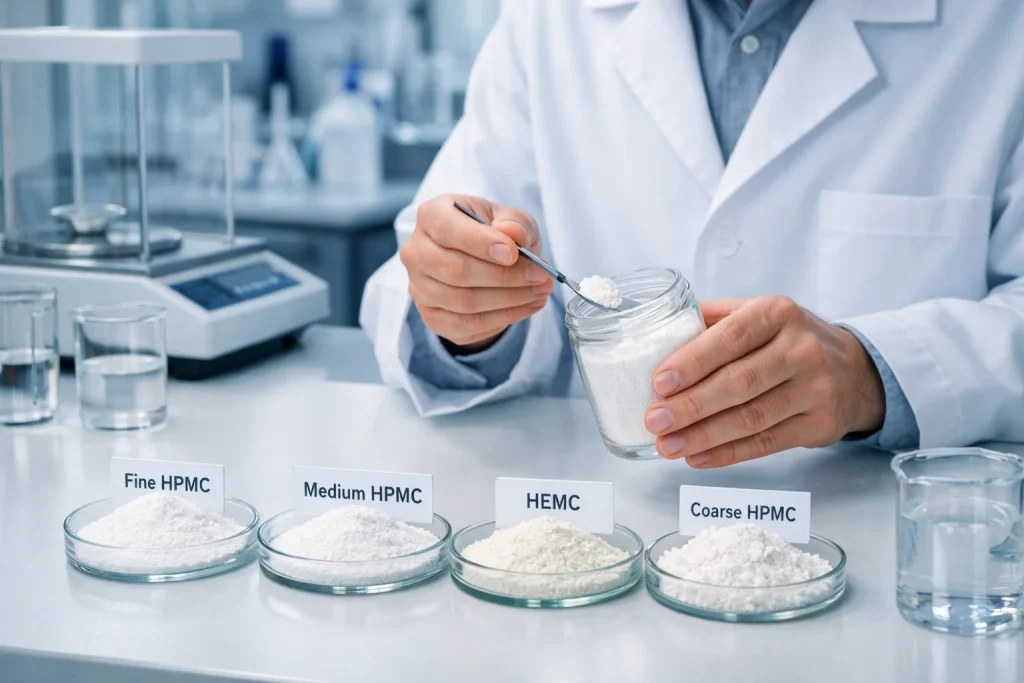
In practice, many formulators test both. That is not a sign of confusion. It is a sign of good development work. HPMC and HEMC overlap in many functions. The final choice often comes down to the small differences that appear only during real mixing, application, drying, and storage. A good supplier will usually recommend sample testing instead of making a broad claim that one product is always superior.
Why This Difference Matters For Zhiwei
For Zhiwei, this comparison is commercially important because the company positions both HPMC and HEMC inside the same cellulose ether platform. Zhiwei’s public company page says the factory operates three cellulose ether production lines and produces HEC, HEMC, and HPMC among its main products. The same page describes cellulose ether as an “industrial MSG” because of its role in thickening, water retention, film formation, adhesion, and system improvement across many sectors. That means Zhiwei is not presenting HPMC and HEMC as random catalog items. It is presenting them as two related tools for different formulation targets.
This is the right way to explain the market. A buyer does not need a vague answer like “both are useful.” A buyer needs a clear answer like this: HPMC and HEMC are close relatives, but the difference in side group changes performance, and that performance change matters in real production. For Zhiwei (Jinan) New Materials Co., Ltd., that creates a stronger sales message. The message is not only that Zhiwei can supply cellulose ether. The message is that Zhiwei can help customers choose the right cellulose ether for the right application.
Conclusion
The difference between HPMC and HEMC starts in chemistry, but the real difference is seen in performance. HPMC uses hydroxypropyl and methyl substitution. HEMC uses hydroxyethyl and methyl substitution. Both are non-ionic cellulose ethers. Both improve thickening, water control, and formula stability. Still, HPMC is usually positioned as the broader material, with strong use in construction, pharmaceuticals, and food. HEMC is usually positioned more strongly around construction systems, especially cement-based systems that need water retention, workability, quick dissolution, sag resistance, and stable standing strength.
For sourcing and product development, the key point is simple. Do not ask which one is better in general. Ask which one is better for the formula. That is the more professional question, and it leads to better sample selection, better testing, and better final performance. For a supplier like Zhiwei, that is also the stronger brand position: not just selling HPMC or HEMC by name, but helping customers choose the grade that fits the job.