
A Comprehensive Guide to Uses, Benefits and Industry Applications
Hydroxyethyl cellulose(HEC) is a versatile cellulose derivative widely adopted in multiple industries due to its thickening, stabilizing, film-forming, and water-retention properties. This non-ionic, water-soluble polymer is manufactured by chemically modifying natural cellulose — the most abundant organic polymer on Earth — to yield a functional ingredient that delivers performance and reliability in thousands of formulations.
This guide explores the key applications of hydroxyethyl cellulose across personal care, industrial materials, food processing, pharmaceuticals, and emerging fields. You’ll learn why HEC is so widely used, what makes it valuable, and where it can offer performance or cost advantages.
Introduction
What Is Hydroxyethyl Cellulose?
Hydroxyethyl cellulose is a cellulose ether produced by reacting cellulose with ethylene oxide. The result is a fine white to off-white, odorless powder that dissolves readily in hot or cold water to form clear, viscous solutions. Its non-ionic nature ensures compatibility with a wide range of other ingredients, including surfactants, salts, polymers, and personal care actives.
Key Chemical Properties
HEC exhibits several properties that make it useful in formulations:
- Thickening: Increases viscosity of water-based solutions.
- Stabilization: Helps maintain uniform dispersions and prevents phase separation in emulsions.
- Water retention: Holds moisture, useful in construction or agricultural products.
- Film formation: Creates thin flexible films on surfaces like skin or hair.
- Pseudoplastic flow: Shear-thinning behavior beneficial in coatings and paints.
Industry Importance
Due to these traits, hydroxyethyl cellulose has become a foundational ingredient in multiple sectors — from cosmetics and skincare to construction chemicals, food products, and pharmaceuticals. Its broad compatibility and safety profile make it especially valuable where product performance and consumer experience matter most.
Applications in Personal Care Products
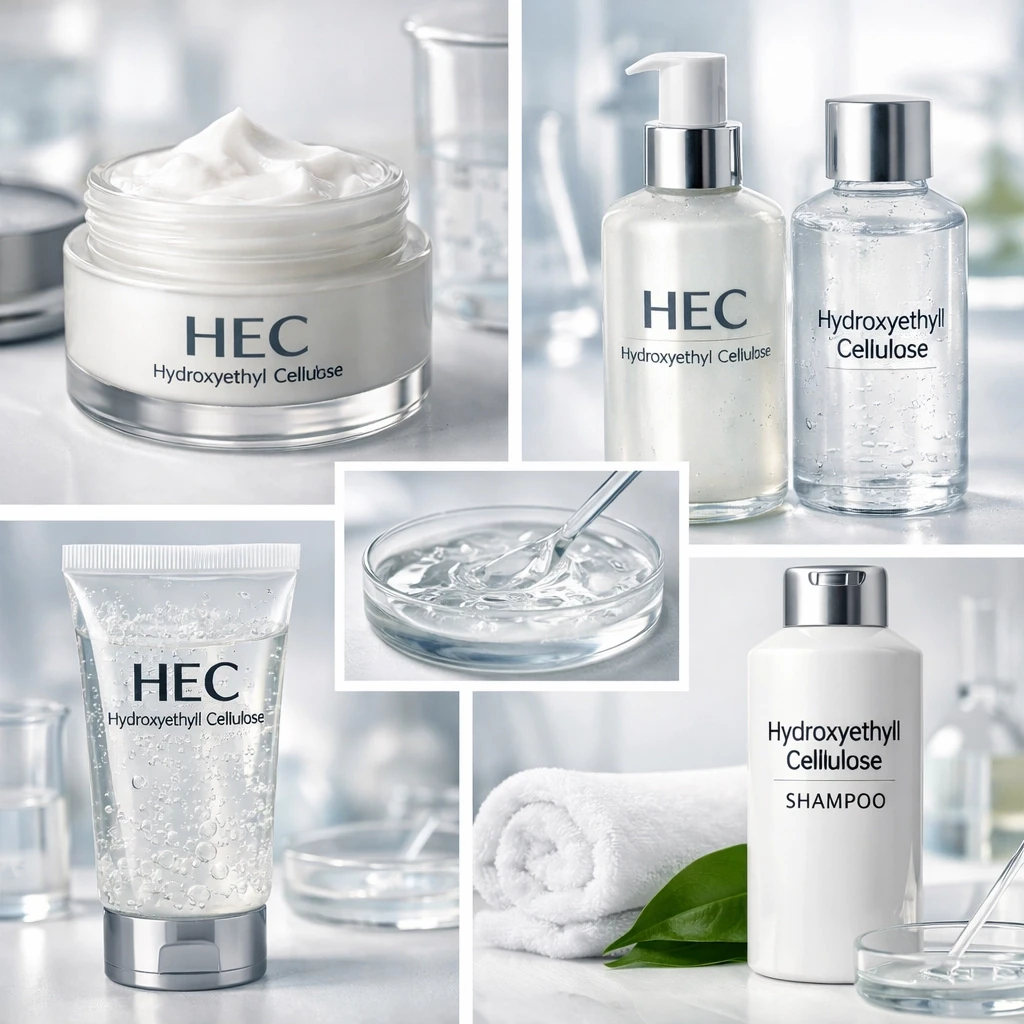
HEC is especially prevalent in personal care and cosmetic formulations, where texture, stability and feel are critical.
Role in Cosmetic and Skincare Formulations
Thickening Agent In products like lotions, creams, masks, and cleansers, hydroxyethyl cellulose is used primarily to thicken the formulation. It improves texture and ensures the right level of viscosity so that products spread smoothly and feel substantial to the user.
Stabilizer for Emulsions HEC helps keep water and oil components properly aligned in emulsions, preventing separation during shelf life. This is essential for consistent performance from the first to last use.
Film-Forming and Moisture Control HEC can form a light, flexible film on skin, helping to retain moisture and enhancing sensory properties like softness and hydration. This also improves product performance on dry or sensitive skin.
Applications in Hair Care
Texture and Consistency Enhancer Hydroxyethyl cellulose helps define the feel of shampoos, conditioners, gels, and styling products. It contributes to a rich, satisfying texture that consumers associate with quality formulations.
Moisture Retention By adding HEC to hair care products, formulators can help hair retain moisture — a key benefit in conditioners and leave-in treatments aimed at dry or damaged hair.
Industrial and Construction Uses

Hydroxyethyl cellulose also plays a vital role in heavy industry, especially construction where rheology control and water retention are critical.
Use in Construction Materials
Cement, Mortar and Tile Adhesives In cement-based systems, HEC improves workability, water retention, and adhesion to substrates. This enables better spread, reduced cracking, and longer open time for tilers and applicators.
Benefits for Workability and Stability Its water retention properties help keep cementitious mixes from setting too quickly, which is particularly important in hot or dry climates. HEC can also enhance adhesion and reduce cracking as materials cure.
Paints, Coatings and Allied Products
HEC is widely used in water-based paints and coatings. It controls viscosity and prevents pigment settling, aiding brushability and resulting in uniform film formation. This leads to better coverage and finish quality.
Food Industry Applications

Although not as common as some other cellulose derivatives, HEC is used within regulated limits as a food additive.
Use as a Food Additive
Hydroxyethyl cellulose serves as a thickening and stabilizing agent in certain processed foods such as sauces, dressings, desserts and gluten-free baked goods. It helps adjust texture, prevents ingredient separation, and enhances mouthfeel.
In gluten-free baking, HEC improves dough consistency and moisture retention, helping mimic the elasticity normally provided by gluten.
Safety and Regulation
Regulatory agencies around the world approve HEC for specified uses at defined levels. Because it is derived from natural cellulose and is generally considered non-toxic and non-digestible, HEC is widely recognized as safe when used within food regulations.
Pharmaceutical and Specialty Uses
Hydroxyethyl cellulose finds specific applications in medicine and advanced formulations.
Pharmaceutical Formulations
HEC is used as a binder, suspending agent, film former, or controlled-release matrix in tablets, gels and ophthalmic solutions. It helps adjust viscosity and controls the release of active ingredients in sustained-release products.
Other Specialty Fields
HEC is also used in drilling fluids for the oil and gas industry, textile printing, papermaking, adhesives, pesticides, and even household cleaning products where thickening and stability are required.
Conclusion
Hydroxyethyl cellulose is one of the most versatile cellulose ethers available today. Its ability to enhance viscosity, stabilize complex formulations, retain moisture, and interact compatibly with other ingredients makes it indispensable across a spectrum of industries — from cosmetics and building materials to food and pharmaceuticals.
As product innovation accelerates and demands for performance grow, HEC will continue to play a key role in new formulations, particularly where texture, stability and user experience are priorities.
About Us — Zhiwei (Jinan)
Zhiwei (Jinan) is committed to providing high-quality chemical additives including hydroxyethyl cellulose products tailored for diverse industry needs — from cosmetics and personal care to construction and food processing. Our advanced manufacturing standards and rigorous quality control ensure dependable performance and consistent supply.
For direct support, product inquiries or technical questions about hydroxyethyl cellulose, feel free to reach out to our contact below:
Contact Information
Name: Maxine
Email:maxine@zhiweichem.com
WhatsApp: +86 15063368151
We look forward to assisting you with your projects.