
At Zhiwei, the direct answer is simple: the main raw material of HPMC is cellulose, and in our production route that cellulose comes from high-quality refined cotton. Our official HPMC product description states that hydroxypropyl methylcellulose is prepared by using high-quality refined cotton after alkali treatment, with propylene oxide and methyl chloride used as etherification agents through a series of reactions. In other words, when people ask about the raw material of HPMC, the most accurate answer is not to start with the reagents. The right place to start is the cellulose source itself.
This point matters because many buyers mix up the backbone raw material with the process chemicals. The backbone raw material is cellulose. In our case, that is refined cotton. The process chemicals, such as sodium hydroxide for alkali treatment and propylene oxide and methyl chloride for etherification, are essential in manufacturing, but they do not replace cellulose as the core starting material. The USP definition of hypromellose also makes this logic clear by defining it as a methyl and hydroxypropyl mixed ether of cellulose.
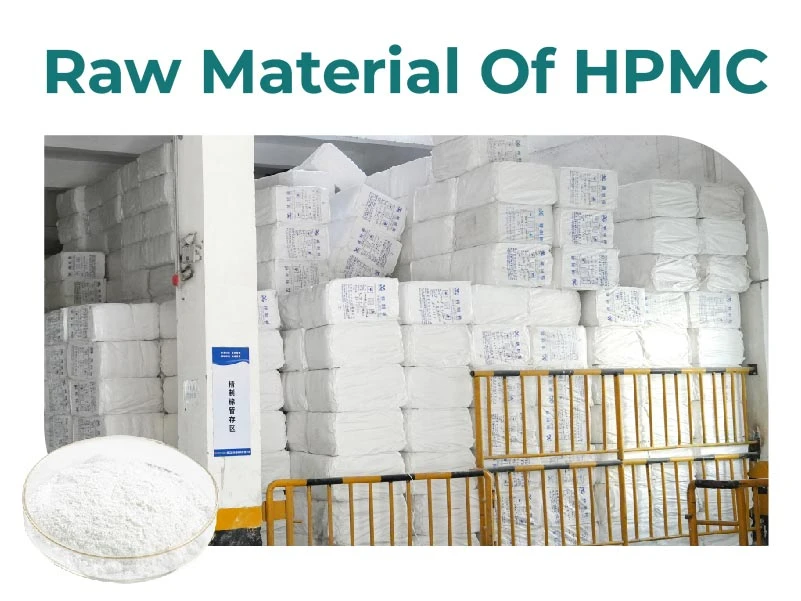
The Real Raw Material Of Hydroxypropyl Methylcellulose Is Cellulose
Hydroxypropyl methylcellulose, or HPMC, is a cellulose ether. That means the whole material family starts from cellulose. The USP monograph preview defines hypromellose as a methyl and hydroxypropyl mixed ether of cellulose, and Ashland describes HPMC as derived from cellulose, a natural, abundant, and renewable resource. So, at the most basic level, the raw material of hydroxypropyl methylcellulose is purified cellulose.
That base fact is important for technical buyers. HPMC is not synthesized from petroleum monomers in the way many synthetic polymers are. It starts from a natural cellulose source and is then chemically modified. This is one reason HPMC is widely accepted across construction, food, pharmaceutical, and personal care uses. The material begins with a familiar natural polymer, but its industrial value comes from how that cellulose is modified and controlled during production.
At Zhiwei, We Use High-Quality Refined Cotton
At Zhiwei, we do not describe HPMC in vague terms. Our official product page states clearly that hydroxypropyl methylcellulose is prepared from high-quality refined cotton after alkali treatment. Our company profile also describes cellulose ether production as one of the core parts of our manufacturing system, with three cellulose ether production lines and annual capacity of 10,000 tons of various cellulose ethers. That means when we answer the title question from our own production side, the answer is precise: the raw material of our HPMC is refined cotton cellulose.
This refined-cotton route matters because raw material quality affects the whole downstream process. A stable cellulose source gives the plant a stronger base for alkali activation, etherification, and final powder quality. If the cellulose source is inconsistent, the final HPMC is harder to control. For that reason, the phrase “raw material” is not a small detail in cellulose ether manufacturing. It is one of the foundations of product stability.
Why People Sometimes Give The Wrong Answer
Many articles answer this question by naming propylene oxide, methyl chloride, or sodium hydroxide first. Those chemicals are important, but they are not the full answer. In our official HPMC description, propylene oxide and methyl chloride are described as etherification agents, which means they are used to modify the cellulose during the reaction. They help create the hydroxypropyl and methoxy substitution pattern that turns cellulose into HPMC. Still, without the original cellulose backbone, there is no HPMC to modify.
A clearer way to explain it is this: cellulose is the primary raw material, and the other chemicals are key processing reagents. This is the most professional way to answer the question for industrial customers. It avoids confusion and makes the production route easier to understand. Buyers who know the difference between a base raw material and a reaction chemical usually make better sourcing decisions.
What Other Cellulose Sources Are Used In The Industry
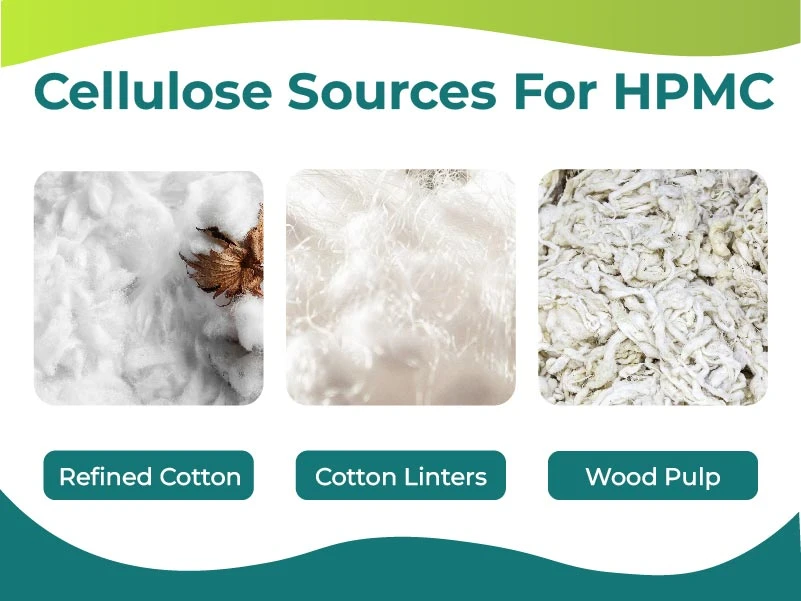
Although our own HPMC route uses refined cotton, the wider industry does not use only one cellulose source. Ashland’s public HPMC pages show that cellulose products in this family are connected to both wood pulp and cotton linters. On one Benecel HPMC page, Ashland states that the wood pulp used in its cellulose products is sourced under zero-deforestation standards and that its cotton linters are certified as 100 percent recycled content. That is useful because it shows that, across the cellulose ether sector, the real raw material remains cellulose, but that cellulose may come from different sources depending on the producer and the grade.
This broader industry view helps answer the title question more completely. If someone asks, “What is the raw material of HPMC?” the most accurate general answer is purified cellulose, commonly from refined cotton, cotton linters, or wood pulp. If someone asks the same question about Zhiwei’s HPMC specifically, the correct answer is high-quality refined cotton. Both statements are true. They simply operate at different levels of detail.
Why Cellulose Quality Matters So Much
Not all cellulose performs the same way in production. Even before the etherification stage starts, the quality of the cellulose source affects purity, reactivity, and downstream consistency. That is one reason we emphasize refined cotton in our own manufacturing description. The better the cellulose foundation, the easier it is to control substitution, ash, transparency, and final performance. Our HPMC product page specifically links our production route to a high degree of substitution, high methoxy and hydroxypropyl content, less ash, and high transparency.
For buyers, this matters because the end use of HPMC is performance-driven. In dry-mix construction systems, customers want water retention, workability, and cohesion. In food and pharmaceutical systems, customers want controlled texture, film behavior, and stability. Those end-use benefits do not begin at the packaging step. They begin with the cellulose source and the way that source is processed through the manufacturing route.
From Raw Cellulose To Hydroxypropyl Methylcellulose
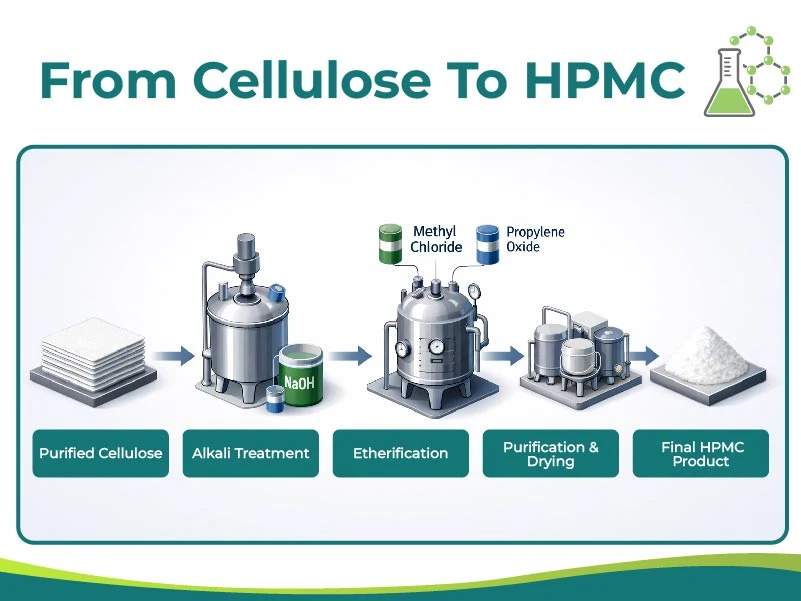
Once the cellulose source is selected, the manufacturing route changes it into HPMC. In our production description, the refined cotton first goes through alkali treatment and then reacts with propylene oxide and methyl chloride through a series of reactions. The result is a non-ionic cellulose mixed ether with cold-water solubility, thickening ability, film-forming performance, and water-retention properties. This is the practical bridge between “raw material” and “finished product.”
The USP definition supports the same chemistry from a more formal angle. It identifies hypromellose as a mixed ether of cellulose containing methoxy and hydroxypropoxy groups. That means the finished HPMC structure still depends on the original cellulose chain, but its properties come from the substitution introduced during processing. This is why the best short answer to the title question is not just “cotton” or just “cellulose.” The best short answer is: HPMC starts from cellulose, and at Zhiwei that cellulose is high-quality refined cotton.
Why This Matters For HPMC Buyers
For many overseas buyers, the real question behind the title is not chemistry. It is sourcing. They want to know whether the material comes from a stable raw-material route and whether the manufacturer can keep the product consistent. That is why the raw material question is more important than it may look. A strong hydroxypropyl methylcellulose manufacturer should be able to answer clearly what the cellulose source is, how the material is processed, and why that route supports product quality.
At Zhiwei, this is part of how we explain our HPMC product platform. Our company profile presents a dedicated cellulose ether manufacturing base with three production lines and 10,000 tons of annual cellulose ether capacity. Our HPMC page gives a direct raw-material answer and a direct process answer. For buyers, that means the product story is grounded in real manufacturing, not only in sales language.
HPMC In Food, Pharma, And Construction Still Starts With Cellulose
One useful way to check whether the raw-material answer is correct is to look at how the material is defined and regulated in different industries. In food law, FDA regulations state that hydroxypropyl methylcellulose may be safely used in food if it meets the prescribed specifications and is used according to good manufacturing practice. In pharmaceutical science, HPMC, or hypromellose, is described as one of the most common hydrophilic cellulose derivatives used in drug delivery. In both cases, the central word is still cellulose. That is the common backbone across industries.
This is another reason the raw-material question matters in SEO and in technical content. If the article only lists the reaction chemicals, it misses the most important point. The reason HPMC belongs to this material family at all is that it starts from cellulose. The reason different producers can make different grades is that they choose different cellulose sources and control the modification process in different ways.
Conclusion
The raw material of HPMC is cellulose. That is the clearest technical answer. In the wider industry, that cellulose may come from sources such as wood pulp or cotton linters. At Zhiwei, our official HPMC route uses high-quality refined cotton as the cellulose source, followed by alkali treatment and etherification with propylene oxide and methyl chloride. So if the question is general, the answer is cellulose. If the question is about our HPMC specifically, the answer is refined cotton cellulose.
That distinction is important for anyone working with hydroxypropyl methylcellulose. The raw material is not a minor detail. It influences purity, consistency, and final application performance. For us at Zhiwei, this is why we prefer a direct answer: HPMC begins with cellulose, and in our production that cellulose begins with refined cotton.