
Introduction
Hydroxypropyl methylcellulose affects mortar in several important ways. It improves water retention, increases open time, improves workability, supports tensile bond strength, and makes mortar more flexible. It also changes the strength balance of the mortar. When the dosage is too high, compressive strength and flexural strength can drop.
For plastering mortar, especially exterior insulation finishing mortar, this balance is very important. The mortar must bond well to the insulation board. It must resist cracking. It must stay workable during construction. It must also keep enough strength after curing.
A practical dosage range for HPMC in plastering mortar is often around 0.20% to 0.25% of the dry mortar weight. This range gives strong water retention and better bonding, while avoiding too much strength loss and unnecessary cost.
What Does HPMC Do In Mortar?
HPMC is a non-ionic cellulose ether. In mortar, it works mainly as a water retention agent, thickener, stabilizer, and workability modifier.
Its main effects include:
| Mortar Property | Effect Of HPMC |
|---|---|
| Water retention | Increases clearly as dosage rises |
| Open time | Becomes longer because water loss slows down |
| Workability | Mortar becomes smoother and easier to apply |
| Tensile bond strength | Increases, including water-resistant bond strength |
| Crack resistance | Improves because drying is more controlled |
| Compressive strength | Can decrease when dosage is high |
| Flexural strength | Can decrease when dosage is high |
| Compression-flexural ratio | Decreases, which means flexibility improves |
This is why HPMC is not just a thickener. It changes the full performance structure of mortar.
Typical Plastering Mortar System
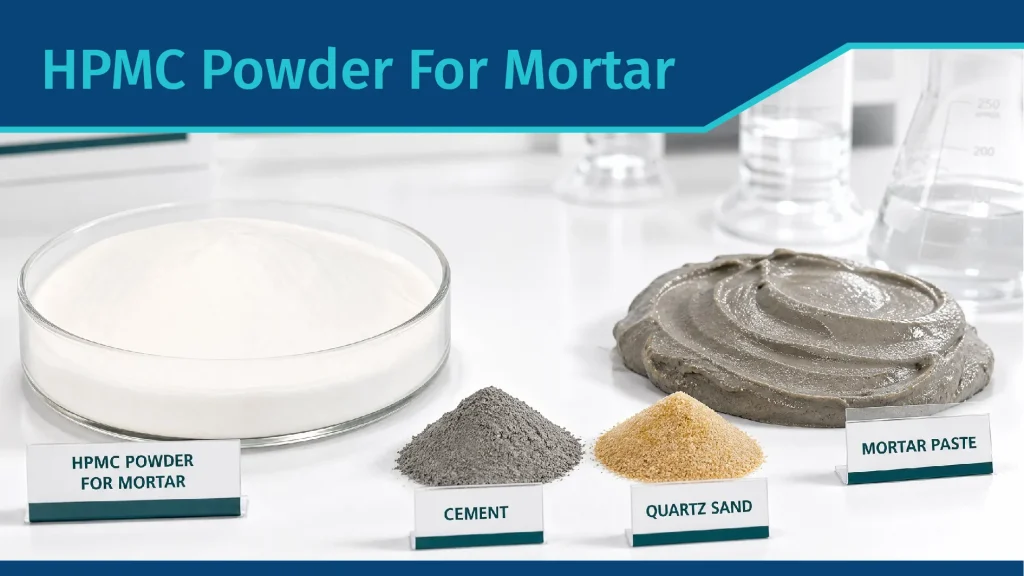
A representative plastering mortar system can use cement, quartz sand, redispersible polymer powder, polypropylene fiber, filler, and HPMC.
A common base formula structure is:
| Raw Material | Typical Share |
|---|---|
| Cement | 27.5% |
| Quartz sand | 59.9% |
| Redispersible polymer powder | 2.5% |
| Polypropylene fiber | 0.1% |
| Filler | 10.0% |
| HPMC | Added separately, usually 0.05%-0.30% |
In one practical test system, 42.5 grade ordinary Portland cement was used with 40-100 mesh quartz sand, redispersible polymer powder, filler, and 9-12 mm polypropylene fiber. The HPMC viscosity was about 100,000 mPa·s. This is close to the application range of high-viscosity construction-grade products such as Zhiwei HPMC 100K.
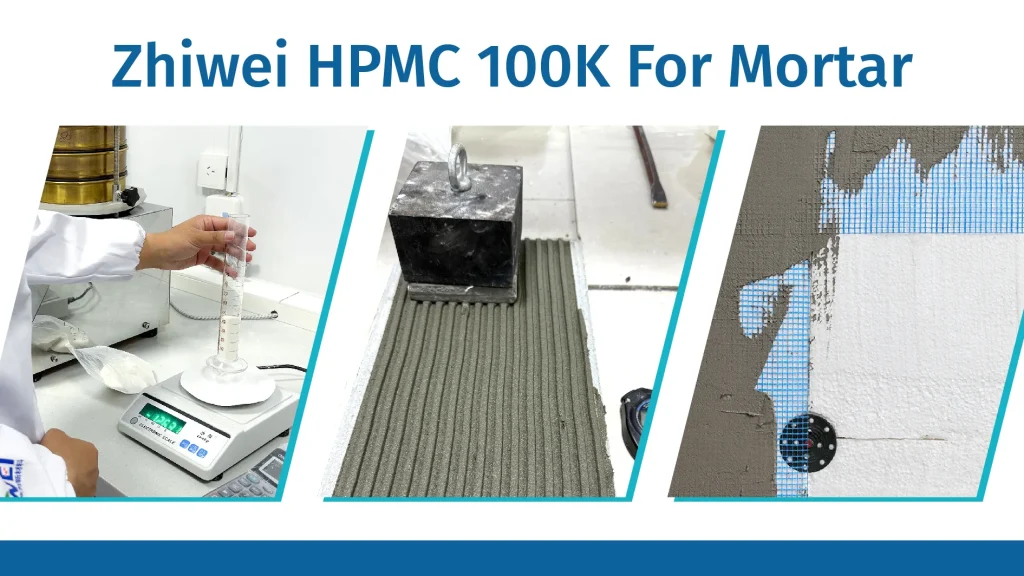
Zhiwei HPMC 100K is a strong starting grade for plastering mortar, EIFS mortar, wall putty, and other dry-mix systems that need water retention, open time, and application body.
How HPMC Improves Water Retention
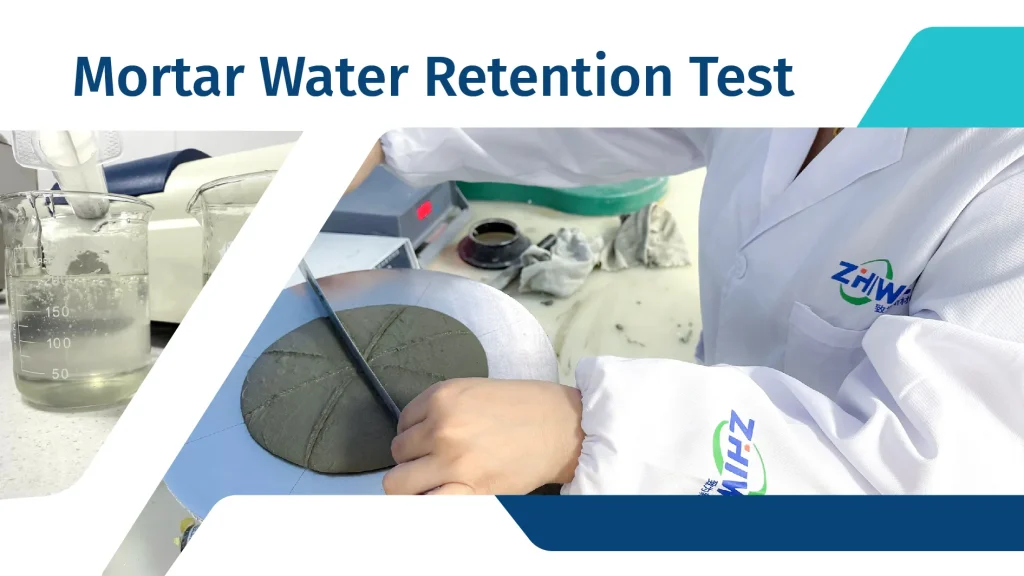
Water retention is one of the most important effects of hydroxypropyl methylcellulose in mortar.
When HPMC dosage increases, mortar water retention increases. The increase is very clear at lower dosage levels. After the dosage reaches about 0.20%, the improvement becomes slower. After about 0.25%, the water retention level usually already meets normal construction needs, so further improvement becomes less obvious.
This happens because HPMC is highly hydrophilic. It absorbs and holds water inside the mortar system. It slows down water loss into the substrate and the air. It also helps keep enough water around cement particles for hydration.
Better water retention gives several benefits:
| Benefit | Why It Matters |
|---|---|
| Longer open time | Workers have more time to apply and adjust mortar |
| Better cement hydration | Cement can develop strength more completely |
| Less surface drying | The mortar surface is less likely to dry too fast |
| Better crack resistance | Uneven shrinkage is reduced |
| Better construction quality | The mortar is easier to spread and finish |
For exterior plastering mortar, this is critical. The mortar layer is often thin. The construction area can be large. The substrate may absorb water. Wind and temperature can also speed up water loss. HPMC helps control these risks.
How HPMC Improves Tensile Bond Strength
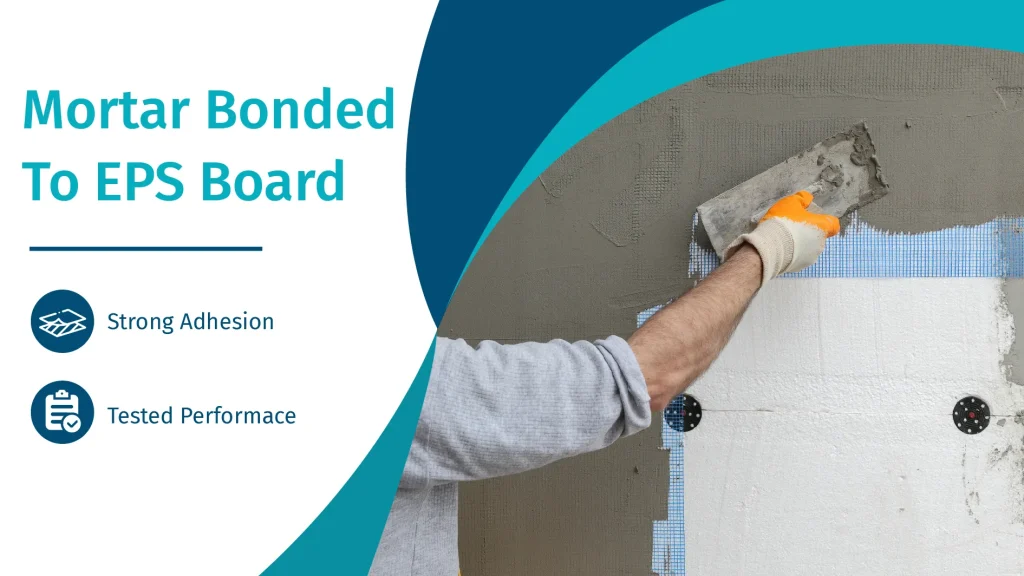
HPMC also improves tensile bond strength. This includes both original tensile bond strength and water-resistant tensile bond strength.
As HPMC dosage increases, the bond strength between plastering mortar and EPS insulation board increases. This is important for exterior insulation systems because the mortar must bond firmly to the insulation layer and resist long-term weather exposure.
The reason is simple. HPMC keeps water inside the mortar for a longer time. This allows cement hydration to continue more fully. HPMC can also form a polymer-rich film around hydrated cement particles. This improves the internal structure of the mortar and supports the interface between mortar and substrate.
The result is better adhesion and better durability.
In practical terms, better tensile bond strength means:
- The mortar bonds more firmly to EPS board.
- The coating system has better resistance to peeling.
- The mortar layer becomes more reliable after water exposure.
- The exterior insulation system has better long-term stability.
This is why HPMC is commonly used in EIFS mortar and plastering mortar. It does not only make the mortar feel better during application. It also improves the bond structure after curing.
How HPMC Affects Compressive Strength
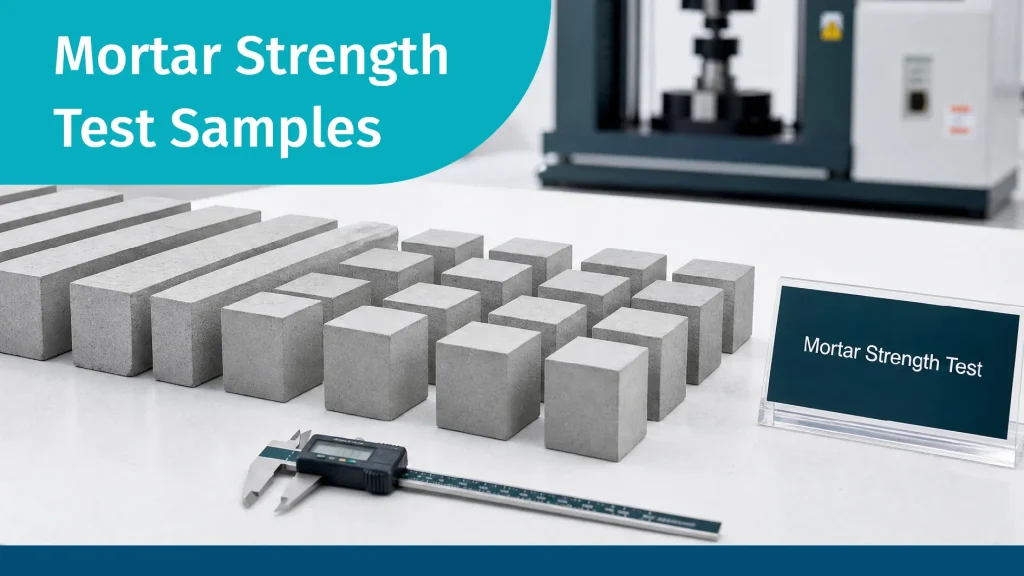
HPMC improves water retention and bonding, but it can reduce compressive strength when the dosage becomes high.
As HPMC dosage rises from low to high levels, compressive strength tends to decrease. The decrease becomes more obvious after about 0.20%.
This does not mean HPMC is harmful. It means the dosage must be balanced.
There are several reasons for the decrease:
| Reason | Explanation |
|---|---|
| More retained water | Higher water retention can increase internal pore formation if the formula is not adjusted |
| More flexible polymer phase | HPMC improves flexibility, but flexible material does not carry compression like cement stone |
| Higher air or void content | Increased viscosity and water retention can change the pore structure |
| Lower rigid skeleton contribution | The mortar becomes less brittle but also less compressive-strength focused |
For plastering mortar, maximum compressive strength is not always the only target. The mortar also needs flexibility and crack resistance. A very brittle mortar may have higher strength but worse real-world performance on an insulation system.
The key is to avoid overdosing. A dosage of 0.20%-0.25% often gives a better balance than 0.30%.
How HPMC Affects Flexural Strength
Flexural strength can also decrease as HPMC dosage increases. This may sound surprising because HPMC improves flexibility. However, flexural strength and flexibility are not the same thing.
Flexural strength is the measured force needed to break a test sample under bending. Flexibility is the ability of the mortar to deform and release stress without cracking easily in the real application layer.
When HPMC increases, the mortar becomes more flexible. But the rigid cement matrix can become less dense, especially at higher dosage levels. This can reduce measured flexural strength.
The useful point is this: plastering mortar does not need to behave like high-strength structural concrete. It needs to bond, cover, resist cracking, and survive movement between layers. A moderate reduction in flexural strength can be acceptable if the mortar gains better water retention, adhesion, and flexibility.
Why The Compression-Flexural Ratio Matters
The compression-flexural ratio is often used to judge mortar flexibility. A lower ratio usually means the mortar is less brittle and more flexible.
As HPMC dosage increases, the compression-flexural ratio decreases. This means the mortar gains flexibility. HPMC forms a viscous and flexible polymer phase inside the mortar. It fills and modifies the internal structure. It can act like a flexible reinforcement effect at the microscopic level.
For exterior wall systems, this is valuable. The mortar layer must handle temperature changes, substrate movement, drying shrinkage, and small deformation from the insulation board. Better flexibility helps reduce cracking risk.
So the goal is not to make the ratio as low as possible. The goal is to reach a practical balance:
- Enough water retention
- Enough tensile bond strength
- Acceptable compressive and flexural strength
- Better flexibility
- Good construction feel
- Reasonable cost
This is why 0.20%-0.25% HPMC is a practical dosage range for plastering mortar.
Why Too Much HPMC Is Not Better
A common formulation mistake is to think that more HPMC always means better mortar. This is not correct.
When HPMC dosage is too low, the mortar may lose water too fast. Open time may be short. Bond strength may be weak. The surface may dry too quickly and crack.
When HPMC dosage is too high, the mortar can become too sticky, too slow to dry, and too costly. Compressive strength and flexural strength can also drop more obviously. The formula may become harder to balance.
A clear dosage logic is:
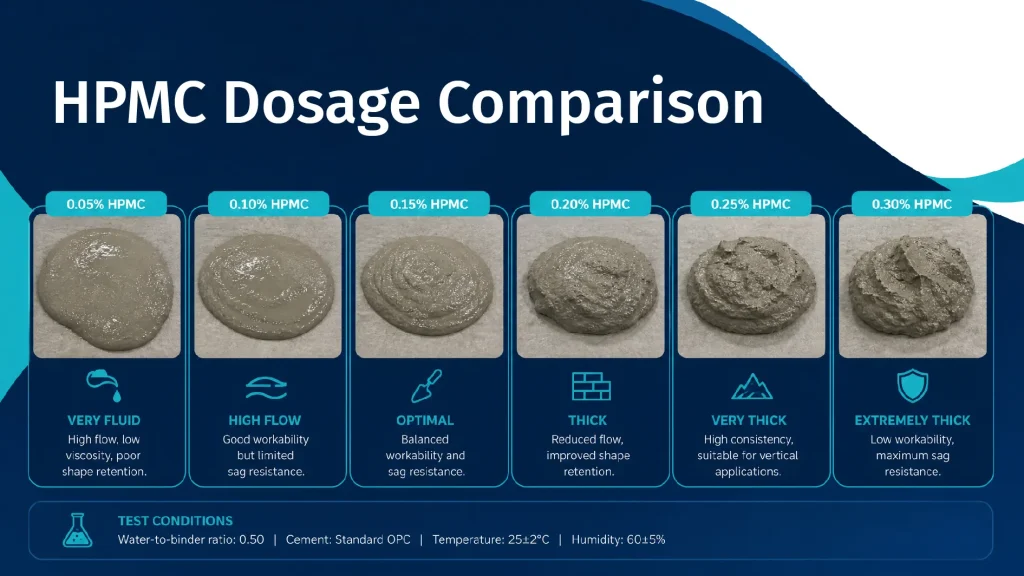
| HPMC Dosage | Expected Behavior |
|---|---|
| 0.05%-0.15% | Water retention improves, but may still be insufficient for demanding plastering mortar |
| Around 0.20% | Stronger water retention, better bond strength, good balance |
| Around 0.25% | Water retention usually meets construction needs well |
| Around 0.30% | Extra benefit becomes limited, while strength loss and cost become more visible |
For most plastering mortar and EIFS mortar systems, the best starting range is 0.20%-0.25%.
How To Select The Right HPMC Grade
The right HPMC grade depends on the formula target. Viscosity is one of the most important selection points.
For plastering mortar with strong water retention and good application body, a high-viscosity grade is usually preferred. Zhiwei HPMC 100K is a strong match because it is designed for construction systems that need stronger water retention, open time, and vertical stability. Its viscosity range is suitable for dry-mix mortar screening.
For higher body, longer open time, and stronger anti-sag behavior, Zhiwei HPMC 150K or HPMC 200K can be tested. These grades are useful when the mortar layer needs stronger wet structure.
For smoother application or lower viscosity demand, Zhiwei HPMC 40K can be tested. It may be useful when the formula already has enough body from other additives or when the mortar should feel lighter during troweling.
A simple selection guide:
| Mortar Requirement | Suggested Zhiwei Grade |
|---|---|
| Balanced plastering mortar | HPMC 100K |
| Stronger water retention and open time | HPMC 150K or HPMC 200K |
| Smoother, lighter workability | HPMC 40K |
| EIFS mortar with stronger wet body | HPMC 100K, HPMC 150K, HPMC 200K |
| Hot weather or high water loss risk | Start with HPMC 100K and compare higher viscosity grades |
Zhiwei (Jinan) New Materials Co., Ltd. can support grade screening for plastering mortar, EIFS mortar, tile adhesive, wall putty, and dry-mix mortar systems.
Practical Formulation Tips
HPMC should be tested in the real mortar formula, not only in water solution. Cement type, sand grading, redispersible polymer powder, filler, fiber, temperature, and water dosage all affect performance.
A practical test plan should include:
| Test Item | Why It Matters |
|---|---|
| Water retention | Confirms water control and construction reliability |
| Open time | Shows how long the mortar remains usable |
| Tensile bond strength | Confirms adhesion to EPS board or substrate |
| Water-resistant tensile bond strength | Shows durability after water exposure |
| Compressive strength | Confirms mechanical performance |
| Flexural strength | Confirms bending resistance |
| Compression-flexural ratio | Helps judge flexibility |
| Workability | Confirms real construction feel |
| Crack resistance | Checks long-term surface stability |
The HPMC dosage should be adjusted step by step. A good lab series can test 0.15%, 0.20%, 0.25%, and 0.30%. In many cases, 0.20%-0.25% will give the best balance.
Conclusion
Hydroxypropyl methylcellulose affects mortar by improving water retention, extending open time, increasing tensile bond strength, and improving flexibility. It also lowers the compression-flexural ratio, which helps plastering mortar resist cracking in exterior insulation systems.
However, HPMC must be used at the right dosage. Too little HPMC may not give enough water retention or bond strength. Too much HPMC can reduce compressive and flexural strength and increase cost.
For plastering mortar, a practical dosage range is usually 0.20%-0.25% of dry mortar weight. This range gives strong water retention, better construction performance, improved bond strength, and better flexibility while keeping strength loss under control.
For manufacturers who want a reliable grade to start testing, Zhiwei HPMC 100K is a practical choice for plastering mortar and EIFS mortar. For higher water retention and stronger wet body, Zhiwei HPMC 150K and Zhiwei HPMC 200K can also be tested.